by Susan Dean | Feb 6, 2018 | Earth Science
A little Dust Devil caught by my friend and photographer David Jones!

Jokes: How does the rain tie its shoes? In a rainbow.
What did the cloud say to the wind? You blow me away!
Weather is the variations in the atmospheric conditions experiences at a given place. It affects our lives and our activities. Climate is the usual weather over a long time: frigid, temperate, or torpid. The study of weather is called meteorology. Weather happens in the troposphere, the layer of air 8 miles next to the earth. It is caused by the interaction of the heat from the sun, air and water and the tilt of the earth as it spins around the sun. The sun is the engine that drives weather. It affects both animals and plants. As weather changes animals may migrate, hibernate, estivate, and some even change colors like the Arctic hare.
There are currents in the ocean (gulf stream) and currents in the air (trade winds). The wind comes from the earth spinning and air moving from high pressure to low pressure. Because the earth spins west to east, winds don’t blow north to south but there is the Coriolis effect where wind curves right north of the equator and left south of the equator. In the middle latitudes the winds blow mainly west. Air and water change in the atmosphere. The air can be still, moving, hot, cold, wet or dry. Air has pressure and takes up space. All air contains water vapor. Humidity is a measure of the water vapor in the air. A Front is when moist warm air meets cool dry air. Hot air moves faster than cold air and rises above cold air.
Water cycles and it can take many forms. It evaporates into the air, condenses into clouds and precipitates out as rain, snow, hail, sleet and fog. The biggest hailstone documented had a circumference of 17.5 inches(the size of your head) and weighed 1.67 pounds. A raindrop doesn’t take the shape that people depict but because of air resistance looks more like a hamburger bun. The SUN is the engine that drives the water cycle. Weather and gravity cycle the earth’s water. Water is found in fog, dew, rain, lakes, rivers, oceans, icebergs, clouds, and ground water. Water warms and cools more slowly than the soil. It evaporates, condenses, and expands when it freezes at 32 degrees and forms a six sided crystal. A molecule of water is made of 2 hydrogen atoms and 1 oxygen atom and looks like Mickey Mouse, therefore called the “Mickey Mouse Molecule” It travels in cycles and forms clouds. When moisture in the air freezes it becomes frost and covers the ground. If it freezes on plants it may form hoarfrost or it may form fernfrost on windows. Wind and water contribute to erosion and shape land (ex. glaciers).
Clouds are the biggest natural electrical generators. The basic cloud formations are stratus, cumulus, cirrus, and nimbus. A large cumulonimbus cloud can weigh more than one billion pounds!When sunlight passes through water it separates light into the colors of the rainbow. You can also do this with a prism or a glass of water. There is no energy released in a rainbow. When there is a thunderstorm, lightening travels from cloud to cloud, cloud to earth, or earth to cloud. Light travels faster than sound and we see the lightening before we hear the thunder. The lightning is electricity and because it is so hot it causes the air to expand making the thunderous sound. Lightening can have a peak temperature of 55,000 degrees Fahrenheit (hotter than the sun’s surface). There is more electricity in a bolt of lightening than can be produced by all the generators in the U.S. If you want to know how many miles away a storm is, count the time between the lightening flash and the sound of thunder and divide by 5. Light travels faster than sound. Planet earth has a negative charge and the atmosphere has a positive charge. There is a global electric current and a thunderstorm belt that surrounds the earth. Always remember “When thunder roars, go indoors!”
Droughts happen when the earth loses more water than it collects. They can happen for months or even years. Strong winds may form a vortex and act like a vacuum cleaner forming hurricanes, tornadoes, or dust bowls. It can suck up all sorts of small things from the ground or water.
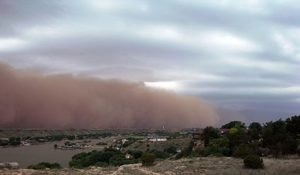
A haboob is a violent dust storm that occurs only is the Sudan of Africa and Arizona. The strong winds can stir up sand and dust into a moving wall 15000 to 3000 feet high that can scrub the paint off of houses and cars.
A tornados average duration is 15 minutes however one in Missouri lasted for 7 hours 20 minutes and traveled 293 miles. It is an intense whirlwind of small diameter over land that extends downward from a convection cloud in a severe thunderstorm. They are funnel shaped, can extend 2000 feet high and may spin at a speed of 250 mph. If it occurs over water it is called a water spout. They arise from “mammatus” clouds which are thunderclouds with small rounded bumps. “Tornado Alley” stretches through the plains from Texas to Illinois.
Hurricanes are violent storms that form in warm water over the western Atlantic Ocean. They may spin 200 mph with an eye from 4 too 25 miles wide. The storm becomes a hurricane when it reaches 73 mph. Tropical storms in the China Seas are called typhoons. In the Indian Ocean and the seas north of Australia they are called cyclones.
Weird weather: Tornados and waterspouts are responsible for curious thing raining from the sky. It has rained spiders in Hungary, maggots in Mexico, thousands of tiny fish in England and the bloody rain in Europe was caused from the red sand of the Sahara desert. In London they have “pea-soupers” when the fog is thick and green from dust and smoke. When there is indoor air pollution it is called the “pigpen Effect”. When we say “It’s raining cats and dogs” we mean that it is heavy rainfall!
- Weather forecasters may include animals and plants! The pine cone closes up when there is moisture in the air. The groundhog is probably the most famous looking for his shadow. If he doesn’t see it there is supposed to be 6 more weeks of winter. Crickets chirp faster when the weather gets warmer. They say if you count how many times a cricket chirps in 15 seconds and then add 10 to the number , you get the temperature.
Natural predictors of good weather:
1. Cumulus clouds appear to dissolve and vanish - 2. Sky is red at sunset
- 3. Wind is from the west
- 4. Clouds are high in the sk
- 5. Birds fly high in the sky
- 6. Fog rises
Bad weather predictors:
- 1. Cumulus clouds increase and move lower in the sky
- 2. Clouds travel at different speeds and in opposite directions
- 3. The sun looks hazy and has a halo
- 4. Birds fly low or not at all and are noisier
- 5. There is a ring around the moon
- 6. The sky is red at sunrise
- 7. Cows huddle and turn their tails to the storm
- 8. Crickets are in the chimney
- 9. Wooly worms have a heavier coat and there are a lot of them crawling about.
- 10. Butterflies migrate earlier
- Hornets and yellow jackets build heavier nests
California is the hottest, snowiest, and driest place in the United State. Alaska is the coldest. Hawaii is the wettest. and New Hampshire is the windiest.
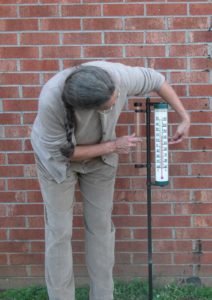
Instruments used to measure weather: Weather vane(wind direction), rain gauge(rainfall), barometer( air pressure), anemometer(wind speed), hygrometer(humidity) and thermometer(heat). Today meteorologists use radar and satellites to track weather patterns.
There are 3 major concerns for our atmosphere: 1) Ozone depletion 2) Acid rain 3) Global warming
Ozone (O3) is caused by CFC’s (chloroflourocarbons) from refrigeration and air conditioning units, industrial solvents, insulation, polystyrene foam(styrofoam) and aerosol spray cans. One CFC molecule can destroy 100,000 ozone molecules. There is a growing hole in the ozone layer of the stratosphere over the Antarctic. Ozone at ground level poses serious health risks and is harmful to lung tissue. The ozone layer in our atmosphere protects us from the sun’s harmful rays.
Acid rain results from pollution of the air by power stations that burn coal or oil to generate electricity. They pour the waste gases into the air and when it rains they are dissolved in the water creating acid rain. The acid rain kills trees, plants, and life in rivers and lakes and eats away at buildings. Smoke and gases from factories and car exhaust pollute the air and form smog that can make people sick. Too much pollution can cause changes in the weather causing heat buildup, floods and droughts.
Global warming is caused by the buildup of carbon dioxide in our atmosphere. CO2 is made when we burn wood, coal, or oil. Cutting down trees or burning trees may lead to less rainfall and the buildup of CO2 in the atmosphere which raises the earth’s temperature.
Activities:
1. Make a rainbow by placing a 4″ prism in a sunny window of your room and kids can follow the path of the sun across the room. You can also make one by placing a glass of water on a piece of white paper in the sun. Make sure the paper is in the shadow. Color a rainbow.
2. Test for acid rain by chopping finely a red cabbage, pouring hot distilled water over it and let it stand for one hour. Strain the juice which should be purple. Put distilled water in one jar and the same amount of rainwater in another jar and add the same amount of cabbage juice to each jar. If the rainwater turns red it is acidic.
3. Have kids describe ice, tell where it is found and how it is used.
4. Make a wind sock (use a tall white trash bag decorated, wire, tape, and a bamboo pole), weather vane, a rain gauge, sundial or barometer. Take a large black plastic bag tied to a long string, sit it in the sun and watch the heat from the sun lift it up(best to do early morning)
5. Using a connector (from supply store listed in resources) between 2 large drink bottles to show the formation of a vortex. Young kids love this!
6. Teach the water cycle song.
7. Give children a thermometer (plastic for safety) and let them hold it in a closed hand and watch the temperature rise.
8. Make a cloud by pouring hot water in a jar, covering it with plastic wrap and putting several ice cubes on top of the plastic.(Sit jar in front of black piece of paper.) Make clouds ( stratus, cumulus, and cirrus) on a piece of paper using cotton and gluesticks.
9. Put a dry pine cone (a natural barometer) in water to see it close when it is wet and open when it dries.
10. Teach the poem

“The Thermometer”
The thermometer has a little red line,
That jumps right up when the weather is fine..
But when it’s cold as everyone knows,
Down to the little round bulb it goes.
It scrunches all up in a tight little ball,
As if it can’t stand the cold at all.
Then the weather begins to change, and
The little red line begins to climb again!A
TIME LAPSE OF A SUPER CELL
Haboob
WaterSpout 
Lightening strikes a tree
STORM COMING
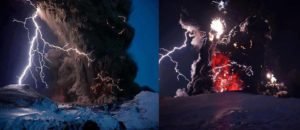
VOLCANIC LIGHTENING

MUSHROOM CLOUD
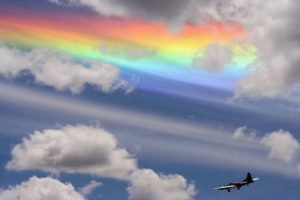
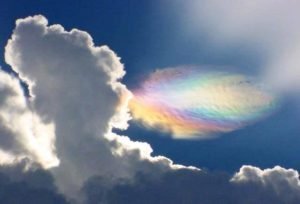
‘Fire rainbows’ are a rare phenomenon that only occur when the Sun is higher than 58° above the horizon and its light passes through cirrus clouds made of ice crystals!


No Name Phenomenon Rainbow

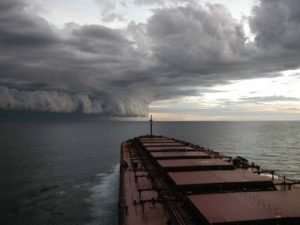
Fog Tsunami Panama City, Fla.
Skypunch
Cloud Tower
Clouds are the biggest natural electrical generators!
by Susan Dean | Feb 6, 2018 | Earth Science

Experiments with Air
Air pressure is 15 lbs. per square inch. These experiments will show that air has weight, exerts pressure, and takes up space and when air expands it makes noise. There is air in water, our bodies, and the soil and air affects many things around us. Give examples such as the rust of iron is caused by oxygen in the air. Thunder is the rapid expansion of air (and so is popping a bag or a balloon.). Air currents can be seen in smoke circulation. The air toy I use that young students like the most is a plastic arm with a little fist on the end. I open it and ask them if anything is inside. They take turns looking and all say nothing is inside. So I close it with the little fist and squeeze it and it shoots off! They learn that air takes up space and has power to move things! I wish I could find another one. Mine is almost worn out! There is also a toy that gives someone a “blast of air”! I ask kids to blow on their hand and feel the air. Though they cannot see it – it is there (invisible to them like germs). This is a good time to impress upon them that they can’t see everything – some things are so small that they are invisible!
- To show weight – tie a balloon on each end of a dowel ( pop one and watch other fall)
- Thunder = fill paper bag with air and listen to the sound from the rapid expansion of air
- Showing currents = a smoking rope in a jar. Ask why circulation occurs.
- 2 wet cloths on chalkboard. Fan one of them. Air hastens evaporation. Dry hot air hastens it even more.
- If you cut off the air from a flame it goes out (no oxygen.)
- Put a string through a straw and attach the string to opposite walls and attach a filled rocket balloon (that you can let the air out of) with tape to the straw to show jet thrust.
- Put a paper in a jar and lower it in water. The compressed air keeps it dry.
- Put water in jar with a piece of cardboard over it. Turn it upside down and see air pressure at work.
- Try to separate 2 rubber cups to feel air pressure
- Put some water on the back of your hand and blow. How does it feel? Evaporation takes heat with it.
- Use 2 jars of water and a tube to siphon and create an air vacuum
- Two objects of different weight fall at = speed and shape changes air resistance. (Galileo). Try a crumpled paper and a flat paper.
- Air moves things. Try straws and ping pong balls.
Jump on air! - Name some ways we use air. Ex. tires, bubble wrap, mattresses, cooling,
- Make little flags to check out currents in the classroom
- Straw and water make a dropper,
- Name some sounds air makes. Bubble wrap makes a sound when popped. And sound is made when air moves through trees, the roar of a hurricane.
- Ice in a can with salt forms dew on outside.
- Pour air from one glass to another under water
- Put a balloon in the fridge. It expands when taken out.
- Get a solar balloon and let kids see how the warmed air in the balloon (from the heat of the sun) makes the balloon rise.
Airborne Pollutants
EXPERIMENT TO TEST FOR AIRBORNE POLLUTANTS
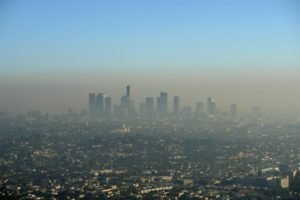
Air is invisible. It is made up of gases that cannot be seen. Many major air pollutants are invisible gases. In some areas of the country, these air pollutants can build to levels where they can be seen. For example, in some cities, smoky, yellowish clouds of primarily car exhaust build up to create smog.
Other easily visible air pollutants, called particulate matter, are made up of tiny particles of solids or droplets of liquids. Some of these particulates are naturally occurring and may pose less of a problem to human health than man-made particulates. Some natural particulates include pollen, wind-blown dust and volcanic ash. Man- made particulates are generated by coal and oil- fired power plants and manufacturing plants, automobile and diesel fuels as well as fireplaces and wood-burning stoves among others.
Place collectors where they can hang freely – not touching other surfaces and where they will not be touched by other students. Be sure to let the custodial staff know about your experiment, too. These particles carried through the air can be harmful to plants, animals and humans. Buildings and statues can be discolored and corroded
Let students make stick-up collectors to see the air pollution. Cut holes in strips of poster paper and cover the holes on one side with clear tape. Put name, date, and location on each strip and select places around the school to hang them. They should hang freely and not be touched. Tell custodial staff about the experiment.
After a week, retrieve the Stick Up collectors and analyze. Can students see pollution with the naked eye. Inspect the strips with a magnifying glass or microscope.