by Susan Dean | Feb 6, 2018 | Earth Science

MAGNETISM
Magnetism is one of the strangest things in nature! What happens is a dance of electrons!
It’s believed a shepherd discovered the first magnet when a rock stuck to a nail in his sandals! A wall of magnetic stones pulled a W. Va. miners helmet off his head! Magnetite or lodestones are natural magnetic rocks found in iron deposits and they get there because a bacteria that breathes without oxygen, enjoys the dark and likes to eat iron. When they digest iron it is turned to magnetite. Many animals have cells that contain magnetite. Scientist think magnetic cells help animals (bees, tuna, dolphin and whales) find food and migrate. In certain parts of their brain we find magnetite. It may help them tell up from down. Whales have been stranded in areas of irregular magnetic fields. Humans have a small amount of magnetite lining their noses. Scientists think our noses were once like compasses!
Magnets attract certain objects and produce magnetic fields which come together at the poles. Opposite poles attract. The magnetic force is strongest at the poles and weakest at the center. The magnetic field is the lines of force around an object. Like poles repel / unlike poles attract.
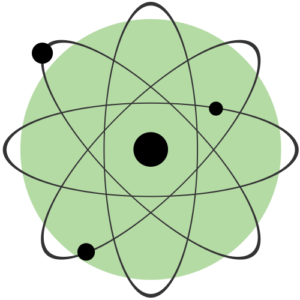
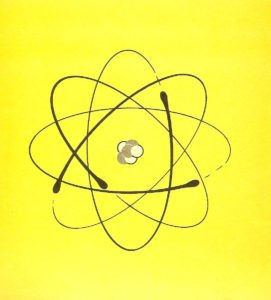
Pure metals have the same kind of electrons. Atoms are the basic substances of the universe and the nucleus and electrons have opposite charges. Different substances have a different # of electrons circling around the nucleus. Electrons form a sort of cloud around the nucleus. Atomic particles may spin, charge in motion, and have a magnetic moment. The spinning motion makes the larger atom magnetic. Electrons may spin in the same or opposite directions. If 2 spin the same it is a strong magnet. If 2 spin in opposite directions they cancel each other and have a magnetic moment of 0. Atoms of certain elements line up in domains and have a magnetic field.
Ferromagnetic – magnets such as iron, nickel, cobalt lodestone (the magnetic atoms of the same substance turn toward and away from a magnet because of a peculiar crystalline structure.) Ground up magnetite is mixed with plastics to make refrigerator magnets. Powdered ferrites coat magnetic recording tapes.
Paramagnetic means having a slight magnetism such as gold, copper, aluminum and can be detected with a magnetometer. If you make an aluminum pan cold enough it will behave like an iron magnet.
Diamagnetic includes silver and most others and is the natural magnetic quality of all matter – even human tissue. Human tissue responds to a strong magnetic field. Stand next to a strong magnet, the atoms in your body repel the magnet!
Temperature and magnets – If the temperature of ferromagnetic metal is raised, the magnetism disappears. The point that it loses its magnetism is called the Curie temp. If you lower the temp of rare earth metals, they become magnetic. Atoms of materials shift around in different ways. Magnetite (3 iron, 4 oxygen) is found in any good rocky area and resembles grey lumps of coal heavy for their size. Use a compass to find them.
Blood hemoglobin contains iron that gives blood its red color. Hematite (rust) is a more common compound of iron. Lodestone has large crystals of magnetite and a permanent magnetism. A Chinese compass uses lodestone floated in water on a small boat. The density of magnetite is over 5. 1 cup of magnetite weighs 5 times that of a cup of water. Pure iron has a density of 8.
If you freely suspend a bar magnet it lines up like a compass and always has a north and south pole. Magnetic particles line up in the same direction. Dropping or heating a magnet will damage it and cause the particles to shift positions. Magnetic transparency is the ability of a magnet to attract through non-magnetic materials. Most materials are non-magnetic. Metals attracted to a magnet are called FERROMAGNETIC like iron. Iron has the strongest attraction to a magnet. Copper, aluminum and gold have weak attractions. Magnets can be created. In 1820 Oersted discovered that electricity produces magnetism. Wherever electricity goes, magnetism follows = electromagnetism. A dry cell battery coil of wire around nail makes a temporary electromagnet. Electromagnetic waves travel through anything, even through a vacuum. Magnets are used on cranes, latches, stud finders, doors, tapes, VCRS, TVS, bells, buzzers, machines ,vacuums, speedometers, computers, credit cards, automatic tellers and in physical therapy.
MATERIALS: Magnetic wands, small amt. of Total cereal, paper clips, 3 nails, materials for magnetic sculpture, 2 bar magnets, round magnet, horseshoe magnet, compass, balloon, salt, pepper shaker of iron filings, 3 feet of insulated copper wire, 6 volt battery, liquid crystals, rust mixed with sand.
ACTIVITIES:
- Have a ferromagnetic scavenger hunt!
- Test magnets through different materials.
- Do magnets work through water?
- Create a magnet sculpture.
- See how many paper clips you can hang from each other.
- Cereal contains iron (Total works best) and you can pick up particles with a magnet.
- A magnet erases tape recordings.
- The needle of a compass is a magnet.
- A compass on the North Pole will spin in circles.
- The forces of attraction and repulsion may be strong or weak.
- Any moving magnetic field will produce an electrical current.
- Rub a balloon on hair 12 times and you can pick up salt.
- Horseshoe magnets work well lifting heavy objects. Because the poles are close together, they combine strengths.
- Magnetic field examples: Put filings in a pepper shaker and test fields by putting beneath paper a bar magnet, a round magnet and a horseshoe magnet.
Bipolarity is one of the most puzzling differences between magnetism and electricity. Magnetic fields have 2 poles that cannot exist apart. If you break a magnet apart, a North and South Pole appear at the ends of the 2 pieces (like the brooms in the sorcerer’s apprentice!) The magnetic field always wraps around itself, flows into itself, and can never separate from its poles. Electricity can only travel in one direction. There is an odd relationship between electricity and magnetism. A magnetic field produces electricity. An electric current creates a magnetic field. Magnetism passes through many materials that do not conduct electricity ex. glass, plastic. When electricity passes through a wire it creates a magnetic field around the wire and you can reverse the current and reverse the poles.
An MRI is magnetic resonance imaging. The machine is like a big donut and takes a picture by reading the turning of atoms in tissue.
Dating with magnets = Thermo remnant magnetic dating notes the direction of the poles of magnets found in the ground.
Bombs in WWII: Nazis dropped mines on bottom of rivers with inclinometers and when a ship passed over, it triggered them. The ships had to be demagnetized.
Liquid crystals change when exposed to magnetic fields and can shut out light like closing a shutter. They are large irregular molecules such as nitrobenzene
Plasma magnetism in the future? = magnetized water. Lightening changes water so more nitrogen sticks to it. To gather micrometeorites in water the best time is Aug. 11 – Dec. 13
Earth is the biggest magnet. We think it is from the huge electric currents deep within where molten iron surrounds a solid core of iron. The motion creates electricity. The earth’s magnetic field can change. It is believed the poles reversed at one time. In ancient clay banks magnetite needles are frozen in time and N points south. If you are close to one of the poles the needle stands on end. An inclinometer measures the angle of dip to figure out distance from pole. A magnet can cause damage to computers and tapes.
Insulators are shields to protect against magnetism.
Experiments:
1. Make a nail into a magnet: Dissolve the domains and make them line up in the same direction. You will need 3 nails of iron. Stroke a nail with a bar magnet 20 times and touch the staples to test. Pound a nail with hammer holding with end pointed north. It will break apart the domains and force atoms to line up. Wrap 3 foot insulated copper wire around a nail and connect the ends to a 6 volt battery – electric current flows in one direction ( electromagnet) is used on cranes to pick up scrap metal. You can switch it on and off. If you remove copper wire staples drop and it loses magnetism
2. Experiment: Observe the Poles. Use 2 bar magnets and dip N pole of one in filings. Dip S pole of other in filings. Notice how filings hang on when put together or pull apart. Dip both N poles in filings. Put together and pull apart. Filings will repel each other
3. You need a ruler, bar magnet and staples. Slide magnet toward staples and measure when pulled. Try through plastic, cloth, tissue, foil, rubber, glass slide. None work well as insulators, a strong magnetic field goes through everything
4. Attach ball bearings to end of bar magnet. 3rd ones push apart. Add the 4th and join. Both attract and create 2 north poles in 7th bearings
5. Mix rust and sand put in saucer and push around to pick up with magnet.
6. There are 2 kinds of compass = radial and dip. Magnetic suspension cushions objects. Mr.Farraday discovered the magnetic dynamo with a copper wire wrapped into circle and tied with 4 twist ties. Wrap free ends of wires around compass in same direction connecting the wires. Move bar magnet in and out of center and the compass needle jumps. The movement produces an alternating current.
7. Heard of levitating ladies with bar magnets! Magnetism is stronger than the force of gravity. Make a magnetic wand for tricks.
Game: Go fish with magnets. Punch holes in fish for points. If catch tire then put fish back or lose turn
Get magnetic wands here: Magnetic Wands
by Susan Dean | Feb 6, 2018 | Earth Science

Elements are Everything – Atoms, Structure and Form (Liquid, Gas, or Solid) Elements around us, in the Air and water, and in our bodies and everywhere!
Elements are the building blocks of all matter.
MATTER HAS THE MAIN PROPERTIES OF: COLOR, SHAPE, SMELL, TEXTURE, WEIGHT, MALLEABILITY, SURFACE TENSION, SOUND, TEMPERATURE, MAGNETISM, ELASTICITY, COHESION
Everything is made up of atoms of elements and temperature changes their behavior. They tighten together and jiggle when they get cold and when they are hot they move apart quickly and jump around even jumping into the air!
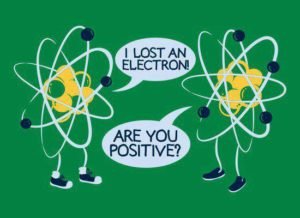
They can have a positive or negative electrical charge and have a center body(nucleus) that is kind of like a little bag of marbles that has different numbers of tiny bodies (electrons) spinning around it. Some are light weights and some are heavy weights! Balloons are filled with helium. It is lighter than anything in our air close to the earth and floats up into the sky.
Children might be familiar with a few elements: oxygen, calcium, sulfur, potassium, magnesium, sodium, hydrogen, iron, nickel, copper, silver, gold, mercury, carbon, aluminum, chlorine, arsenic, tin, lead, iodine, krypton, neon. Show them some samples. Ask children if they can name some of the elements.
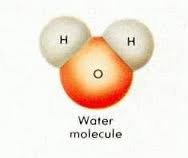
Elements are made of atoms that are all alike, one kind of atom, ex. oxygen. When oxygen joins to another kind of atom Hydrogen, it becomes a molecule – 2 different atoms join together to make water – H2O – the Mickey Mouse molecule made of 2 hydrogen’s and 1 oxygen. Point out some of the elements on the chart as they name a few. All of the body needs oxygen to be alive. Our lungs take in air and our red blood cells grab it from the air and carry it off to feed the cells of our body. There are more than 100 elements.
Our body is made mostly of 5 elements: Oxygen 65%, Carbon 17.5%, Hydrogen 10.2%, Nitrogen 2.4%, Calcium 1.6%, others 3.3
The Earth is made mostly of 5 elements: Oxygen 49.5%, Silicon 25.8%, Aluminum 7.5%, Iron 4.7%, Calcium 3.4%, and Others 9.1
The Air close to the earth is mostly 3 elements: Nitrogen 78%, Oxygen 21%, Carbon Dioxide 1%
Materials: Chart of Elements, Molecule of water (the “Mickey Mouse Molecule” is easy to make of paper mache). Samples of elements: silver, gold, tin, iron, copper, helium in balloon, charcoal (carbon), sulfur. Earth, body, and air charts of the elements (pie charts are easy for children to visualize.)Colored marshmallows and toothpicks to make a molecule of water.
Activities: Children act out behavior of atoms. Stand close together and just jiggle (frozen). As molecules heat up they get more active. As they get cold they freeze in place and jiggle. When they melt to liquid they move sliding around. When they heat up they move fast even jumping into the air. Construct a molecule of water using the colored marshmallows. Draw simple pictures of the hydrogen atom. Draw a small ball and fill it in and then draw a tiny ball out from it and a circle going through it showing that the electron circles the larger body in the center (nucleus). This is a simple picture and simple science.


by Susan Dean | Feb 6, 2018 | Earth Science

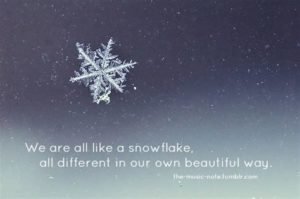
Little Susie Snowflake was born very high above the earth where cirrus clouds occur (35,000 feet) from a tiny amount of water vapor that froze a pattern around a tiny particle of pure salt from sea spray!
At first she was a plain hexagonal crystal of ice but she floated around and around attracting more water molecules and grew stubby arms. Then thin ice filled in the spaces between Susie’s arms. It was about 35 degrees below zero and she slowly grew into a simple little plate snowflake, so small she was barely visible!
She fell from her high perch into a veil of snowflakes with millions of little flakes just like herself and soon landed on the top of altostratus and altocumulus clouds (25,000 feet high.) The top layer of the clouds was still very cold (20 degrees below zero.) As Susie fell through the deck of clouds it got warmer and warmer (14 degrees above zero). There was lots more water vapor and Susie grew 6 more arms with odd little decorations between them and more thin ice formed around her edges. Susie became a large beautiful plate with thickened edges and sharply pointed corners.
She tossed about in the churning clouds and sank into the low stratocumulus clouds of a winter storm. There was even more water to grow on! The temperature was almost 0. She drifted downward growing 6 broad plate-like extensions at each corner.
Susie reached snowflake paradise when she entered nimbostratus clouds with an abundance of water. The temperature was 10 degrees above 0 and she started to grow fast! Needlelike arms started shooting out and branching crystals grew from them until they touch and connect. She continued to branch as she fell and grew armfuls of branching crystals, extending the points and ending them with hexagonal plates.
She became heavy enough in her crystal dress to leave the paradise clouds and fall to the earth. Susie Snowflake might have landed in my yard and become part of a snowman or maybe we ate her in our snow cone! Or Susie could have been part of a glacier or maybe one of the plants in the yard drank her when she melted and she became part of the plant!
Snowflake Bentley from Vermont photographed a snowflake for the first time in 1885 when he was 19 years old. Although ice crystals are clear, scattering of light by the crystal facets and imperfections make the crystals appear white in color. The whole spectrum of light is diffused by the small ice particles. Guinness World Records list the world’s largest snowflakes as those of January 1887 in Montana. Allegedly one measured 15 inches wide. The exact details of the sticking mechanism remain controversial. Possibilities include interlocking, sintering, electrostatic attraction as well as the existence of a “sticky” liquid-like layer on the crystal surface. The individual ice crystals often have hexagonal symmetry.
WHO IS SNOWFLAKE BENTLEY?
by Susan Dean | Feb 6, 2018 | Earth Science
“One of the most soothing sounds of nature is the laughter of falling water.” Jeff Cox

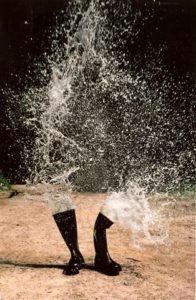
“Water Boots” Roman Signer
Water is the universal solvent. It is tasteless, colorless, odorless and unique. It is the only element on the earth found in all three forms – liquid, solid, and gas. Considered the universal solvent, many things dissolves in water and it flows through everything that is alive. It is unique because when it freezes it grows bigger. The most important things we must have to stay alive are oxygen from the air and water to drink.
Water cycles. It evaporates into the air, condenses into clouds and precipitates out as rain, snow, sleet, hail, fog and dew. The sun is the driving force. Teach children the water cycle song.
This is a good time to talk about temperature and how molecules respond. When they are cold they pack closely and jiggle. When they heat up they start to slide around melting and then begin to move faster when they get hot and jump into the air. Children enjoy acting this out.
Examine pictures of clouds and lightning. Clouds are the largest electrical generators. Lightening is electrical flashes between the clouds and the earth. Thunder is made when the heat from the electrical flash makes the air expand quickly making the sound of thunder. You can illustrate this by popping a bag of air. The quick expansion of air makes the pop.
Talk about safety. Lightening is dangerous and they should take cover in a safe place like a building or car during a storm.
Children need to know that it is very important for them to drink water and all animals and plants are mostly made of water.
We are conductors of electricity and it can be shown with the energy ball and by rubbing a balloon on someone’s hair.
Materials: Hand drum, Mickey Mouse Molecule (paper mache) representing water, Hand out of the water cycle picture to color, Pictures of water, ice and clouds, water cycle chart, paper bag, misc. materials for doing other water experiments you choose.
The Mickey Mouse Molecule

Activities: Water cycle song, Act out the effect of temperature on molecules of water. Put a drop of food coloring in a bottle of water and watch the molecules disperse. Dissolve different substances in water ex. salt or sugar. Check buoyancy of different objects in water, a magnet goes through water, light goes through water. Check surface tension by floating a paper clip on the surface of a glass of water. , check the capillary action by putting the tip of a paper towel in a glass of water. Show examples of erosion, evaporation, condensation. Show difference in density of fresh and salt water with an egg. The egg floats in salt water. A straw appears bent in water. Explore the qualities of water through experiments, river books, rain sticks, and crystals.
Without water we are nothing.

Ice Halos, Joshua Thomas, a photographer in Red River, New Mexico, was lucky enough to catch rainbow-like arcs and pillars of light blazing over a snowy landscape last week. This is caused by the collision of light and ice crystals high in Earth’s atmosphere.
Those frozen specks of water refract light in myriad ways to produce arcs, halos, and pillars of light. Air temperatures and the shape and arrangement of ice crystals fine-tune the phenomena that we see.
In the center of the image is a bright, vertical mass called a sun pillar. Cooler air temperatures boost the brightness of these phenomena. The circle of light ringing the pillar is a 22-degree halo. These halos are fairly common and are so named because they occur at a 22-degree angle from the sun. They’re created of hexagonal ice crystals.
The glaring blob of light to the right of the pillar is called a sundog, the result of ice crystals that are only partly aligned with each other. Sundogs are fairly common.
The delicate strands of light winging out from the top of the sun pillar are tangent arcs. They’re formed when tube-shaped hexagonal ice crystals are oriented on their sides. The halos and arcs aren’t a harbinger of dangerous weather events.

WATER QUOTES
When the well is dry we know the worth of water. Benjamin Franklin
The frog does not drink up the pond in which he lives. American Indian
Water has become a highly precious resource. There are some places where a barrel of water costs more than a barrel of oil. Lord Axworthy
Throughout the history of literature, the guy that poisons the well has been the worst of all villains.
“A lake is the landscape’s most beautiful and expressive feature. It is earth’s eye; looking into which the beholder measures the depth of his own nature.” Thoreau
The noblest of the elements is water. Pindar
“Water is the only drink for a wise man.” Thoreau
“When you drink the water, remember the spring.” Chinese proverb
“The cycle of life is intricately tied up with the cycle of water.” Jacques Cousteau
A GREAT BOOK I RECOMMEND
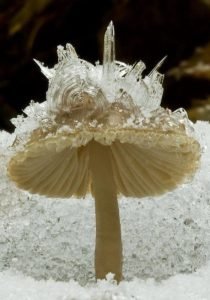
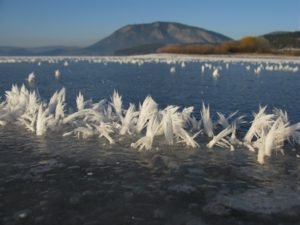
Frost Flowers – It is as beautiful as it is rare. A frost flower is created on autumn or early winter mornings when ice in extremely thin layers is pushed out from the stems of plants or occasionally wood. This extrusion creates wonderful patterns that curl and fold into gorgeous frozen petioles giving this phenomenon both its name and its appearance.


LAKE HILLER, AUSTRALIA
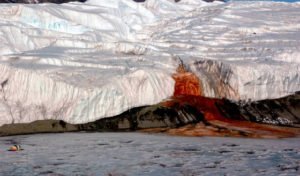
BLOOD FALLS,ANTARTICA 
by Susan Dean | Feb 6, 2018 | Earth Science
CRYSTALS “The Flowers of the Mineral Kingdom”

Crystallography is the study of crystals. The father is Abbe Hauy. The most obvious characteristic of crystals is transparency and geometric regularity. There are 14 BRAVAIS LATTICES grouped into 7 SYSTEMS. X-rays passing through a crystal scatter in a regular pattern. All minerals crystallize into their own individual lattice structures. All minerals are made of crystals. Crystals can be grown synthetically. A unit cell is the smallest spatial structure possessing the characteristics of the mineral as a whole.
ALL CRYSTALS have symmetry. There are different planes of symmetry and a center of symmetry. Our body has bilateral symmetry. All crystals possess DIAD, TRIAD, TETRAD, or HEXAD symmetry. Systems are defined in terms of symmetry:
SYMMETRY: 3 TYPES: There is always a balanced pattern in the arrangement of the FACES
1. PLANE if cut along the plane there will be a mirror image
2. ARIAL is symmetry around an axis. There are identical faces in identical positions at regular intervals. May have several axis of symmetry 2 fold, 3 fold, 4 fold, 6 fold
3. SYMMETRY ABOUT A CENTER each face has a parallel face to it on the opposite side
The surest way to I.D. a crystal is x-ray diffraction. Crystals are solids with geometrical form and are built up from a large # of tiny units having the same shape – the solid state is synonymous with the crystalline state. ATOMS make up all matter, are in constant motion, and their energy increases as the temperature increases. As the temperature cools, atoms arrange themselves in an ordered structure. The outside shape of a crystal is determined by many inside tiny units that have the same angles and form regular shapes.
FLOURESCENCE: Minerals can glow in a variety of colors when exposed to Ultraviolet light. Impurities in the minerals are “activators”. The color depends on the activator and the kind of U.V. light (long or short wave)
The 6 LATTICE SYSTEMS:
1. CUBIC 12% salt has the highest degree of symmetry.
2. HEXAGONAL 8% of crystals including snowflakes and most gems.
3. TRICLINIC or TRIGONAL: 9% such as wollostonite, rhodonite, kyanite, microcline, axinite, plagioclase, corundum, calcite, hematite, tourmaline, and QUARTZ
4. TETRAGONAL: 10% include rutile, zircon, scheelite, scapolite, wulfenite, and chalcopyrite
5. ORTHORHOMBIC: 22% include sulfur, stilinite, arsenopyrite, marcasite, aragonite, witherite, andalusite ,topaz, olivine, cordierite, chalcocite
6. MONOCLINIC: wolframite, azurite, malachite, gypsum, crocoite, vivianite, erythrite, datolite, epidote, stilbite, and pyroxenes
Crystals usually occur in groups in rock fissures, cavities (geodes) or flat surfaces (druses). Sometimes they penetrate one another. MASSIVE Crystals are minerals with crystals too small to be seen. TWINS / Twinning is 2 or more inter-grown crystals as zircon, rutile, cassiterite, staurolite, Iron cross=pyrite. Their formation depends on the geological conditions: Graphite, ice cubes, sand, the metals in bridges, coins, asprin, snowflakes, icicycles, stones, salt, sugar, bones
Crystals often can be as transparent as glass. A small amt. of impurities can cause fantastic changes in color. Impurities are responsible for color changes in stars. Some crystals are electrical conductors.
LUMINESCENCE = a crystal emits light when scratched, tapped, or broken. ex. sugar.
PHOSPHORESCENCE = when crystals glow after a light source is shut off.
FLORESCENCE = when they glow under a UV light
ELECTROLUMINESCENCE = crystals glow when electric current is passed through.
THERMOLUMINESCENCE -= if they emit light when warmed. ex. barite
There are many electronic uses for crystals in lasers, t.v. , telephone, computers
Some crystals generate a small electric current when struck. Squeezing can create a pulse of electricity because of the arrangement of the unit cells as in quartz. Some crystals generate electricity when heated. Tourmaline has no elec. charge but when heated, one end turns + and the other – . As it cools it reverses. Sometimes liquid is trapped in a crystal. In N.Y. someone found calcite crystal with a pint of water trapped inside for 8 million yrs. Sometimes they trap gases too.
Democritus identified the smallest piece of matter as atoms. Each element is made up of different kinds of atoms. You combine 2 or more atoms to make molecules. An atom is mostly empty space and resembles a solar system. It consists of a nucleus of protons and neutrons with electrons spinning around it. The electrons can make quantum jumps in orbit around the nucleus. A magnet or a + electric charge will cause a light beam to swerve.
Atoms build matter in the three forms of a solid, liquid or gas. Crystals grow from gases or liquids! Atoms go from disorder to order. Atoms are always in motion. Molecules have qualities like a magnet with a + or – charge and attract or repel. The electrical charge can be weak or strong. Two factors determine the state of matter = molecular motion and electrical attraction.
A GAS has no shape, size, or volume and molecules have a weak attraction for each other and there is almost total disorder. There is a resistance of a gas to an object moving through it and the resistance can add up as the breeze you feel when you ride a bike or swing. Atoms of most gases team up to make molecules. The NOBLE GASES do not pair up = helium, neon, argon
LIQUIDS do not have shape but they have size and volume. They don’t spread out like gases. The molecules stick together but slip and roll over each other. It takes more force to push molecules apart than air!
SOLIDS have volume; take up space, and have a definite shape. The molecules bound together vibrate! CRYSTALS are molecules arranged in the highest degree of order – the solid. It has billions of tiny crystals.
THE 4th STATE of matter is PLASMA = a hot gas with no electrons.
5th STATE = SUPERSOLIDS packed tight under extreme pressure.
CRYSTALS are like “frozen ice”. Most crystals are too small to see with the naked eye. Crystals are groups of atoms, molecules, or compounds that have firmly clumped together like bricks layered from a disorderly pile. The electrical forces within give them their shape!
Crystals need nuclei to form:
1. Around dust particles
2. In supersaturated solutions (warm liquid dissolves more solid matter)
Heat puts atoms in motion. Cold slows atoms down. The bonds that hold molecules together are of different strengths. Each kind of molecule has a unique shape of it’s own. Freezing temps and boiling temps vary depending on the strength of the bonds. The freezing point and melting point are almost identical.
Sublimation is when gas turns to solid or solid to gas with no liquid step.
Quartz is the most abundant crystal has unit cells of 3 silicon dioxide mol. clasped together in repeated patterns. It takes time and freedom to form perfect crystals – the less time and freedom the more defects. Glass is not crystalline but a supercooled liquid that becomes hard so quickly there is no time for crystals to organize. It is amorphous and has no shape to it’s structure.
The final shape of natural crystallization is it’s HABIT = the preferred mode of growth = the arrangement and proportion of faces on a single Crystal.
HABITS:
1. Acicular needlelike – natrolite
2. Bladed broad flatlike blade – gypsum
3. Dendritic treelike or branching – copper
4. Equant = same diameter in every direction – garnet
5. Prismatic elongated in one direction – tourmaline
6. Striated shallow parallel grooves on 1 or more faces – pyrite
7. Tabular thick or thin flat plates – wulfenite
Most minerals lock together in more than one pattern depending on temp. pressure, and saturation. They have more than one habit = ALLOTROPIC “variety”. Habits change. They change from 1 habit to another as the temperature drops. Water is a mineral with 4 habits. ASBESTOS has 1 habit = stringy crystals
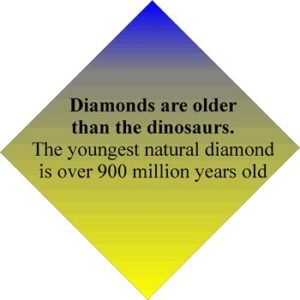
Carbon has 2 habits: forms graphite in hexagonal system or diamond in cubic system
1. Graphite smooth slippery flat 6 sided molecules easily slide over each other – used as lubricant and to write
2. Pyramid crystals high temp. and great pressure = diamond the hardest
RADIOACTIVITY occurs in some minerals like uranium, thorium. They give off energy as radiation. Some are a rich orange, green or yellow in color. Some minerals respond to a magnet, usually the iron bearing minerals. Lodestone is a natural magnet, and varieties of magnetite, franklinite, hematite, chromite, pyrrhotite, ilmenite. Magnetism grows stronger when heated and depends on the amt. of iron content.
OTHER PROPERTIES:
TASTE: a mineral must be soluble in water to have taste as salt, epsomite, borax
ODOR: arsenopyrite = garlic, kaolinite = earthy, Pyrite = sulfurous
FEEL: soft, smooth like chalk (a rock composition of microscopic fossil shells)
Acid test for carbonate minerals: crush some and add a few drops of acid and they will bubble = aragonite, calcite, dolomite
LIQUID CRYSTALS are crystals that have characteristics of liquid and solid states. Can be poured yet molecules arrange themselves in rows side by side. Some change color with a small temp. change. The membranes surrounding brain cells are made of liquid crystals. Our sense of smell may be due to liquid crystals. Most liquid crystals change the way they group together when exposed to different chemical vapors!
CRYSTAL WISKERS are single perfect crystals and are very strong. They were discovered as interference in miniature electrical equip.
METALS a few dislocations or mismatches make a metal soft with wider planes of slippage. Many dislocations make it hard.
Gems are minerals that have ornamental value of beauty, durability, rarity (about 20 minerals). The most valuable gems are at least as hard as quartz. There are about 2500 minerals known and they are of many different COLORS or can be multicolored or banded or metallic. Gems have outstanding transparency, luster, color. They are prized for their beauty. With little or no flaws they are cut, shaped or polished.
1. FACETED for brilliance = diamond
2. POLISHED for stars, colors and patterns = tigers eye or sapphire
3. CARVED as jade, turquoise, or agate
ROCK is an aggregate of minerals. We learn about the earth’s history from understanding the differences in rocks and how they are formed and from fossils. Minerals like rocks form under a variety of conditions of heating, cooling and pressure.
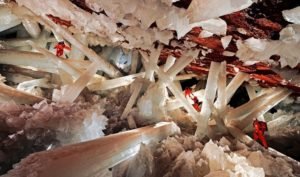
Natural Crystal Cave Nacia, Mexico