by Susan Dean | Feb 6, 2018 | Gardening, Plants

The Sweet Potato
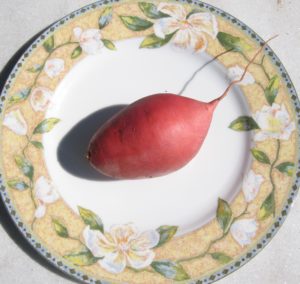
The soft orange sweet potato is often mislabeled a “yam” in parts of North America. The sweet potato is botanically very distinct from a genuine yam. The genus Ipomoea that contains the sweet potato includes several garden flowers called morning glories. The sweet potato is not a potato or even a distant cousin. Potatoes are tubers; sweet potatoes are roots.
The plant is an herbaceous perennial vine bearing alternate heart-shaped or palmate lobed leaves and medium-sized sympetalous flowers. The edible tuberous root is long and tapered, with a smooth skin whose color ranges between yellow, orange, red, brown, purple, and beige. Its flesh ranges from beige through white, red, pink, violet, yellow, orange, and purple. Sweet potato varieties with white or pale yellow flesh are less sweet and moist than those with red, pink or orange flesh.
The center of origin and domestication of the sweet potato is thought to be either in Central America or South America. Sweet potatoes were domesticated at least 5,000 years ago. In South America, Peruvian sweet potato remnants dating as far back as 8000 BC have been found. Sweet potatoes are now cultivated throughout tropical and warm temperate regions wherever there is sufficient water to support their growth. The majority comes from China, with a production of 105 million tons. About half of the Chinese crop is used for livestock feed. In the U.S., North Carolina, the leading state in sweet potato production, provided 38.5% of the 2007 U.S. production of sweet potatoes. In 2007, California produced 23%, Louisiana 15.9%, and Mississippi 19% of the U.S. total.
Sweet potatoes provide twice the recommended daily allowance of vitamin A and more than one-third of the daily requirements of vitamin C. They are an important source of beta-carotene, vitamin B6, iron, potassium and fiber. Studies consistently show that a high intake of beta carotene-rich vegetables and fruits can significantly reduce the risks for certain types of cancer. Sweet potatoes contain virtually no fat or sodium.
Sweet potatoes that are a pretty, bright, orange color are richest in beta-carotene.
The orange tuber packs 438% of your daily value of infection-fighting vitamin A. Like carrots, sweet potatoes are a major source of skin-protecting beta-carotene. While bananas are often touted as the go-to source of potassium, a medium sweet potato has 28% more potassium than a banana. Potassium helps your body absorb fluids to replace sweat losses.)
Besides simple starches, sweet potatoes are rich in complex carbohydrates, dietary fiber, beta-carotene, vitamin C, and vitamin B6. Pink, yellow and green varieties are high in carotene, the precursor of vitamin A. In 1992, the Center for Science in the Public Interest compared the nutritional value of sweet potatoes to other vegetables. Considering fiber content, complex carbohydrates, protein, vitamins A and C, iron and calcium, the sweet potato ranked highest in nutritional value. According to these criteria, sweet potatoes earned 184 points, 100 points over the next on the list, the common potato. Despite the name “sweet”, it may be a beneficial food for diabetics, as preliminary studies on animals have revealed it helps to stabilize blood sugar levels and to lower insulin resistance. While sweet potato provides less edible energy and protein per unit weight than cereals, it is a higher nutrient density source of certain vitamins and minerals than cereals.
Although the leaves and shoots are also edible, the starchy tuberous roots are by far the most important product. Sweet potato leaves and shoots are a good source of vitamins A, C, and B2 (riboflavin).
The plant does not tolerate frost. It grows best at an average temperature of 24 °C (75 °F), abundant sunshine and warm nights. Annual rainfalls of 750–1,000 mm (30–39 in) are most suitable, with a minimum of 500 mm (20 in) in the growing season. The crop is sensitive to drought at the tuber initiation stage 50–60 days after planting, and it is not tolerant to waterlogging, as it may cause tuber rots and reduce growth of storage roots if aeration is poor.
Depending on the cultivar and conditions, tuberous roots mature in two to nine months. Sweet potatoes rarely flower when the daylight is longer than 11 hours. They are mostly propagated by stem or root cuttings or by adventitious roots called “slips” that grow out from the tuberous roots during storage. They grow well in many farming conditions and have few natural enemies; pesticides are rarely needed. Sweet potatoes are grown on a variety of soils, but well-drained, light- and medium-textured soils with a pH range of 4.5-7.0 are more favorable for the plant. They can be grown in poor soils with little fertilizer. Sweet potatoes are very sensitive to aluminum toxicity and will die about six weeks after planting if lime is not applied at planting in this type of soil. They are sown by vine cuttings rather than seeds. The rapidly growing vines shade out weeds and little weeding is needed.
In the Southeastern United States, sweet potatoes are traditionally cured to improve storage, flavor, and nutrition, and to allow wounds on the periderm of the harvested root to heal. Proper curing requires drying the freshly dug roots on the ground for two to three hours, then storage at 85–90 °F (29–32 °C) and 90 to 95% relative humidity from five to fourteen days. Cured sweet potatoes can keep for thirteen months when kept at 55–59 °F (13–15 °C) and >90% relative humidity. Colder temperatures injure the roots.
Cuttings of sweet potato vine, either edible or ornamental varieties, will rapidly form roots in water and will grow in it indefinitely in good lighting with a steady supply of nutrients. Sweet potato vine is ideal for use in home aquariums, trailing out of the water with it’s roots submerged, as it’s rapid growth is fueled by toxic ammonia and nitrates, a waste product of aquatic life, which it removes from the water. This improves the living conditions for fish, which also find refuge in the vast root systems.
Researchers at North Carolina State University are breeding sweet potato varieties that would be grown primarily for biofuel production.
Candied sweet potatoes are a side dish consisting mainly of sweet potatoes prepared with brown sugar, marshmallows, maple syrup, molasses, orange juice, marron glacé, or other sweet ingredients. Often served in America on Thanksgiving, this dish represents traditional American cooking.
In South America, the juice of red sweet potatoes is combined with lime juice to make a dye for cloth. By varying the proportions of the juices, every shade from pink to black can be obtained.
by Susan Dean | Feb 6, 2018 | Plants, Trees

WE LOVE TREES!
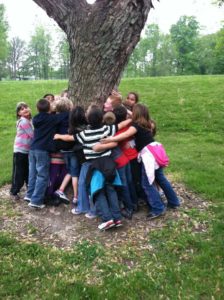
Just touching that old tree was truly moving to me because when you touch these trees, you have such a sense of the passage of time, of history. It’s like you’re touching the essence, the very substance of life. – Kim Novak
Research a favorite tree or give students clues and let them go on a scavenger hunt. Some things to include might be:
Scientific and other common names of the tree:
Habitat and Environment
Kind of seed
Flowers, fruit, or cones?
Estimated height
Circumference (measured 4 feet above the ground )
Above ground roots?
What is the soil like?
The color, texture and strength of the bark
Does the tree shed it’s bark?
Leaves or needles?
Shape, color, texture, size, strength, vein pattern of leaf or needle.
How many other trees like this are around.
Any animals in, on, or around the tree?
How much sunshine does it get?
Other interesting knowledge about this tree
EVERYTHING DANCES!


by Susan Dean | Feb 6, 2018 | Plants, Trees

Don’t you dare climb that tree
or even try, they said, or you will be
sent away to the hospital of the
very foolish, if not the other one.
And I suppose, considering my age,
it was fair advice.
But the tree is a sister to me,
she lives alone in a green cottage
high in the air and I know what would
happen, she’d clap her green hands,
she’d shake her green hair,
she’d welcome me. Truly
I try to be good but sometimes
a person just has to break out and
act like the wild and springy thing
one used to be. It’s impossible not
to remember wild and want it back. So
if someday you can’t find me you might
look into that tree or – of course
it’s possible – under it.
Mary Oliver
The Pink Peach Tree Van Gogh
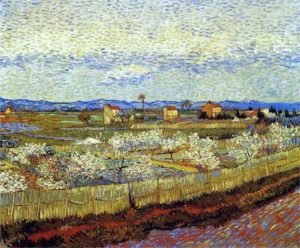
Peach Trees in Blossom Van Gogh
Apple Tree in Blossom Van Gogh

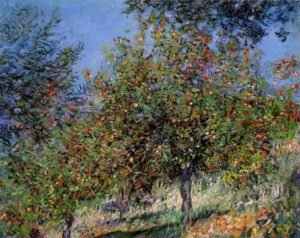
Apple Trees on Chantemesie Hill Claude Monet

Tree of Life Gustav Klint

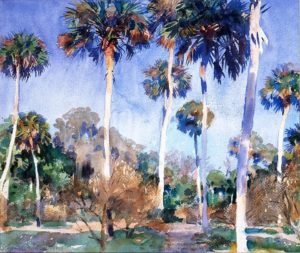
Palms John Singer Sargent

Sunlight Effect Under the Poplars Claude Monet

Four Trees Egon Schlele

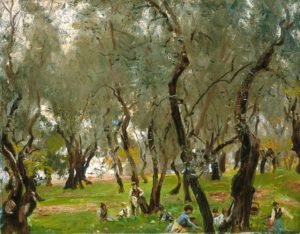
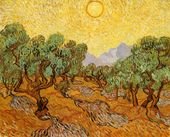
The Olive Grove John Singer Sargent

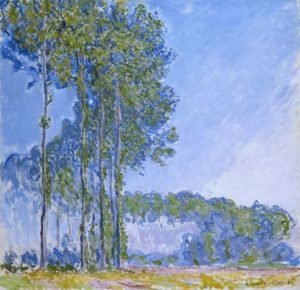
The Poplars Claude Monet

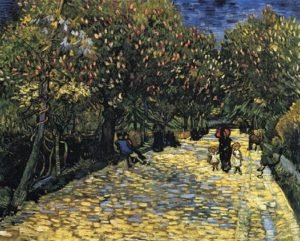
Avenue with Flowering Chestnut Trees Vincent Van Gogh
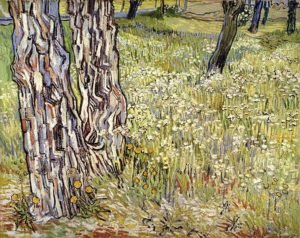
Trunks in the Grass Vincent Van Gogh

The Pink Orchard Vincent Van Gogh

FLOWERING PLUM TREE CAMILLE PISSARRO
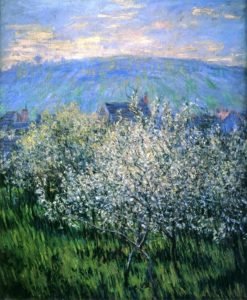
PLUMS BLOSSOM CLAUDE MONET
Orchard in Bloom Claude Monet

The Olive Grove Vincent Van Gogh

Branches With Almond Blossom Van Gogh

Orchard in Blossom Vincent Van Gogh

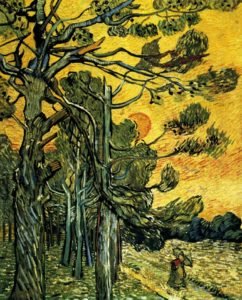
Pine Trees Against a Red Sky With Setting Sun

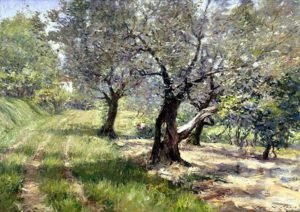
The Olive Grove William Merritt Chase

Beech Trees Steele

Olive Trees Van Gogh

The Tree House Klee

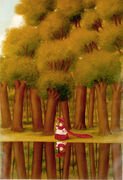
Walking Next To The River Fernando Botero

Willow Tree

Apple Tree With Red Fruit Paul-ElieRanson

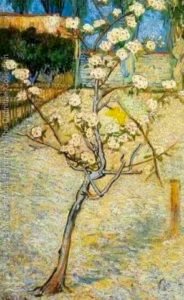
Blossoming Pear Tree Van Gogh

Apple Trees in Bloom at Giverny Monet

In the Woods Cezanne

Mulberry Tree Van Gogh

Cypresses Van Gogh

Red Tree Mondrian

Birch Forest Klimt

Beech Forest Klimt

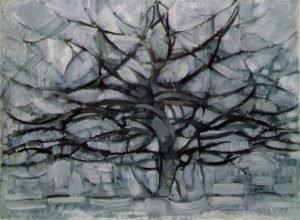
Apple Tree Mondrian

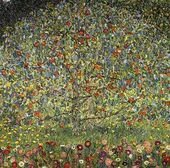
Apple Tree Gustav Klimt
Joy of Life Matisse

A Palm Tree Monet

Apricot Trees In Blossom Van Gogh

by Susan Dean | Feb 6, 2018 | Plants, Trees
e

Tree shown on the new Vermont 25¢ coin: Maple
The Dutch disease nearly wiped out this tree: Elm
The Christmas partridge was in this tree: Pear
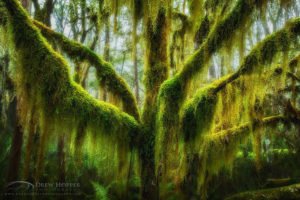
Spanish moss hangs from this southern tree: Live Oak
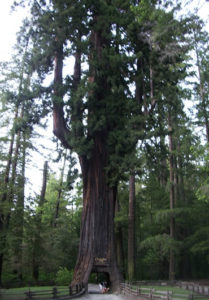
Largest tree species by volume: Sequoia
Noah’s dove brought back this branch: Olive
Tree associated with Lebanon: Cedar
Berries from this tree used to make gin: Juniper
The tree with knobby knees: Baldcypress
What little acorns grow into: Oak
Texas state tree: Pecan
John Chapman’s claim to fame: Apple
It is to the south what the lilac is to the north: Crapemyrtle
President Andrew Jackson’s nickname: Hickory
Tree Robert Frost talks about in his poem: Birch
Most common U. S. Tree: Silver Maple
Tropical island tree: Palm
The village smithy worked under this tree: Chestnut
Tree most struck by lightning: Oak
Everlasting life is the symbol of this tree: Yew
The tree with bark like elephant skin. Beech
Favorite tree lovers carve their initials in: Beech
World’s tallest species of tree: Redwood
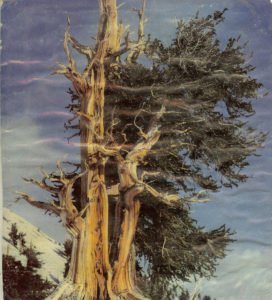
Oldest living tree (4844 years): Bristlecone Pine
Tree associated with Burmese rain forests: Teak
Mississippi’s state tree: Magnolia
Before barb wire, it was called the “living fence”: Osage Orange
In England this tree is called a sycamore: Maple
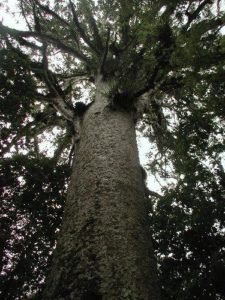
The “Lord of the Forest” in New Zealand. Tane Mahuta
The state tree of South Carolina. Palmetto
Men collect tears of sap from this tree often used as incense. Frankinsence
We use the beans from this tree to make chocolate. Cacoa
This tree has the largest seed of all. Coconut
This tree blooms in spring and has markings of the crucifixion on the flower. Dogwood
Long ago people used knots from this tree for light. Pine
This tree is a lunar tree that sheds it’s bark to white limbs. Plane tree or Sycamore
We get delicious syrup for our pancakes from this tree. Sugar Maple
The flower is sweet but the fruit is sour. Lemon
What is the smallest living tree? The dropsickle tree

by Susan Dean | Feb 5, 2018 | Plants, Trees

Old Methusela, a bristlecone pine tree
Wolf Lichen on a tree

Tree of Life
El Arbor del Tule
The Tree with the Largest Diameter in the World:
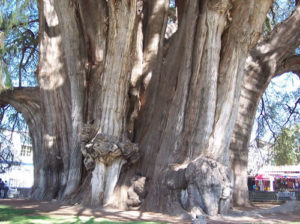
El Arbol del Tule – This tree is an Ahuehuete or Montezuma Cypress growing in Oaxaca, Mexico in the town of Santa Maria del Tule. The trunk of the tree is 33 feet in diameter and has a circumference of 178 feet. Originally thought to be multiple trees that had grown and fused together, DNA tests have shown that it is actually all one tree.

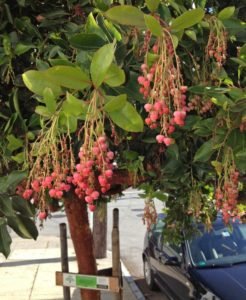
Strawberry Tree (Arbutus ‘Marina’) on Hermann Street near Duboce Park shows off its flowers.

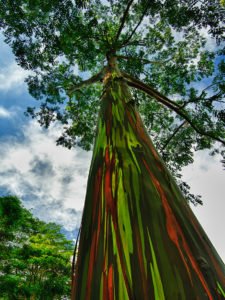
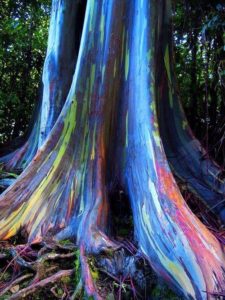
Rainbow Eucalyptus trees on Maui, Hawaii. The phenomenon is caused by patches of bark peeling off at various times and the colors are indicators of age. A newly shed outer bark reveals bright greens which darken over time into blues and purples and then orange and red tones.

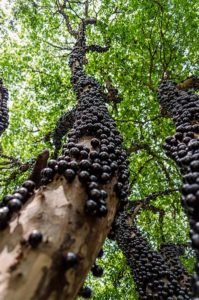
Brazilian Grape Tree known as Jabuticaba does not use branches to grow fruits. It grows fruits (and flowers) directly on the trunk.

American Elm Central Park

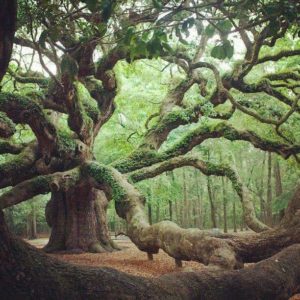
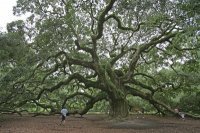
The Angel Oak

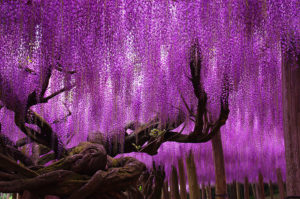
WISTERIA TREE JAPAN

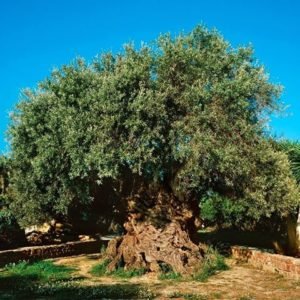
Olive Tree

Jomon Sugi

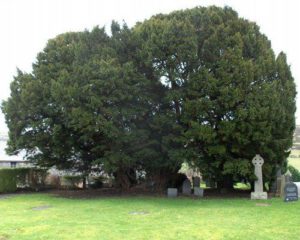
Llangernyw

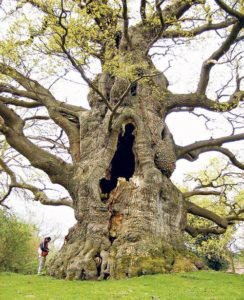
The Majestic Oak

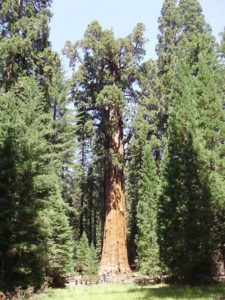
General Sherman

The Senator

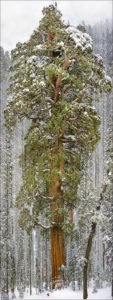
The President

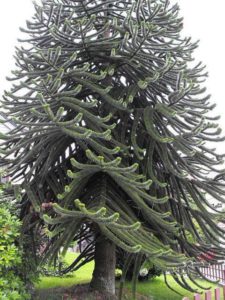
Monkey Puzzle Tree

Patriarcada floresta

King Oak Tullamore, Ireland

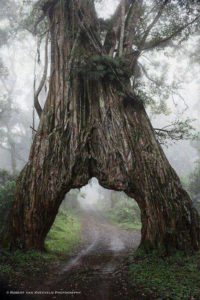
National Park Tasmania

Kapok Tree Mexico

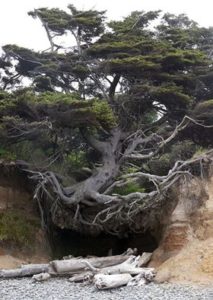
Root Cave Big Sur

The Knarled Tree

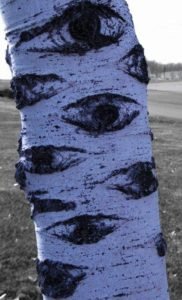
Birch Eyes

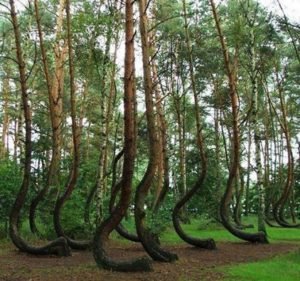
The Crooked Forest 
Square Trees

Pine Tree with 6 legs

Japanese Maple Oregon 
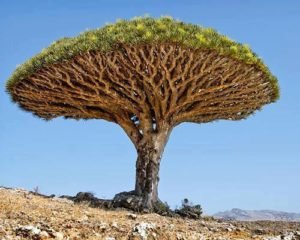
Dragon Tree

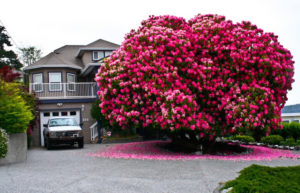
125 year old Rododendro

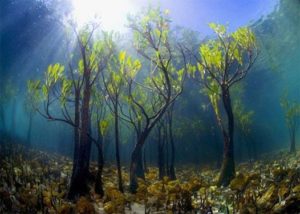
Underwater Mangrove Trees

Canada’s most knarled tree

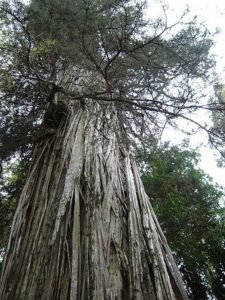
Alerce
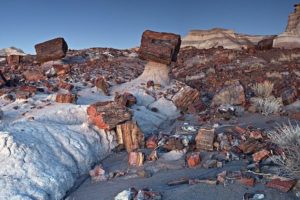
Petrified Trees

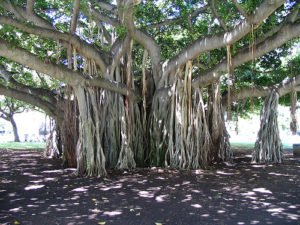
Banyan Tree
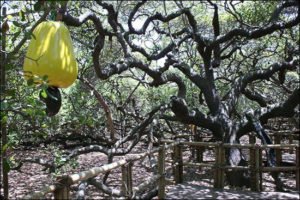
The World’s largest Cashew Tree
Maior Cajueiro do Mondo is located in Natal, Brazil. The gigantic tree has grown from an amalgamation of two genetic tissues. Such tissues allow the branches of the tree to grow outwards rather than upwards. Gradually, hence, the branches tend to stoop towards the ground and eventually make for a root. This new root further grows into a new tree.
The massive tree occupies 80,000 square feet of land or roughly five acres. It is guessed to be around thousand years old. One can easily climb a tower to view this tree from a vantage point or for that matter, even climb up through the roots.
You can heartily go and pay a visit to this enormous work of nature. However, beware of the orange caterpillars. These gorgeous looking insects are poisonous. They swamp over the tree seasonally and are a size of a finger.
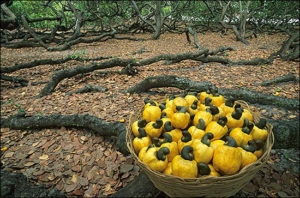
The beauty of this tree is that it produces 60,000 pieces of cashew fruit each year. As for some people it may come as a surprise that a cashew nut is not the fruit but a single nut is attached only to the bottom of the fruit!
Maior cajueiro mundo

Cajueiro mundo

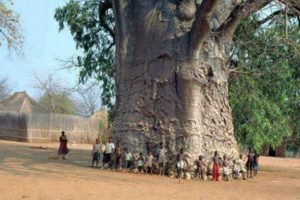
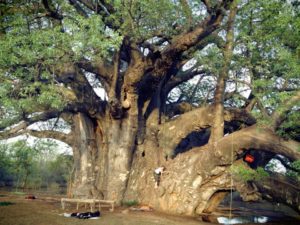
Baobab tree

Sagole Baobab S. Africa

Frankincense Tree
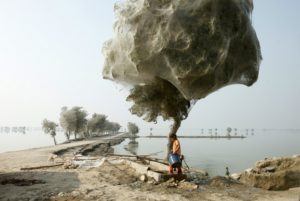
Spider Web Cacooned Trees

Dropsickle Tree
Underwater Forest
Dragon Trees

Angel Oak

Octopus Trees
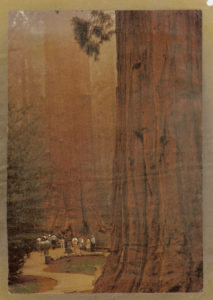
Giant Sequoia

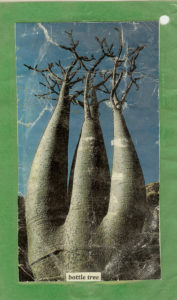
Bottle Tree

Fan Palm

Umbrella Tree

Chandelier Tree

BIg Kauri Tree

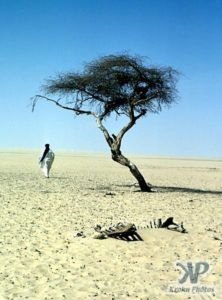
Tree- Tenere

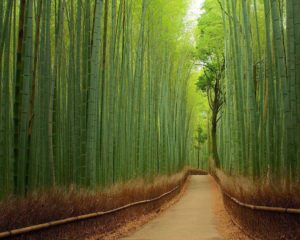
Bamboo Forest

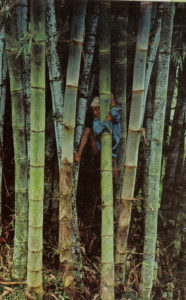
Tree Grass

Sausage Tree

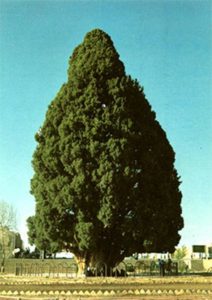
Sarv Abarqu

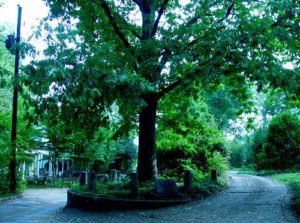
The tree that owns itself!