Composting

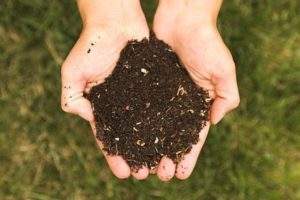
Compost is what you get when organic materials have completely broken down into a rich, dark, crumbly material – “black gold”. Finished compost is often called humus. Nature creates compost all the time without human intervention. Gardeners can speed up the composting process by creating the optimal conditions for decomposition: Air + Water + Carbon + Nitrogen = Compost The trick to accelerating decomposition is particle size. The ideal carbon-to-nitrogen (C:N) ratio for a compost pile is 30:1. Grass clippings have a C:N of about 16:1. Sawdust is about 400:1. Check OrganicGardening.com for the C:N ratios of common compost ingredients; then get out a calculator when building your pile.

Benefits of composting: Compost holds twice its weight in moisture that it slowly disperses to plants’ roots. Compost captures pollutants in the soil that could wash into your drinking water. The microbes in compost attack disease organisms in the soil before they get to your plants. Composting means successful gardening and a solution to waste-disposal problems. Improves the soil structure Increases the activity of soil microbes Enhances the nutrients of the soil Improve the chemistry of soil. Insulates changes in soil temperature Reduces the amount of solid waste you generate. Saves space in municipal landfills. Saves you tax money. Creates a useful natural fertilizer, more environmentally friendly than synthetic fertilizers.

The success of your garden depends on the soil, and the health of your soil depends on the compost you give it. Making compost isn’t difficult. The composition of the compost pile must be balanced for efficient decomposition. There must be plenty of air, adequate water (moist, but not wet), and the proper mix of carbon to nitrogen (about 30:1). Small particle size decomposes faster – Shred and chop – “the smaller, the better”. Pile should stay moist, but not wet. You may need to water occasionally.

If a very wet climate, you may need to cover the pile to keep it from becoming soggy. You can open up air holes by getting in there with a pitchfork or shift the entire pile over a few feet, bit by bit, taking care to move the outside to the inside of the new pile. Nothing is worse than cold, slimy compost! Three factors are usually to blame: poor aeration, too much moisture, or not enough nitrogen-rich material in the pile. The Process: Aerobic microorganisms make compost cook and cannot live in an oxygen-poor environment. Anaerobic bacteria don’t require air to thrive. These microbes eventually make compost, but work much more slowly. An anaerobic compost pile makes a home for sow bugs, pill bugs, and earwigs—all undesirables. Such a pile won’t get hot enough to kill any weed seeds it contains, either. Add manure or blood meal to get the pile going. Don’t let it dry out.

Microorganisms use up a lot of water. An adequate amount of soil provides enough microorganisms to start the process Microorganisms from the soil eat the organic (carbon containing) wastes producing a fiber-rich, carbon-containing humus with inorganic nutrients like nitrogen, phosphorus and potassium. They break the material down through aerobic respiration. Through the respiration process, the microorganisms give off carbon dioxide and heat — temperatures within compost piles can rise as high as 100 to 150 degrees Fahrenheit (38 to 66 C). If the compost pile or bin is actively managed by turning and watering regularly, the process of decomposing into finished compost can happen in as little as two to three weeks (otherwise, it may take months).

Compost Pile Foodweb: Bacteria and fungi break down the organic matter . Single-celled organisms (protozoa), small worms (nematodes), and mites feed on the bacteria and fungi. Larger predatory nematodes, predatory mites and other invertebrates (sow bugs, millipedes, beetles) feed on the protozoa, mites and nematodes. Water. Compost microbes need the right amount of water. Too much reduces airflow, causes temperatures to fall, make the pile smell; too little slows decomposition and prevents the pile from heating. Compost should feel like a wrung-out sponge. Carbon ingredients. The microbes that break down organic matter use carbon as an energy source. Ingredients with a high percentage of carbon are usually dry and brown or yellow. The most common are leaves, straw, and corn stalks. Nitrogen ingredients.

Microbes need nitrogen for the proteins that build their bodies. Ingredients high in nitrogen are generally green, moist plant matter, such as leaves, or manure. They are called greens, but in reality they can be green, brown, and all colors in between. C/N ratio. In order for a compost pile to decompose efficiently, you need the right ratio of carbon (C) to nitrogen (N) (C/N). Piles with too much nitrogen tend to smell. The excess nitrogen converts into an ammonia gas. Carbon-rich piles break down slowly. There’s not enough nitrogen for the microbe population to expand. An ideal compost pile should have a 30:1 C/N ratio. Grass clippings alone have about a 20:1 C/N ratio. Add one part grass clippings to two parts dead leaves.

Create an active compost pile. Provide a steady supply of water and air to the pile to encourage microorganisms that drive the composting process. Make sure your location is level and in partial shade. 4’x4′ palettes make a perfect square and are excellent compost bin walls. If you want to add soil amendments (bonemeal), add them when compost is finished Additives decompose and lose their valuable nutrients.

Making Compost Without a Bin You need:

1. A site that’s 3 feet long by 3 feet wide.

2. Carbon-rich materials (leaves, straw, dead flowers, shredded newspaper)

3. Nitrogen-rich materials (grass clippings, raw plant-based kitchen waste (peelings and rinds) and animal manure. Don’t use manure from carnivores

4. A shovel or two of garden soil. Spread a layer several inches thick of straw, cornstalks, or leaves where you want to build the pile. Top it with several inches of green stuff. Add a thin layer of soil. Add a layer of brown stuff. Moisten the three layers. Continue layering green and brown with a little soil until the pile is 3 feet high. Use a ratio of three parts brown to one part green. Keep adding until it gets at least 3 feet high. Occasionally turn the pile to aerate and keep the pile moist. Shovel out the finished compost and start the next pile with the material that hadn’t decomposed.

First layer Straw (not hay). Using straw as your first layer keeps your pile off the ground and keeps out weeds and pests. You can get straw at your local garden center.

Second layer Garden plants, kitchen scraps, equine stable bedding, and manure. Periodically sprinkle in compost with good bacteria as it helps speed up the process.

Third layer Shredded leaves. Shredding is good but not entirely necessary. Keep layering in straw for airflow. Repeat and finish with manure, compost, and lock in with straw. You can use cornstalks for extra aeration. The more manure, grass, and leaves the faster the process. For a fast cooking compost pile you need: 1/3 horse manure 2/3 leaves or grass If you don’t have access to a barnyard, substitute a high N product, such as blood meal.

Ingredients for compost: Fruit and vegetable wastes – peels, skins, seeds, leaves Eggshells, shellfish shells, fish heads Coffee grounds (including paper filters), tea bags, paper napkins Corncobs (shred to make them break down quickly) Yard waste Grass clippings Leaves Pine needles Weeds (no invasive weeds) Woody materials (branches, twigs) Straw, sawdust, hay Newspaper Seaweed, kelp or marsh grass washed in fresh water to remove salt

SHOULD NOT BE COMPOSTED: Human waste or pet litter Diseased garden plants Invasive weeds Charcoal ashes are toxic to soil microorganisms. Pesticide-treated plant material harmful to the compost food web organisms, and pesticides may survive into the finished compost.

You are one of the Chosen Ones, called to give away your riches. Give a bag with a scoop of your finest compost to unenlightened gardeners you meet.

Compost tea is an effective, low-strength, natural fertilizer for seedlings and garden plants, and it can suppress fungal plant diseases. The tea-brewing process extracts, and in some cases grows and multiplies, nutrients and beneficial bacteria and fungi from compost and suspends them in water in a form that makes them quickly available to plants.

Making compost tea:

1. Place compost and water (10 pounds mature compost for 10 gallons of water) in a 40-gallon barrel. Protect the barrel from cold and heat.

2. Stir with a stick daily for a minimum of 5 days.

3. Strain the liquid from the compost after 5 days, using cheesecloth or burlap. There should be no bubbling or off odors. Use the compost tea immediately, without further dilution. When you brew compost tea use mature, sweet, earthy-smelling compost. Keep in mind that E. coli can be present in the raw ingredients of a compost pile. Maintain a hot pile or allow the compost to mature fully. Don’t apply compost tea to any vegetable within 3 weeks of its planned harvest date.

The Rain Barrel

The Rain Barrel

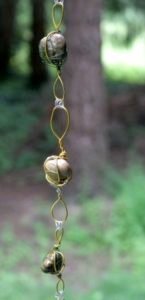
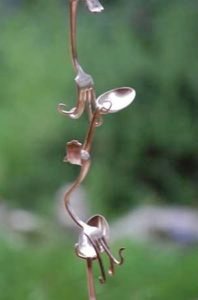
                                                        Rain Chains and Rain Barrels


     Often water that comes to city dwellers in the form of rain is hurried into storm sewer systems and away by surfaces that don’t absorb water. Rainwater that falls on porous ground is filtered through layers of soil and rock and into ground water aquifers or into streams, rivers, and lakes unassisted. A large percentage of household water is sprinkled on lawns and gardens and is a crazy inefficient way to water plants. Using a rain barrel to catch the water flowing from eave troughs is one of the simplest cheapest ways to conserve water and divert it from the storm sewer system. If there is a ban  on watering during times of dry weather, it may be the only way to avoid having to watch your garden wilt.  
     Rainwater is oxygenated,  not chlorinated, and warmer than tap water, qualities that make it a better source for plants and safer for the environment. Chlorine is bad for soil bacteria.  You will notice the difference in your plants too when you don’t feed them chlorinated water! To be safe for kids rain barrels need to have a secure lid. Plastic barrels are used for storing nice and not-so-nice things so know where your barrel comes from and make sure it’s clean.
    Setting up a rain barrel is simple. The downspout of the eaves trough runs from the roof right down to the ground. Shorten it enough to get the rain barrel underneath the spout. Most downspouts are a series of aluminum tubes with tapered ends tucked into one another and attached to the building. Plastic tubing or flexible piping can be attached to the spout to direct the water right into the barrel or even more than one barrel at the time. You can add a screen filter and an overflow hose to move extra water to the garden when it rains a lot.  Some rain barrels you purchase may also have a tap at the bottom where a hose can be attached. If you are looking to buy a rain barrel check with environmental groups in your community or soil and water conservation. The usual costs is $100+.
 This is a good easy inexpensive way to enhance the appearance of a plastic rain barrel  . . .or whatever. Surround it using slats from a pallet! Drill a few holes top and bottom and then let the kids string them or wire them together.                                            

Calendula Officianalis

Calendula officinalis; Garden marigold; Pot marigold

     This beautiful plant flowered through the winter this year – even stood up through a snow! Calendula is usually an annual plant that thrives in most soils.  It belongs to the same family as daisies, chrysanthemums, and ragweed and is native to the northern Mediterranean countries.
 
 
 Its name refers to its tendency to bloom with the calendar (Once a month or with every new moon). The term “marigold” refers to the Virgin Mary, and the flowers are used to honor her during Catholic events.  The Egyptians considered calendula flowers to have rejuvenating properties.  In the Hindu world, calendula flowers were used to adorn statues of gods in their temples, and as a colorant in food, fabrics, and cosmetics.
      It is an annual commonly grown in gardens for its bright display of yellow or orange flowers.  Calendula can be directly seeded in the spring or even summer or they can be started indoors as transplants. They will re-seed themselves but don’t become a nuisance.  Rich soil and full sun will keep them blooming. Calendula deters many insect pests, making it a good border flower for the garden. It doesn’t have any known issues with pests or diseases!
      Cutting blooms will encourage budding. Snip early and often! Harvest blossoms when they are half open, in late morning, after dew has dried. Check often because they come and go quickly. Use flowers fresh or dry.  Cut flower heads and spread on a screen, in a shady, dry spot. Turn a few times until they are papery dry. Store in jars.  Allow some blossoms to stay on the plants and mature if you want to collect seed.
      The whole flower or just petals are used, fresh or dried, for herbal medicine. Salve, lotion, tincture, soaps and oil are all popular uses for calendula. It’s great for the skin, so you’ll find it in this application most frequently. It is used as a dye for food and fabric and its petals are edible and look great sprinkled atop a fresh salad. It soothes gastrointestinal problems and can be used fresh or dried in a tea for this.
      Calendula in suspension or in tincture is used topically for acne, reducing inflammation, controlling bleeding, and soothing irritated tissue. Calendula has high amounts of flavonoids, plant-based antioxidants that protect cells from being damaged by unstable molecules called free radicals. Calendula appears to fight inflammation, viruses, and bacteria. Calendula has been used to treat stomach upset and ulcers and relieve menstrual cramps. Calendula contains chemicals, which have been shown to speed up wound-healing by increasing blood flow to the affected area and promoting the production of collagen proteins.
      The dried petals of the calendula plant are used in tinctures, ointments and washes to treat burns, bruises, and cuts, as well as the minor infections they cause. Calendula helps prevent dermatitis or skin inflammation in breast cancer patients during radiation therapy.
      The aqueous-ethanol extract of Calendula officinalis flowers was shown to have spasmolytic and spasmogenic effects.  An aqueous extract of Calendula officinalis obtained by a novel extraction method has demonstrated anti-tumor activity and lymphocyte activation in vitro, as well as anti-tumor activity in mice. Calendula is one of several herbs used traditionally to treat conjunctivitis and other eye inflammations. It helps reduce the swelling and redness of eye infections.
      As an anti-fungal agent, it can be used to treat athlete’s foot, ringworm, and candida. The tincture applied to cold sores encourages healing. Calendula possesses anti-septic and anti-inflammatory effects due to its flavonoid content. In mouthwashes and gargles, calendula soothes sore throat or mouth tissue; in solutions, it has been uses to treat hemorrhoids. Compresses of calendula blossoms are helpful for varicose veins.
      Calendula’s high-molecular weight polysaccharides stimulate immune system activity. It was determined to have some potential therapeutic activity against the HIV: extracts significantly inhibited HIV-1 in vitro, and reduced HIV-1 reverse transcriptase in a dose- and time-dependent manner.
      Calendula is being investigated for it’s anti-cancer properties. There has been evidence of success in treating certain cancers (Heren’s carcinoma) according to the Fedkovich Chernivtsi State University in the Ukraine. In one small study of about 250 women undergoing radiation therapy after surgery for breast cancer, a commercial calendula ointment reduced the amount of skin irritation better than another commercial preparation. Women who used the calendula ointment reported less pain from the radiation.

     Properties: Anti-bacterial, anti-fungal, anti-infective, anti-inflammatory, anti-oxidant, anti-phlogistic, anti-septic, anti-spasmodic, anti-viral, aperient, astringent, cholagogue, detoxifier, diaphoretic, emmenagogue, estrogenic, haemostatic, immunostimulant, vulnerary.

      Indicated for: Acne, athlete’s foot, blepharitis, candida, cold sores, conjunctivitis, coughs, cramps, eczema, fungal infections, gastritis, good digestion, haemorrhoids, HIV, menopausal symptoms, menstrual cramps, minor burns, phthiriasis (dry), relieving colitis, ringworm, sore throats, skin ulcerations, snake bites, sprains, sunburns, varicose veins, viral infections, warts, wounds.

People who are allergic to plants in the daisy or aster family, including chrysanthemums and ragweed, may also have an allergic reaction(usually a skin rash) to calendula.

Infusion: 1 tsp (5 – 10 g) dried florets in 8 oz (250 mL) water; steep 10 – 15 minutes; drink 2 – 3 cups per day

Fluid extract (1:1 in 40% alcohol): 0.5 – 1.0 mL 3 times per day

Tincture (1:5 in 90% alcohol): 5 – 10 drops (1 – 2 mL) 3 times per day

Ointment: 2 – 5% calendula; apply 3 – 4 times per day as needed

Perenial Plants for the Garden

      Raspberries, blueberries and other berry bushes, asparagus, rhubarb, kale (usually grown as an annual), garlic (usually grown as an annual), globe artichokes, lovage, and watercress.  Perennial Vegetables by Eric Toensmeier is the bible on perennials. Here are a few more perennials that are tasty, easy to cultivate and cook, and have a broad climate range.    

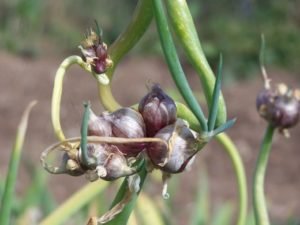
Bunching Egyptian Onions continually produce new onions. Small bulbils form at the top of its stalk in late summer. Use these tiny onions as they are, or plant them to grow more Egyptian onions. Zones 4-8.forever onions

Daylilies thrive on neglect.  They are grown as a vegetable in Asia, and harvested for their daily profusion of flower buds, which are used like green beans. The flowers themselves are served in salads or battered and fried. Zones 2-10.

Good King Henry is a traditional European vegetable known for it’s tasty shoots, leaves and flower buds. This spinach relative grows in full sun or partial shade and moist, well-drained soil. Harvest the tender shoots in spring. Hardy to Zone 3.


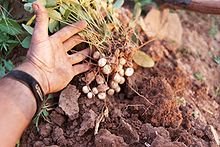
Groundnut is a nitrogen-fixing, 6-foot vine that bears high-protein tubers that taste like nutty-flavored potatoes. Grow groundnut vines near a shrub (as support) in a moist site that receives full sun or partial shade. Harvest in fall. Hardy to Zone 3.


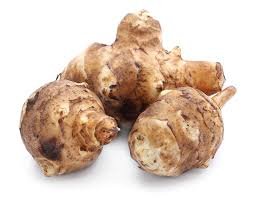
 Jerusalem Artichokes or sunchokes are grown for their underground tubers. You can eat them raw or cooked. Their yellow flowers attract beneficial insects. They spread by underground rhizomes and may become difficult to eradicate. Some gardeners consider them invasive. Zones 4-9.

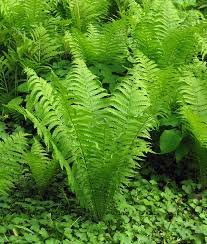
Ostrich Fern is easy to grow, and deer tend to leave it alone. It grows best in rich soil with adequate moisture; ostrich fern grows and spreads by underground runners. Not all fiddlehead ferns are edible. Look for a U-shaped groove on the inside of the stem and a thin, brown, papery coating to identify the edible sort. They love cool, shady spots and are very hardy from Zones 2-8.

Ramps or Wild Leeks are an onion relative that grows wild east of the Mississippi. They are a delicacy that many people forage from the wild.  Leaves and bulbs are both edible. Grow in a shady border in moist loam, or naturalize beneath trees. Hardy to Zone 4.

Scarlet Runner Beans are usually grown as ornamentals but they are edible and nutritious as green beans or dried beans. The flowers, young leaves and tubers are edible when cooked.
 
 Sea Kale is sometimes grown as an ornamental for its gray-blue leaves and white flowers on 3-foot-tall plants. The shoots, young leaves and flowers are edible. Hardy to Zone 4.
 
Sorrel is a perennial herb with tart, lemon-flavored leaves used for soups, stews, salads, and sauces. The two sorrels grown are common sorrel and French sorrel,. They are relatives of rhubarb, and the leaves contain small amounts of oxalic acid. Sorrel tastes best in early spring; it becomes bitter as weather warms. It’s a delicacy hard to find because it wilts after harvest. French sorrel is hardy to Zone 6.


Smudging with Herbs

Smudging and Blessing Herbs

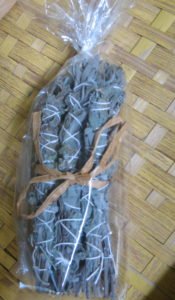
        Sage is for healing. The smoke is used to bless, cleanse and heal the person or object being smudged. Sage is used to ‘wash off’ the outside world when one enters ceremony or other sacred space. Objects are likewise washed off with sage medicine smoke to rid them of unwanted influences. The plants that are called sage can come from very different families of plants. True sages are in the genus of Salvia; this includes Salvia Officinalis (garden sage) and Salvia Apiana (White Sage), also called California White Sage and Sacred Sage. Many of the herbs called sage come from a completely different family of plants, the Asteracea family. This family brings us the genus of Artemisia from which come New Mexico Sage (Artemisia tridentada), and the sage from the Dakotas (Artemisia ludoviciana), also called Grey sage, Prairie sage, Dakota sage, Lakota Sage and mistakenly sometimes called White sage. All of these sages (Salvia and Artemisia) are used for healing and cleansing. More can be learned from the book Sacred Sage, How It Heals.

        Cedar is a medicine of protection. Cedar trees are very old, wise and powerful spirits. Cedar is often used to cleanse a home or apartment when first moving in, inviting unwanted spirits to leave and protecting a person, place or object from unwanted influences. Cedar is used as a name for a number of different genuses of trees and shrubs. The primary ones are Cedrus, Thuja, Libdocedrus and Juniperus.
Junipers are not true Cedars but are used as such by many people.

        Sweetgrass is also called Seneca grass, holy grass and vanilla grass. This special herb’s sweet vanilla-like scent is the breath of the Earth mother, bringing the blessing of Mother Earth’s love. Sweetgrass is burned to remind us of the essence of the feminine and that the earth provides us with everything we need. Sweetgrass can be unbraided or trimmed with a scissors into small pieces and sprinkled on hot Charcoal Tablets. Allow the sacred smoke that follows to wash over the subject of the blessing.

        Lavender is often used for invitation of the spirits. The name may be derived from the Latin lavare (to wash) or livendula (meaning bluish). In ancient times lavender was an important herb used in mummification. There is a legend that the clothing of baby Jesus was laid upon a lavender bush and acquired the fragrance. Some Christians still regard the scent of lavender as a safeguard against evil. Burning

        CopalCopal is tree sap from Mexico similar to Frankincense. When burned it has a crisp, clean, sharp scent that is almost citrus-like. Copal is sacred to the native peoples of Mexico, as it is a gift ‘pleasing to the gods.’ Because copal is the blood of trees, it is offered to honor the enormous gift given to us by all of the tree people of our planet.

        Frankincense and Myrrh were considered more valuable than gold. Used to embalm the bodies of the Egyptian Pharaohs, this tree resin is considered to cleanse and protect the soul. Frankincense is still used in religious rituals. It is said to ease depression and promote clairvoyance.
Myrrh tree resin is said to help one maintain a state of enlightenment, connect one to the spirit of youth, and clear the path of debris that stands in the way of one’s truth.

        Smudging Feather – It is traditional to use a bird’s feather to brush the smoke over the person or object being blessed. It is important to use the underside of the feather to wash the smoke over the object of blessing. It is the underside of the bird and its wings that face the Mother Earth as it flies and it is this surface of the feather that offers the blessing medicine of the bird.

Other Important Herbs

Mullein has been used in smoking blends for the sacred pipe, also used as a tea for lung inflammation. Mullein is also called Yerba del lobo, velvet plant and miner’s candlestick.

Red Willow Bark is another traditional ingredient for smoking in the pipe. It is not really a willow, but a dogwood. Sioux people call this bark Chanshasha.

Osha Root is one of the roots called Bear Root. This plant grows mainly in the Rocky mountains and is used to invite the bear spirit medicine. Osha is an important medicine for people from northern Mexico to Canada, often used for infections.

Uva Ursi, called Kinnikinnik by many people,  is another plant used in pipe smoking mixtures. Uva ursi is commonly used as tea for bladder infections.