by Susan Dean | Feb 6, 2018 | Animals, The Human Body

The Digestive System: THE DISSAPPEARING APPLE
The food we eat travels through the alimentary canal, a path that is about 30 feet long from mouth to rectum and includes 2 large glands the liver and the pancreas.
We are food processors! We break down our food by chopping, mashing and mixing it to a nice soup that our body can absorb. Food has minerals like calcium for healthy teeth and bones. The minerals that we need come from non-livings things. Iron is a mineral required by your blood to carry the oxygen you breathe to feed every living cell in your body. Cells must have oxygen to stay alive. The iron that we get from our food originally comes from rock. The core of the earth is iron and many things are made from iron like gates and tools. Zinc and magnesium are other minerals we need.
Plants and animals that we eat contain carbohydrates, proteins, fats, minerals and vitamins like vitamin A to strengthen our eyes, vitamin C to help us heal, and B vitamins to feed our brains! Growing and doing things requires energy and energy comes from fuel! Food, water and oxygen are our fuel. The sun is the fuel for plants to grow and stay alive. In a lifetime we may eat the weight of 6 elephants. Food keeps us strong, builds cells, and allows us to grow and work and play. It helps fix our body if we are hurt or sick and it controls the systems of our body.
What happens to an apple when we eat it? Smelling and seeing food starts the process of producing saliva. The mouth releases 3 cups of saliva a day. In the mouth our teeth and tongue work together to chew food and mix it with saliva. The epiglottis trapdoor to our lungs closes and the tongue pushes the food down into the esophagus (a narrow tube 10 inches long.) It goes into the stomach where it is mashed and mixed with gastric juices and turned into a thick soup. It is in the stomach 2 to 4 hours churning. The stomach has 3 layers of muscles to help churn our food. Mucus protects the stomach from digestive acids. The food is moved into the small intestines (about 22 feet long and the longest part of the canal) where nutrition from the soup is taken into the blood stream by the tiniest blood vessels called capillaries. Then it is taken to a major checkpoint the liver to filter out any harmful substances or wastes. The nutrients are then sent to all parts of our body.
The pancreas makes juices that help the body digest fats and proteins. A juice from the liver called bile helps to absorb fats into the blood stream. The gall bladder is the storage place for the bile. Food not used goes on to the large intestines (about 5 feet long) where the rest of the liquid is absorbed. The large intestine has a tiny tube with a closed end called the appendix that doesn’t do anything. Wastes from our food travels through the colon where the rest of the water is absorbed. The solid waste accumulates in the rectum and is eliminated through the round sphincter muscle called the anus (a circular muscle is a sphincter). A meal takes from 15 hours to 2 days to go through the alimentary canal.
The body can only use one kind of sugar for energy and that is glucose. Plants make there own glucose. If there are bacteria in the food or the stomach is irritated by a germ, the stomach objects and pushes the food out and you stomach ache and you may vomit up the food.
The pancreas produces digestive juices for the small intestines and is like a giant salivary gland. It produces the hormone insulin (glucose) a type of sugar that is fuel for cells, esp. those in the brain. The liver is the largest internal organ and it makes poisons in our food less harmful and produces the green fluid called bile stored in the gall bladder. Kidneys filter and clean the fluid from the blood and sends liquid waste to our bladder and it is eliminated from the body in urination.
To keep the body in good health we must breathe clean air, keep our bodies clean, get enough rest, exercise, and eat foods that have the nutrients our bodies need. The protein we need comes from meat, fish, eggs, beans, and whole grains. Our body rearranges the protein into amino acids that our bodies use for building new cells and tissues. The carbohydrates that we need come from vegetables, fruit, bread, and cereal and the body makes glucose for energy that is stored in muscles and the liver. The fats we eat come from milk, eggs, meat, and oils. They cushion around organs and store energy in the liver and under the skin.
I use the digestive system apron with students and may have them eat an apple or pretend to eat an apple. The apron is available through one of the suppliers listed on the resource page. I may discuss animals that have 2 stomachs or a crop to store food. We may discuss herbivores, carnivores, and omnivores and those that have beaks and the differences in teeth depending on their diet. This is a good time to follow up on nutrition and the food pyramid and for very young children I have samples of food for them to identify and learn how it is good for the body.
The importance of teeth and chewing your food.
Chewing is a very important part of healthy digestion. Chew your food well. What you get in return is better health. Chew your food completely to be swallowed with ease. Digestion begins with chewing your food. Chewing breaks down food molecules to smaller particles. Increases the surface area, reduces esophageal stress and exposes food to saliva for a longer time. Saliva helps lubricate the food making it easier for foods to pass through the esophagus. The enzymes in saliva contribute to the chemical process of digestion. Carbohydrate digestion begins with saliva. The first stage of fat digestion also occurs in the mouth. Incomplete digestion can lead to bacterial growth. When food is not well chewed and food fragments are too big to be broken down, incomplete digestion occurs. Nutrients do not get extracted from the food and it becomes fodder for bacteria in the colon, which can lead to bacterial overgrowth, flatulence, and symptoms of indigestion. Chewing relaxes the lower stomach muscle. Chewing is directly connected with the movement of food through your digestive tract, and with the movement of food from your stomach to your small intestine. At the lower end of your stomach, there is a muscle called the pylorus. This muscle must relax in order for food to leave your stomach and pass into your small intestine. Sufficient saliva from optimal chewing helps relax the pylorus, and helps your food move through your digestive tract in a healthy fashion. Chewing triggers the rest of the digestive process. The process of chewing activates messages to the rest of the gastrointestinal system to begin the entire digestive process. Chewing activates taste receptors in the mouth and prompts the nervous system to relay information to the gastric system to optimize the process of digestion. Stimulation of the taste receptors can signal the stomach lining to produce hydrochloric acid that helps in the breakdown of protein. Chewing also signals the pancreas to prepare to secrete enzymes and bicarbonate into the lumen of the small intestines.
by Susan Dean | Feb 6, 2018 | Animals, The Human Body

Our Amazing Body!
The CELL is the basic unit of LIFE. There are billions of cells in your body. Each cell has special work to do for your whole body. Like cells combine into tissues like muscle, nerve, bone. Tissues combine into organs like your heart and lungs. Organs combine into systems like your circulatory, digestive, or skeletal system. There are over 50 trillion cells in the body / more cells than stars in our galaxy. Many cells are so small that 100,000 can fit on a pinhead. Cells work like people in a big city: some handle food, some send messages, some keep things clean. Each cell is protected by a cell membrane that surrounds it. There are strings of genes in cells that contain information from your parents that determine much the way you are. Cells are always dieing and being replaced. Skin completely replaces itself about once a month.
Our body is 70% water and has enough carbon to make the lead for 9000 pencils.
Our greatest gifts are our brain and our hands.
We grow 25 feet of HAIR in a lifetime.
The most sensitive part of the body is the tongue. The most flexible muscle in our body is the tongue! It can also be the most dangerous! The least sensitive part of the body is the middle of the back.
Animals can run faster than we can but we have more endurance and can outrun over long distances
The skull contains the holes for receiving food, water, and oxygen.
The lungs almost fill the thorax above the diaphragm. Most of the body’s hormones are produced in the abdomen below the diaphragm.
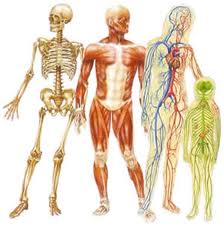
Organs of the systems of our body:
SKELETAL SYSTEM: BONES AND LIGAMENTS
NERVOUS SYSTEM: BRAIN, SPINAL CHORD, AND NERVES
DIGESTIVE SYSTEM: TEETH, TONGUE, ESOPHAGUS, STOMACH,
SMALL INTESTINES, LARGE INTESTINES, LIVER, PANCREAS.
CIRCULATORY SYSTEM: HEART, ARTERIES, CAPILLARIES, AND
VEINS
MUSCULAR SYSTEM: MUSCLES, TENDONS, AND CARTILAGE


by Susan Dean | Feb 6, 2018 | Animals, The Human Body

My very best wishes to you for a good green healthy positive and inspiring new school year! What better way to start the year than a good hand washing lesson and check!
GERMBUSTERS
Tiny living things called bacteria and viruses are found everywhere. . . in the soil, water, and air, and on almost everything.. They are so small that we cannot see them except through a microscope. Some are good and some are bad for us. They have different shapes like balls, rods, and spirals. Draw circles, spirals, and rods on a board for young students. Viruses are even smaller than bacteria. There are many ways to get germs that can make us very sick.
Ways that germs spread:
Drinking after someone
Breathing the air of someone sick.
From someone coughing germs into the air
Handling things that are dirty (discuss the many things we do with our hands)
Not washing our hands and putting them in our mouths.
Food that is contaminated or spoiled
Not washing hands after we use the bathroom
Not cleaning our skin if it is cut or bitten or scratched
Bacteria multiply fast and give off poisonous wastes. Viruses force their way into body cells and multiply until the cells burst open. WBC’s and antibodies are proteins in our blood that attack germs. Ask students if they remember ever being sick. Some germs are very dangerous such as measles and chicken pox and we go to a doctor and get a vaccination so we won’t get them. I use a little thermometer and a toy syringe for a shot. Act out the signs of having a germ: fever, chills, ache, vomit, rash on skin, cough.
Examples of germs in the body include the germs of a cold, flu, measles, mumps, and chicken pox, food poisoning, West Nile virus, and swine flu. One should rest, drink plenty of water and go to the doctor if you don’t start to get better. If they have a cut or scrape in their skin they should wash it, apply an antibacterial medicine and cover it with a bandaid depending on how bad or deep it is.
What was the first thing you did when you came into this world? BREATHE. You must have air to be alive. Can you see air? You feel air when you blow on your hand but you can’t see air. Air is INVISIBLE.
Has anybody seen a germ? Like the air, germs are INVISIBLE. Say that word. Invisible means we cannot see them. I usually start out with the little air fist and they can’t see air but can feel it and see it in action. Germs are invisible like the air and they are everywhere! Let them name some of the many things they do with their hands. They have many opportunities to gather germs! The best thing they can do to keep from getting germs that make them sick is to wash their hands.
Act out being sick: “Oh, I’ve got a headache, my throat hurts, my stomach hurts, I’ve got diarrhea, I feel like I might vomit.” I check my body temperature to make sure my body isn’t getting warmer. (Your body gets warmer and you get chills when you have a fever.) If I get worse I might need to go to the doctor. He may check my blood to see if the white blood cell count is high. White blood cells multiply to fight the germs. The doctor may prescribe medicine or give you a shot if you are sick. Sometimes I let them hold a thermometer to see how the body heat will make the thermometer rise.
Have a bowl of water, soap and towel ready and give them a lesson on how to wash their hands, making sure to get the front and back of the hands and in between their fingers. Make sure they rub their hands to make bubbles. It’s the bubbles that carry away the germs when you rinse them. I show them a hand brush and talk about how germs get under your fingernails sometimes and you need a brush to clean them.
I have noticed that many young children simply dab a drop of soap on their hands wash it off right away, grab a towel, wad it up in a ball, and throw it in the trash and their hands are still wet! Dampness attracts germs so I check to see how they dried their hands.
Glitterbug Potion is a hand lotion that is fluorescent. 8 ounces is a lot of lotion. I rub it over my hands pretending that it is germs and then I go around the circle and shake hands with each of them. They look at their hands under a blue light to see the germs and then go and wash them and then look again to see if they got the germs off. The fluorescence will remain where they did not wash. They carry a small inexpensive glow bar UVA light to check their hands and if they did a poor job, I go over how to wash them and we wash them together. They have a great inexpensive hand brush and it would make a great bonus gift for good washing.
Spend at least a week with young children giving attention to hand washing. Let them draw pictures of germs and tell stories about when they were injured or sick (Give them a chance to practice talking.) Teach children to listen and share through their stories. They love to talk and tell them.
by Susan Dean | Feb 6, 2018 | Animals, The Human Body

The Tongue and Tasting
The tongue is the mot flexible muscle in our body! It is attached to the bottom of the mouth by the FRENULUM. It is also attached to the front and sides of the throat or pharynx. The upper surface of the TONGUE is covered with tiny bumps called PAPILLAE that contain tiny pores that are our TASTE BUDS.
There are 3 TYPES of PAPILLAE that help to grip food. We have about 10,000 taste buds.
1. FUNGIFORM are larger and in the front of the tongue.
2. FILIFORM are in the front of the tongue and are smaller and hairlike.
3. VALLATE are at the back of the tongue and are large and round. There are 8-12 of them.
The 4 kinds of taste buds are SWEET, SALTY, SOUR, and BITTER. Each taste bud has cells with microscopic hairs called MICROVILLI covered with taste receptors that send nerve signals to the brain for interpretation. If you have a cold the taste receptors are dulled. Taste helps us determine if the food is bad such as sour milk. Cold foods make the taste buds less receptive.
The tongue can’t take all the credit for tasting because the nose plays a part through smelling. HOLD AN ONION TO YOUR NOSE AND EAT AN APPLE TO SEE WHAT HAPPENS! The tongue pushes saliva back in the throat to be swallowed or we would be drooling everywhere. It also helps us talk! You should brush your tongue and avoid super hot foods that can burn the tongue.
The four kinds of taste buds are: BITTER, SALTY, SWEET and SOUR.
Taste bud cells last a short time and some are replaced every 24 hours. Fish have taste buds all over their bodies. Butterflies have taste buds on their feet shaped like bulbs
There are 10,000 taste buds in humans. Play with words that use the tongue to form or try a few tongue twisters with students.

MY FAVORITE TONGUE TWISTERS
by Susan Dean | Feb 6, 2018 | Animals, The Human Body
 NOSES
NOSES
Our nose is part of the respiratory system in our body. There are different kinds of respiratory systems in different kinds of life such as in a person (lungs), a fish (gills), a plant (stoma) or an amoeba (cell wall). There are many different shapes of noses located in different places on a body with different abilities to smell.
Our nose allows us to breathe air, it aids in digestion, speaking and smelling. The organs of smell are the nasal cavity, sinuses, hard palate, soft palate, epiglottis and the windpipe (trachea). Our nose is our first air filter and moistens and warms the air. The nasal cavity is a good humidifier and gets moisture from mucus, tear ducts, and sinuses. The blood in the membrane of the nasal cavity warms the air. The hairs and bony ridges trap the largest particles.
The epiglottis is protection for the respiratory system and is a trap door at the root of the tongue that closes over the trachea and keeps us from choking or breathing in food. The soft palate closes off the nasal cavity.
There are mucus glands in the wall of air passages and cilia that trap dirt and try to move it out (1 inch a minute) – as mucus making buggers. HAIRS grow in the nose and help filter dust from getting in lungs. The bronchial tree has mucus membranes that produce sticky mucus that traps smaller particles. Tiny cilia sweep the mucus to the mouth and nose to be swallowed, coughed up, or blown or sneezed out.
SMELL
Smelling is one of our five senses. How does smell affect us? A pizza smell can make your mouth water and start digestive juices, or smoke can warn us of a fire or something rotten we shouldn’t eat. Sense organs contain double-ended receptor cells. The receptor cells in the nose collect information and send electrical signals to the brain where they are converted to information and knowledge. Smell comes from the chemical particles in the air. Some animals and Insects can smell for miles. People have a very poor sense of smell.
What makes up our nose? 2 Nostrils separated by septum of cartilage, mucus glands and cilia (hairs). There is a postage stamp size area of receptor cells in roof of the nose that sends signals from olfactory rods in the mucus to olfactory BULB and to brain. For us to smell something, a signal from a receptor cells in the nose travels to the olfactory rods of mucus to the olfactory bulb (above the roof of the nasal cavity) and is sent to the brain – the cerebral cortex for perception.
Odors stimulate the brain to respond automatically affecting other systems. Food odor stimulates appetite / saliva. Disagreeable odors may produce gagging and vomiting. Our sense of smell helps taste buds to warn you of spoiled food. If you want to identify how something smells you give it a little sniff.
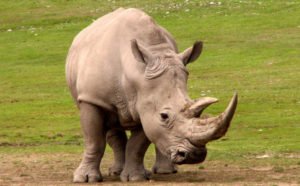
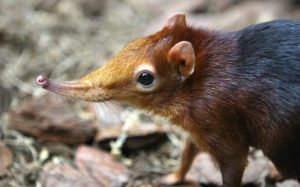
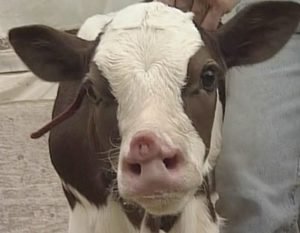
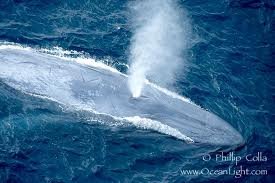
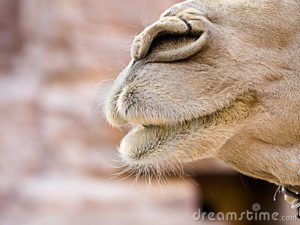
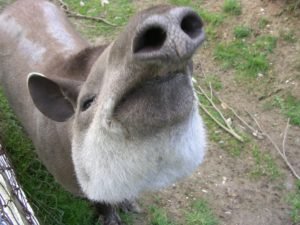
Do you have a NOSE? How many? We have one nose and 2 NOSTRILS or NARES. Do you have a snout? What has a snout, a muzzle, a trunk, gills, or blowhole? Let children answer and show them some pictures or toy examples of animals with different noses. Remind them that plants breathe air too! You can show them the picture of the stoma on the underside of a leaf.
What do noses do? Where are noses located?
1. They are a PASSAGE for air. We breathe 15 times a minute. Our body loses heat and water with each breath. We see the moisture in our breath when the air outside is cold.
2. MOISTENS the air
3. FILTERS the air
4. SMELLS the air. Smells come from chemical particles in the air. Some animals and insects can smell for miles. Ex. Dogs
The Nasal Cavity amplifies sound along with the throat, mouth, and sinuses. Noses of some animals push, pull, lift, reach and root for food.
ANOSMIA is odor blindness.
Objectives: Children will know that animals have different kinds of noses for breathing and some of them use them for other things too.
Children will know that plants also breath air through stoma in the leaves
Children will know some of the ways our nose helps us.
Children know that a signal is sent from the nose to the brain for identification.
Model of the nose
Materials: Models of animals with different noses.
ex. Bird, elephant, anteater, pig, fish, whale, camel, seal.
Picture of stoma in leaf
Chart showing nose and respiratory system
Make some smelling bottles with cotton balls and oils or powders or plants like lemon, mint, chocolat, vanilla, lavender etc.
(Remember scratch and sniff books!)
NOBODY CHOSE HIS NOSE
EACH IS DIFFERENT AS YOU MIGHT SUPPOSE
BUT WHATEVER THE CASE, IT’S THERE ON THE FACE,
AND NOW YOU KNOW ALL THE NOSE KNOWS!
Take a look at the noses of a few other animals!





 NOSES
NOSES