by Susan Dean | Feb 6, 2018 | Animals, The Human Body

Ears to Hear:
How many ears do you have? Our two ears collect sound vibrations and tell us more accurately where a sound is coming from. Ears come in all sizes and shapes. What are some other animals that have ears? Discuss the ears of rabbits, elephants, rhinoceros, dogs, bats and whales.
What is a vibration? Quivering, shaking to and fro or side to side, back and forth. Sound waves are vibrations that are invisible and travel through the air.
Ears collect sound vibrations and send messages to our brain that tells us what we hear. They help us keep our balance. We make sounds to communicate warnings, our needs, information, or to sing.
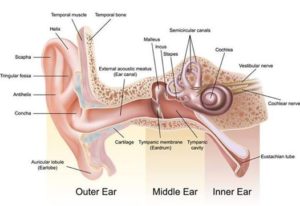
Point out and discuss the parts of the ear:
OUTER EAR = The part you see that collects sound waves and sends them through the Ear canal. This is where wax is made that collects dirt and helps fight off infection. The EAR DRUM receives the sound waves, is also part of the outer ear, and is a piece of skin (like the head of a drum) that sends vibrations to the bones of the inner ear.
MIDDLE EAR = Turns sound waves to vibrations. It consists of the OSSICLES, three tiny bones – HAMMER, ANVIL, and STIRRUP (the smallest bone in our body) that lead to the oval window and send the sound vibrations to the inner ear. The middle ear is connected to the Eustachian tube that regulated the air pressure in the ear. When there is a change of pressure going up a mountain or flying in a plane, this is what causes your ears to make a little pop.
INNER EAR = Here the vibrations go into the COCHLEA that looks like a snail shell. It is filled with fluid and tiny hairs that send electrical signals through the auditory nerve to the brain and the brain translates what we hear. 3 SEMICIRCULAR CANALS are next to the cochlea and keep us balanced. They report to the brain the movements of the head. The skull acts as a resonance chamber like the body on a guitar and amplifies the sound.
How does hearing help us? We can communicate easier if we can hear sounds, gain information about our world, hear warnings or sirens, listen to music, or someone reading a book. How can we protect our ears from injury or infection? Don’t put anything in your ear smaller than your elbow! Use earplugs if noise is too loud. Keep ears dry to keep from infections. A few drops of alcohol will get water out and hydrogen peroxide in a little water will dissolve and rinse out ear wax and dirt)
With swimmers ear the bump or tragus is sore. If there is an inner ear infection you will run a fever and it hurts when you swallow. THREE CHEERS FOR THE EARS!
Activities: Teach them the sign language for I love you and let them know that people who cannot hear use sign language. Examine models of animals with different ears. Experiment making sounds with their body clapping, snapping, and tapping. Make the tuning fork vibrate and listen to the sound. Let children turn around a few times and stop to notice that they get a little dizzy until the fluid in their ears stops moving around. Examine the model of the ear. Listen to recording of sounds animals make. Play some listening games “What is it? Match the Sound, High-Low, or Did You Hear That?”I have a sound bingo game we play and I love to use the melody bells and let them tell me which one is higher or lower or let them put the bells in ascending order from low to high.
Materials: Models of animals showing ears of different sizes and shapes, tuning forks, glass of water to show how vibration travels, Model of the ear, Chart showing the parts of the ear, Chart showing sound waves, Ear puzzle, Drum and peas(or rice) to show vibration, Glass of water to show how water keeps moving when the glass is still .(this is why we get dizzy on rides at the fair or when we stop spinning), Earplugs, melody bells, sound bingo game.
by Susan Dean | Feb 6, 2018 | Animals, The Human Body

“The human brain has more switches than all the computers on Earth. Researchers at Stanford developed a new imaging method that enables visualization in unprecedented detail of the myriad connections between nerve cells in the brain. “They found that the brain’s complexity is beyond anything they’d imagined, almost to the point of being beyond belief,” says Stephen Smith, a professor of molecular and cellular physiology and senior author of the paper describing the study. One synapse, by itself, is more like a microprocessor–with both memory-storage and information-processing elements–than a mere on/off switch. In fact, one synapse may contain on the order of 1,000 molecular-scale switches. A single human brain has more switches than all the computers and routers and Internet connections on Earth.
A typical, healthy brain houses some 200 billion nerve cells, which are connected to one another via hundreds of trillions of synapses. Each synapse functions like a microprocessor, and tens of thousands of them can connect a single neuron to other nerve cells. In the cerebral cortex alone, there are roughly 125 trillion synapses, which is about how many stars fill 1,500 Milky Way galaxies. These synapses are so tiny (less than a thousandth of a millimeter in diameter) that humans haven’t been able to see with great clarity what exactly they do and how, beyond knowing that their numbers vary over time. That is until now.
Researchers at the Stanford University School of Medicine have spent the past few years engineering a new imaging model, which they call array tomography, in conjunction with novel computational software, to stitch together image slices into a three-dimensional image that can be rotated, penetrated and navigated.”
Content: The Nervous System
Do we have electricity inside of us? Yes, we do. Ripples of electricity take messages to our brain. Electricity travels to the brain along cells called neurons and the brain gets the message and tells us what to do.
Where is our brain? Our brain is inside our head and is protected by the bones of our skull. The long chord that comes from our brain is our spinal chord and it is inside the vertebrae of our back. These bones protect the spinal chord. Nerve cells carry electrical signals to and from the spinal chord. All five of our senses are connected to our brain. The brain tells us to move or if we are touching something. The fastest brain message travels 360 mph!
The brain, spinal chord and nerves (31 pair of spinal nerves) make up our nervous system and control the actions and sensations of the whole body. The largest cells in our body are nerve cells. In the brain they are very small, but they can be as long as 4 feet in our legs. Point out the parts of the nervous system on the chart. The spinal nerves have 2 jobs; taking messages to the brain and reflexes.
Draw a picture of a neuron. There are 3 kinds of neurons: motor, sensory, and connector. We have 100 billion neurons in our body. The brain controls the whole body and tries to keep it stable (homeostasis).
What gives the brain energy? OXYGEN from the air we breathe gives the brain energy. If the brain goes for 5 minutes without oxygen then it begins to die. If we learn something new, the brain grows and makes new connections!
When we are asleep the brain keeps our heart beating and our lungs breathing. We have a built in sleep-wake clock. Lack of sleep can hurt us because this is when the brain stores up chemicals it will need for the next day. In our lifetime we will sleep almost 30 years! Our brain uses a lot of energy (20%) and consumes a lot of oxygen (1/4th of the body’s oxygen)
People who study the brain are called Neurologists. Neurologists believe that the brain is surrounded by liquid crystals. Show the liquid crystals and how they respond to the heat of your hand.
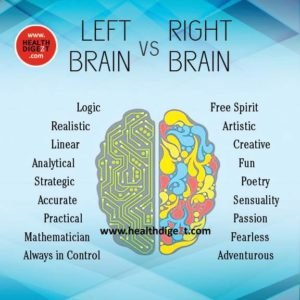
Not only does the brain control the whole body, but also your emotions, pain, thoughts, and memory. The right side of the brain controls the left side of the body and the left side of the brain controls the right side of the body.
Examine the model of the brain and point out the two cerebral hemispheres and the brain stem that attaches to the spinal chord. The brain works using chemicals and electricity and is sensitive to the food we eat. Some things can hurt our brain like poisons from certain plants or animal bites, pollution in the air and exposure to certain chemicals and metals can cause nutritional imbalances, allergies, brain fog, and chronic fatigue.
We are what we eat! It starts with the soil that determines the nutrients in the plants we eat. Without copper, plant leaves turn yellow. If we get too little copper, we can develop brain fog, thyroid and hormone problems. If we don’t get enough calcium and magnesium, nerves fire improperly, awareness is lessened, and we experience mental fatigue and numbness. It is important where our food comes from, how it is grown, and how clean the environment is.
Use your noodle and make new connections! What animal do you think has the biggest brain? The sperm whale has the biggest brain. (201 lbs.) Our brain weighs only about 3 lbs. A worm has a brain and spinal chord and even a slug is able to learn things!
Activities: Children can make the connection with their finger and light up the energy ball. Examine the chart of the nervous system and realize that nerves reach to all parts of the body and are connected to the brain by the spinal chord. Examine the model of the brain and see how it fits into the skull. Observe the change in the liquid crystals from the heat of their hand. Give them some brain teasers.
Materials: Electric ping pong ball, Skull model, Chart of the nervous system, model of the brain, drawing board and markers, liquid crystals


by Susan Dean | Feb 6, 2018 | Animals, The Human Body

1. MUSCLES MOVE! Muscle work requires energy! Muscles need oxygen to work. If they don’t get enough oxygen when working, they will produce muscle fatigue from lactic acid and will ache or stop working completely. The energy comes from oxygen and glucose from the carbohydrates you eat. To release energy the glucose must combine with oxygen from red blood cells. Muscles cramp when there is not enough oxygen and lactic acid builds up. Inside muscles ATP is like a battery that stores energy. Muscles work if they have a constant supply of ATP provided by respiration. Aerobic = food + oxygen = ATP. If you exercise intensely and the heart can’t keep up then the anaerobic system takes over and ATP is produced without oxygen and also produces the poison lactic acid. You need protein for healthy muscles. Aerobic exercise increases oxygen in the blood and strengthens the heart. The more you exercise, the more food and oxygen you need. The more you use muscles, the stronger they grow. Without exercise, healthy nourishment and enough oxygen muscles become smaller and weaker. To strengthen muscles you must work against a stronger resistance than used to and increase as muscle training continues. Exercise doesn’t increase the number of muscle cells but increases the size of the existing cells. To develop bigger muscles the individual muscle filaments grow in thickness 24-48 hours later.
Muscles have the only kind of tissue that can contract getting shorter and thicker. Put your thumbs in your ears and you can hear the rumbling sound of your muscles contracting! We have 656 muscles in our body. More than 200 operate when we take a step. They are controlled by the central nervous system through nerve impulses from our brain. If your nervous system weren’t so efficient, you might be socking yourself in the face instead of scratching your nose!
Muscles are voluntary as skeletal muscles or involuntary as organs. Muscles are mostly protein – meat on the bones – flesh. When we eat meat we are eating muscle tissue. There are red and white muscle cells mixed together. Red cells work longer but white cells are stronger. This is why there is white meat and red meat.
Muscles are attached to our bones by tough inelastic tendons. We can see tendons on the back of the hand. You can feel one of the biggest tendons, the achilles at the back of your foot at the heal. Bones are attached to bones by ligaments and joints are oiled by synovial fluid. Cartilage acts as a shock absorber. It is cartilage that grows into bone.
3 kinds of muscle:
1. Striped Skeletal Muscles – Are voluntary muscles. We can control these muscles at will. Most are attached to bone and move us. The muscles can’t push but work in pairs. One relaxes and the other contracts. one muscle gets long and the other contracts to shorten. Our reflex action is involuntary and comes from the spinal chord.
2. Smooth Muscles are responsible for the movements inside of us – our guts and organs. We cannot control the digestive or circulatory system, nor the diaphragm, muscle of the iris in the eye, or the muscle of each hair when we get goose bumps. When we are hungry our stomach muscle contracts and if there is air in the stomach it growls for food!
3. Cardiac Muscle makes up our heart and is our strongest involuntary muscle. We cannot control it and it never stops working till we die. The heart is a pump that feeds oxygen and nutrition to our body.
Muscles Matter – The Benefits of Muscles:
1. Move parts of our body allowing many kinds of activity such as swimming or painting
2. The heart pumps blood through our body to feed it oxygen and nutrition to keep us alive and healthy
3. Protect inside organs
4. Stabalizes the spine of the skeletal system.
5. Shape us – our face and whole body
6. Allow us to breathe, eat, digest food, talk, sing, whistle, see,
7. Allow us to manipulate things
8. Keep us warm with a shiver
The tongue is your most flexible and dangerous muscle. Our smallest muscle is in the ear. The largest in in our rear – the gluteous maximus of our derriere. Our strongest is the jaw masseter muscle we use to bite, chew and talk. The most active muscles are the eye muscles. Takes more muscles and energy to frown than to smile!
In multiple schlerosis a layer of fat is absent from muscles and they can’t transmit nerve messages properly. Muscular dystrophy is when muscles waste away. Muscles can become paralized from brain damage. A strained muscle is one that has been stretched too much.
Be a body scientist and test your reaction time catching a ruler, check your pulse, listen to your heart, listen to your muscles contract, check knee reflex, lung capacity, nail growth, and get outside and exercise!
by Susan Dean | Feb 6, 2018 | Animals, The Human Body

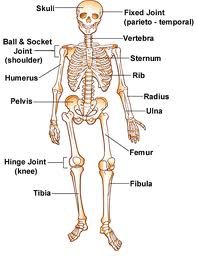
Content: Skeleton Jones and Bones Do you have bones inside of you? Show children the model of the human skeleton and tell them all the bones in the body are called the skeleton. Do animals have bones? Trees? Rocks? Show models of different animals and ask them which ones have bones. Animals that do not have bones are invertebrates. Animals with bones are vertebrates. Show children skulls of different farm animals and let them guess the animal. How do bones help us: They give us our shape, protect parts of our body, help us move, blood is made inside bones, bones hold our teeth, they give us clues to the past’The places where bones meet are called joints. Point out the following joints: Saddle joint (thumb), hinge (knee or elbow) ball and socket joints(hip and shoulder) Children examine a model of the human skeleton. Give a model of an animal to each child and let them tell if they area vertebrate or invertebrate. Let children exercise some the 3 kinds of joints. Children can choose a bone from the bone box, examine it, and help put the skeleton together.
MATERIALS: Model of the human skeleton. Examples of animals that do and do not have bones. The small plastic models of animals are great for this. Examples of bones forming joints.
ACTIVITIES: Children examine model of the human skeleton. Let children exercise some the 3 kinds of joints. Children can choose a bone from the bone box and help put the skeleton together. Teach the song about skeleton Jones.
CLASSROOM SKELETON MODEL
Classroom Skeleton Puzzle
by Susan Dean | Feb 6, 2018 | Animals, The Human Body

If we think of our body as a city then the circulatory system is the subway train that travels through it and feeds everything. The heart is the pump in humans. It beats about 72 times a minute when resting, 38 million times in one year. Newborn = 130/minute , adult = 60-100. Pumps 1.3 gallons of blood \ minute.
Why does the heart beat faster when we are working or exercising? Pulmonary circulation – to lungs
Coronary circulation – to heart
Systemic circulation – to rest of body Blood travels about 12,000 miles a day
The HEART : 2 ATRIA are the 2 top chambers that receive blood from the body and the lungs. 2 VENTRICALS – 2 bottom chambers – right pumps blood to the lungs – left pumps blood to the body and is the strongest chamber.
There are 4 valves in the heart that keep blood from flowing backwards and it is these that produce the sounds LUB-DUB. Function: to receive nutrition and deliver it to rest of body and deliver wastes to be discarded by body
Each time the heart beats it is sending another wave of blood through the body. BLOOD VESSELS ARE LIKE TUBES THAT ARE ELASTIC.
Arteries travel from the heart carrying OXYGEN from the lungs to the CAPPILLARIES ( the smallest vessels), They DELIVER THE OXYGEN AND FOOD TO THE CELLS.
Veins travel back to heart carrying wastes= CO2 to the SVC & IVC of the heart.
Coronary arteries supply the heart BLOOD = the fluid of life for growth and health. Carries nourishment from digestion, harmones from glands, Disease fighting substances, Wastes to kidneys.
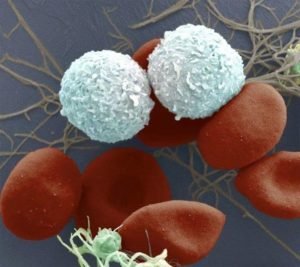
BLOOD is ALIVE the cells have a life cycle RBC WBC and PLATELETS to clot the blood RBC that carry oxygen.
WBC are germbusters: Phagocytes eat germs. Lymphocytes kill by blasting with antibodies.
PLASMA = 55% of blood, straw colored liquid, contains salts and minerals, antibodies, 90% water
SA node, sinoatrial node, AV node these are bundles of cells that can generate electrical impulses and the special fibers of the heart contract!
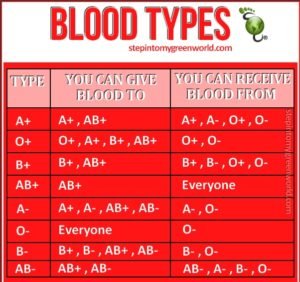
Blood TYPES DIFFERENT CHEMICALS – if given wrong type is attacked.
Human blood has the same saltiness as sea water.
If leg goes to sleep not getting blood supply and oxygen.
KIDNEYS filter all of blood
How Circulatory system flows:
1. SVC & IVC (Superior Vena Cava and Inferior Vena Cava)
2. right atrium
3. tricuspid valve
4. right ventricle
5. pulmonic valve
6. pulmonary artery
7. lungs to pick up oxygen
8. pulmonary veins (only veins to carry oxygenated blood)
9. left atrium
10. mitral valve
11. left ventricle
12. aortic valve
13. aorta to rest of body
Vessels are tubes that transport blood. A child has vessels that would stretch 60,000 miles long.
Pulse and blood pressure Systole = beats higher # 110-150 Diastole = relaxes lower # 60-80 3 kinds:
1. veins – transport wastes rich blood back to the heart at low pressure there are 3 layers. They are not as strong as arteries, They receive blood from capillaries, the blood is a darker color. There are valves throughout the veins to help with flow of blood.
2. arteries – elastic and very strong. They take oxygen rich blood to all the cells in the body
3. capillaries – are thin and fragile only 1 cell thick, nutrients and oxygen flow to the cells in the body and co2 and wastes are picked up. A single RBC lives about 3 months/ makes 130,000 round trips through the body Veins, arteries, and capillaries measure over 62,000 miles
Blood cells under electron microscope