by Susan Dean | Feb 2, 2018 | Health, Kitchen Recipes, Medicinal Recipes

Learning how to increase metabolism can result in safe and effective fat loss, an increase in muscle tone, and an elevated sense of mental wellbeing. People struggling with obesity eat a majority of their calories from processed, factory-farmed and heavily packaged foods. These foods are far more of a strain on the environment than foods grown naturally.
EAT REAL FOOD– Raid your pantry and fridge to purge it of products that you doubt were around a few generations ago. Lean meats, fresh vegetables, fruit and a small amount of seeds, nuts and natural oils should comprise 99 percent of your food intake. Read food labels. If a product has as many items as the periodic table of elements, it won’t boost your metabolism. Don’t eat something if it has more than three to five ingredients (less is best). Foods loaded with preservatives, excessive natural sugar, and cheap sugar surrogates like high-fructose corn syrup lead to weight gain because these substances are a shock to the liver and have a tendency to get stored as body fat.
EAT 3-6 TIMES PER DAY– Eating smaller, balanced meals throughout the day keeps blood sugar levels from fluctuating amd cravings for foods that tend to put on fat are greatly reduced. If you go several hours without eating (more than four or five), your body’s neurological wiring will still act as it did in prehistoric times, shutting down your metabolism to prepare for a period of starvation.
EAT 10 GRAMS OF PROTEIN BY 10 a. m.– Every meal you eat should contain three main macronutrients: carbohydrates, protein and natural fat. If you’re eating smaller balanced meals throughout the day, chances are, you’re eating breakfast. It will make sure your metabolism gets cranking early in the day. Eat 10 grams of high-quality protein to kick start your metabolism. (One egg has about 6 grams.) Even waiting to eat your first meal of the day at an 11 a.m. brunch will throw your metabolism off for the rest of the day.
EXERCISE — but don’t do too much cardio. Too much cardio will burn muscle tissue. Start a strength-training routine. Several short bursts of resistance training can be more effective at boosting metabolism than an hour-long workout. Pushups off your knees are a great way to get back in shape and boost metabolism. Perform several sets of 10 repetitions throughout the day. Drink green tea throughout the day and plenty of water. Get 7 to 8 hours of sleep a night to regulate hormone levels. Metabolism Boosting Spice & Herb Blend:
Ground cinnamon
Dried kelp
Garlic powder
Ground mustard seed
Red chili pepper
Cayenne
Ground cumin seed
Grind your own spices from the original dry source (cinnamon sticks, mustard seeds, dried cayenne pepper). Use a mortar and pestle or a coffee grinder and blend the spices together to taste. Store in a glass jar for up to a month. Add the spice blend to your meals near the end of cooking the dish. Add to soups, stir-fries, fish and veggie dishes, and bean and grain dishes.
Cinnamon for Insulin Sensitivity – Cinnamon has been linked to lowered blood sugar. Research demonstrates improvement in insulin sensitivity with cinnamon
Kelp Is on the Way – Kombu is a subtype of kelp and is valuable for its high iodine content, needed to produce two important thyroid hormones that control the metabolism. A pigment in kombu called fucoxanthin may boost production of a protein involved in fat metabolism. Look for kelp powder or good quality thick, long brown kelp pieces in health food stores, Asian markets, and online.
Garlic for a Healthy Heart – Garlic is used to regulate blood sugar levels and prevent diabetes-related conditions. It lowers blood pressure and improves cholesterol levels. According to the National Health and Medical Research Council, consuming half to one clove of garlic daily may reduce cholesterol by nearly 10%.
Mustard Seeds – Warm Up Your Metabolism. Big in spicy flavor, these small brownish-yellow seeds give your metabolism a boost, potentially helping you burn fat more quickly. Mustard seeds are low in calories and carbohydrates, but high in fiber, which gives the feeling of fullness.
Some herbal supplements may interact with drug medications. As your health strategies change and evolve, never stop taking prescription medications without first speaking to your physician and pharmacist.
by Susan Dean | Feb 2, 2018 | Health, Kitchen Recipes, Medicinal Recipes

Low Energy ?
1. Exercise A quick ten-minute walk will increase your energy and boost your mood. Unless you’re exercising at a very intense level, exercise tends to boost energy.
2. Listen to Lively Music This is one of the quickest, easiest ways to get a jolt of energy.
3. Get Enough Sleep Most adults need at least seven hours each night. Don’t kid yourself about how much sleep you need!
4. Act Energetic When people move faster, their metabolism speeds up. Acting with energy will make you feel more energetic.
5. Talk to Friends Connect with other people. Reach out if you need a boost.
6. Get Something Done Crossing a nagging chore off your to-do list provides a big rush of energy.
7. Watch Your Food Strategy It’s tempting to reach for food when you feel poorly, but those extra calories will drag you down. I might eat a cracker piled with hot pepper relish! That gives me a boost. O something else with cayenne like hot cheese pennies. Spiralina, Superfood, or a high-energy shake and my B complex sublingual vitamins also help my energy level!
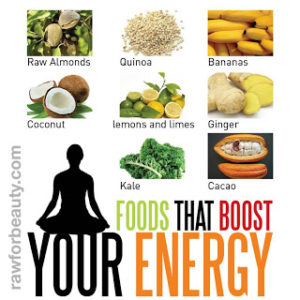
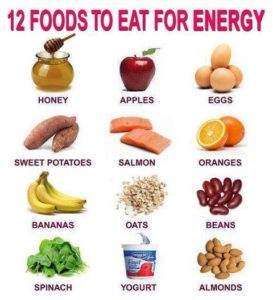
Boost energy with these foods:
Most of us just need a good night’s sleep along with a boost in our daily intake of the following fatigue fighting foods:
1. Bananas – According to Natural Health Advisory.com “The nutrients found in bananas include B vitamins, vitamin C, fiber, and both omega-3 and omega-6 fatty acids. Bananas best fight fatigue due to the amount of electrolytes they contain: potassium, magnesium, sodium, calcium and phosphorus. Your body needs the right balance of electrolytes to function properly. The body is about 70 percent water, and small fluctuations in that can be felt quickly. As water levels decline, so do the levels of electrolytes needed to keep the body functioning, such as sodium and potassium and the body becomes dehydrated. As dehydration progresses, the body has a harder time diffusing internal heat, and tension is created in muscles, joints and organs. That tension often first manifests itself as fatigue. In fact, dehydration is one of the most under-recognized leading causes of fatigue. As dehydration progresses, other symptoms develop: muscle cramps, dizziness, headaches, thirst, dry skin, confusion, decreased urination and increased heart rate. one of the primary ways to prevent fatigue in the body is to stay properly hydrated and consume an adequate amount of electrolytes, which can be achieved by eating bananas and drinking plenty of water.
2. Spinach is very nutrient-dense and is loaded with iron and B vitamins that are key ingredients for feeling more energized and, it contains a good supply of chlorophyll.
3. Wild Fish – Fish is loaded with omega-3 fatty acids, the healthy fat that helps you fight fatigue (and chronic illness). The fish highest in omega-3 content include:
Salmon
Caviar
Sardines
Herring
Tuna
Farm-raised fish contain less omega-3’s than wild fish. Farm-raised fish are often injected with hormones or dyes.
4. Beans fight fatigue. They are high in fiber content which works together to help balance blood sugar to prevent dips in energy. Beans are great for promoting digestive health, as well as preventing constipation.
5. Nuts are fiber and protein powerhouses and can keep your engine humming all afternoon. Almonds are rich in magnesium, which help turn sugar into energy. Studies show eating an ounce of nuts daily as part of a weight loss diet helped satisfy appetites without packing on pounds. Get an extra wallop of energy by adding raisins to the mix.
6. Orange – Citrus and other vitamin-C packed produce, like pineapple, boost production of norepinephrine, a stimulating chemical in the brain. Its sugar content makes fruit a natural energy source. Maintain your stamina by adding a bit of protein.
7. Green Tea is loaded with antioxidants and a terrific addition to any weight-loss program. It contains natural caffeine that fights fatigue, as it mimics the same feelings you get from coffee. Looking to quit or decrease your morning java? Turn to some delicious green tea to avoid coffee withdrawals and keep energy up. Green tea contains 2 nutrients that offer a wide range of positive health benefits: polyphenols and L-theanine. L-theanine is an antioxidant found naturally only in tea and a rare mushroom. Consuming L-theanine is instantly calming. L-Theanine has been fairly well-researched and is believed to:
Boost energy levels
Decrease stress and anxiety (provides relaxation without drowsiness)
Increase alertness and improve memory and concentration
Protect brain cells
Increase levels of dopamine and norepinephrine
Lower glutamate activity (which can be high in fibromyalgia)
Boost T cell production (which can be low in chronic fatigue syndrome)
Help regulate the sleep-wake cycle
8. Protein – Eating the right amount of protein helps to balance blood sugar, which in turn avoids energy fluctuations. Optimal sources of protein are those that are lower in saturated fat, such as chicken, fish, turkey and eggs.
9. Fermented Foods with live probiotics – Imbalance in microorganisms in the digestive tract are said to partially be the blame for the fatigue associated with Chronic Fatigue Syndrome; probiotics are the good bacteria that aids digestive health and restores balance to your digestive tract.
10. Water – Dehydration is one of the most common fatigue-causing culprits, because most of us don’t realize when we need to replenish our fluids. If you wait until thirsty, you’re already partially parched so drink up! Try adding lemon juice to your water to get you that extra boost of energy.


by Susan Dean | Feb 2, 2018 | Health, Kitchen Recipes, Medicinal Recipes

Phytosterols are compounds found in plants that have a chemical structure similar to cholesterol, and when present in the diet in sufficient amounts, reduce blood levels of cholesterol, enhance the immune response, and decrease risks of certain cancers. Their effects are so dramatic that they have been added to processed foods such as imitation butter and touted as cholesterol- lowering.
Sesame seeds have the highest total phytosterol content of all nuts and seeds, followed by pistachio, sunflower and pumpkin. English walnuts and Brazil nuts have the lowest.
Pumpkin seed oil packs whopping amounts of vitamins – A, B1, B2, B6, C, D, E and K as well as the minerals magnesium, calcium, and iron. Pumpkin seed oil can lower cholesterol and ease symptoms of arthritis.
Oats and Barley are packed with fiber. Soluble fiber seems to reduce the amount of cholesterol the body absorbs from the intestines, lowering total cholesterol and LDL or “bad” cholesterol in the process.
Fish – The right seafood can lower cholesterol. You are replacing meat in your diet, and meat contains more LDL-boosting saturated fats. Fish like salmon, sardines and albacore tuna are high in omega-3 fatty acids, shown to lower triglycerides.
Nuts – Toss in salads, sprinkle on oatmeal, or snack them by the handful. Just about any variety of nuts can lower total cholesterol, LDL and triglyceride levels.
Olive Oil – Swapping saturated fats for unsaturated fats in oils can help reduce total cholesterol. Olive oil in particular may increase HDL, or “good” cholesterol
Apples – A medium-sized apple contains about 4 grams of LDL-lowering soluble fiber – 17 percent recommended daily intake. An apple a day keeps the heart doctor away!
Strawberries are rich in pectin, a soluble fiber that can lower LDL.
Citrus Fruits – You find pectin in oranges, grapefruits and other citrus fruits. Adding more fiber to your diet can lower blood pressure and reduce inflammation.
Beans And Lentils – Beans and lentils are great sources of soluble fiber, which keeps you full and can reduce cholesterol. People who ate a half-cup of beans a day over a 24-week period lowered their cholesterol by 8 percent.
Soy is a great source of protein and cholesterol free. A 2010 study found that eating soy can result in a moderate 8 to 10 percent decrease in total cholesterol.
Red Wine may be particularly beneficial, since it’s rich in antioxidants, which may lower LDL levels.
Avocados are rich in cholesterol-lowering unsaturated fats. Monounsaturated fats may lower LDL and raise HDL. Replace unhealthier dietary fats with these heart-healthy ones.
Green tea – While it appears to lower “bad” cholesterol, it’s only a slight reduction. — and you’d probably have to drink quite a few mugs full to see a difference. Chugging green tea isn’t a good idea for everyone; it can interfere with some medications.

by Susan Dean | Feb 2, 2018 | Health, Kitchen Recipes, Medicinal Recipes

Boost Your Immunity to Colds and Flu
1) Take a vitamin D supplement every day. Check our Vitamin D guide for details about choosing the proper dosage.
2) Get as much sunlight as you can for as late into the year as you can manage. Even getting sunlight on just your face helps produce more vitamin D in your body.
3) Drink immune-boost beverages like organic Cocoa Mojo, which contains a blend of 4 medicinal mushrooms. And it tastes like a delicious hot chocolate!
4) Use a high-quality air filter in your home to filter out bacteria and mold spores that may be circulating inside your home.
5) Get regular exercise to boost your circulation and immune strength. This exercise should be frequent and moderate. Do not over-stress yourself at the gym, or your immune system will be temporarily compromised.
6) Take supplements especially designed to protect your respiratory tract. These include Lomatium, Osha, Elderberry and more. You’ll find many of these in the herbal medicine cabinets offered at the NaturalNews Store.
7) Take measures to minimize your exposure to immune-damaging chemicals such as those you’ll find in laundry products, cosmetics, personal care products and fragrance products. The artificial fragrance chemicals found in most of these products are carcinogenic and cause liver damage.
8) Get off all medications that you can safely eliminate! Work with a naturopath to accomplish this, of course, as quitting medications cold turkey can also be dangerous. Most medications suppress your immune system, liver function, kidney function and even your reproductive function.
9) Eat more meals that are rich in pungent spices. Eat more curry, which is rich in turmeric. Eat more ginger. Eat more cilantro, rosemary, thyme and other rich spices. This includes cloves and nutmeg, two spices you’ll typically find in eggnog drinks. These spices boost immune function and taste great, too!
10) Clean up your diet. If you’re eating cheese and drinking processed milk, those substances are to be avoided during the winter influenza season, especially. In many people, cheese and dairy products tend to cause sinus stuffiness, which is really a lack of sinus circulation. This can make you more susceptible to physically catching and harboring a virus floating around.
11) Boost your trace minerals intake, especially zinc. Both zinc and selenium are hugely important for immune function. Zinc is especially well known for functioning as a shield support against many viral attacks. One of the best ways to boost your trace minerals intake is to switch to a natural sea salt or a high-mineral salt. We’ll be offering these salts by Thanksgiving, by the way.
12) Move your lymph! Rebounders (mini trampolines) are great for this purpose. Jumping rope also works, as does just hopping in place for a few minutes each day. You can also do arm rotations and other simple movements to keep your lymph circulating. Lymph movement is crucial for immunity.
13) Take immune-protective herbal tinctures such as goldenseal, garlic, echinacea, osha root and elderberry. All of these herbs are found in the Enerfood Herbal Medicine Cabinet – intermediate. We also have a “basic” and “advanced” kit available.
14) While you’re at it, wash your hands more frequently. Many of the infections we receive during the flu season come from us touching contaminated surfaces and then touching our eyes, nose or mouth. The simple act of washing your hands can dramatically cut down on viral infections.
15) At the same time, demand high levels of hygiene by those around you. Ask them to wash their hands, for example. Ask them to boost their immunity with herbs, nutrients and supplements that really work. In fact, when others fail to boost their immune systems, it’s actually highly irresponsible on their part. Merely relying on a vaccine is actually putting other people at risk, since vaccines don’t work 99 times out of 100.
16) Have an emergency supply of colloidal silver available. Not only do you want the liquid colloidal silver, you may also want to consider an inhalable form of silver like what you’ll find in the Silver Lungs product. At the Natural News Store, we currently carry GHC’s colloidal silver product called Silver Fuzion, and we’ll soon be carrying Sovereign Silver products.
17) Get plenty of sleep. A lack of sleep compromises the immune system.
18) Reduce your levels of chronic stress, if possible. Stress also compromises your immune system, and it even “uses up” nutrients in your body, leaving you nutritionally depleted.
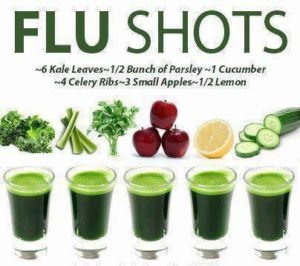
19) Drink more “live” vegetable juice. If that sounds too cold, make yourself some warm but raw vegetable soups. Search online for recipes. My favorites include a raw avocado soup recipe using red peppers, to which I add some Tobasco sauce. You make these soups in a blender like the Vita-Mix.
20) Laugh a little! Watch some comedy movies, or spend some fun time with family and friends. Laughter boosts immune function at many levels. It’s good for your body and your mental health. Find creative ways to expose yourself to comical situations and you’ll benefit as a result.