Matter: Solids, Liquids, and Gases

Matter is everything that you can see touch and feel.
It takes up space, has mass, and can be dead or alive.
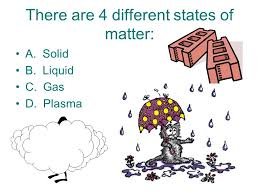
The forms of matter are SOLID, LIQUID, GAS and PLASMA
All matter is made of particles called ATOMS

ATOMS – “ATOMA” means indivisible. PROTONS and NEUTRONS form the NUCLEUS.
ELECTRONS spin around the nucleus. Atoms differ only in the # of protons in the nucleus and # of electrons spinning around it. This is what determines whether it is a solid, liquid, or gas. Hydrogen is the lightest element. Uranium is the heaviest.
Molecules are made of 2 or more atoms and are always in motion. Compounds are atoms joined together of 2 or more kinds of atoms = H2O

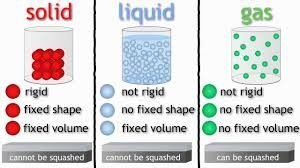
CHARACTERISTICS OF A SOLID:

1. molecules are very close together and jiggle in place
2. Keep a definite shape and size
3. Most molecules are arranged in patterns like crystals
4. They change when a force acts upon them
5. They have physical the properties of color, texture, hardness, odor, luster, melting & freezing points, malleability, and ductility.

Mass is the amount of matter an object contains. / The amount of force to move a weight is the gravitational force and depends on the distance from gravity. If you weigh 100 on earth you would weigh 16 lbs. on the moon but the mass remains the same. Find the center of gravity with a straw.

CHARACTERISTICS OF LIQUIDS:

1. The atoms are farther apart and slide around each other allowing flow.
2. Have no definite shape but moves freely, but have a definite size.
3. Exhibit capillary action. Water is pulled into spaces uphill as molecules exhibit cohesion (molecules have a strong attraction for each other) Water moves from soil into roots by the method of cohesion.
4. Has surface tension (float a needle or paper clip on water)
5. Some liquids are lighter and less dense than others.

Natural Liquids are water, petroleum, blood, lava, sap, and honey.
You can layer liquids. Oil dissolves in alcohol.

CHARACTERISTICS OF GAS:

1. Molecules are far apart moving fast and bouncing off one another
2. Has no definite shape but moves freely
3. Flows through neon signs
4. Expands when heated
5. INVISIBLE
6. Most are odorless
7. It contracts when cooled

When matter expands it gets bigger and when it contracts it “usually” gets smaller. Matter usually contracts when cooled and expands when heated. Water is one example of a liquid than expands and gets larger when frozen. Hoses can be ruined if water left in them freezes or water pipes may freeze and burst.
A Thermometer is often used to measure the temperature of the home or food when cooking. The temperature is also a gage for when to plant.

An ELEMENT consists of ONE KIND OF ATOM. MANDELEV created the periodic table of elements. BOYL identified 100 kinds of elements. There have been a few more discovered recently. Mass = bulk or quantity. Adhesion is when the molecules are attracted to surface molecules of other substances as water clings to the teeth of a comb.

Water is the only element found in all three states in nature.
Gas as fog, clouds, steam, mist
Solid as arctic ice, hail, icicles, sleet, snow, frost
Liquid as rain, ocean, dew, rivers, ponds, ground water and puddles.

We use all three states of water in everyday life. Living things are mostly made of water!

Solid + heat = liquid . . . liquid + cold = solid liquid + heat = gas

CO2 under pressure and then cooled turns the gas to dry ice. Dry ice melts to a gas. SUBLIMATION is when a solid is turned to gas

If warm air is cooled or meets cold air it forms condensation.
Different liquids evaporate into a gas at different rates (paint alcohol, water, and vinegar on a chalkboard)
Epsom salts and water, plus add a little ammonia, and it turns white forming a precipitate.
Teach the water cycle song about Evaporation, Condensation, and Precipitation

Experiments:
1. CO2 from borax and vinegar to blow up balloon
2. Two liquids combine to a solid in slime
3. Thermometer goes up from heat
4. Teach them the Molecule dance
5. Water song
6. Capillary action with different kinds of paper strips
7. Layer liquids

Plasma is an electrically neutral medium of unbound positive and negative particles ( the overall charge of a plasma is roughly zero). Although they are unbound, these particles are not ‘free’ in the sense of not experiencing forces. When the charges move, they generate electric currents with magnetic fields and they are affected by each other’s fields. This governs their collective behavior with many degrees of freedom. A definition can have three criteria:

The plasma approximation: Charged particles must be close enough together that each particle influences many nearby charged particles, rather than just interacting with the closest particle (these collective effects are a distinguishing feature of a plasma). The plasma approximation is valid when the number of charge carriers within the sphere of influence (called the Debye sphere whose radius is the Debye screening length) of a particular particle is higher than unity to provide collective behavior of the charged particles. The average number of particles in the Debye sphere is given by the plasma parameter.

Bulk interactions: The Debye screening length is short compared to the physical size of the plasma. This criterion means that interactions in the bulk of the plasma are more important than those at its edges, where boundary effects may take place. When this criterion is satisfied, the plasma is quasineutral.

Plasma frequency: The electron plasma frequency (measuring plasma oscillations of the electrons) is large compared to the electron-neutral collision frequency (measuring frequency of collisions between electrons and neutral particles). When this condition is valid, electrostatic interactions dominate over the processes of ordinary gas kinetics.

Ranges of parameters
Plasma parameters can take on values varying by many orders of magnitude, but the properties of plasmas with apparently disparate parameters may be very similar. The following chart considers only conventional atomic plasmas and not exotic phenomena like quark gluon plasmas:

Terrestrial Plasma:

Lightning
St. Elmo’s fire
Upper-atmospheric lightning (Blue jets, Blue starters, Gigantic jets, ELVES)
Sprites
The ionosphere
The plasmasphere
The polar aurorae
Some flames
The polar wind, a plasma fountain

Celestial plasma:

The Sun and other stars
(plasmas heated by nuclear fusion)
The solar wind
The interplanetary medium
(space between planets)
The interstellar medium
(space between star systems)
The Intergalactic medium
(space between galaxies)
The Io-Jupiter flux tube
Accretion discs
Interstellar nebulae
Cometary ion tail

Earth Science

First Known Interstellar Asteroid
An object from far beyond our solar system has recently been discovered that is very strange. It is a rapidly rotating object, at least as big as a football field, and changes in brightness dramatically, hinting that it could be more than 10 times longer than it is wide – something never seen in our solar system.
It was classified as an interstellar asteroid, the first ever observed, and named 1I/2017 U1 (`Oumuamua). The name was chosen in consultation with Hawaiian language experts and reflects the way this object is like a scout or messenger sent from the distant past to reach out to us (`ou means “reach out for”, and mua, with the second mua, means “first”.)
It must have traveled through space for millions of years before its chance encounter with our star system. It’s a dark dense reddish, and very elongated rocky or high-metal-content object. Its surface is dark red from the effects of the irradiation of cosmic rays over millions of years. It is estimated to be at least 400 meters long. Astronomers calculated its hyperbolic orbit, showing beyond a doubt that it did not originate from our solar system. It is the first known asteroid from interstellar space.
It shares characteristics with Kuiper Belt objects and organic-rich comets and Trojan asteroids. It is completely inert, without a hint of dust around it.
Astronomers continue to observe this unique object in hopes of pinning down where it came from and where it’s going.
Artist’s impression by M. Kornmesser shows the 1st interstellar asteroid.

The brightest star visible from any part of Earth is Sirius in the constellation Canis Major, the Greater Dog. Sirius is well known as the Dog Star. The term “Dog Days of Summer” came to mean the 20 days before and 20 days after this alignment of Sirius with the Sun. The dog days are the hot, sultry days of summer.

In India, Sirius is known as Svana, the dog of Prince Yudhistira. The prince and his four brothers, along with Svana, went on a long and arduous journey to find the kingdom of heaven. One by one the brothers abandoned the search until only Yudhistira and Svana were left. At last they came to the gates of heaven. The gatekeeper, Lord Indra, welcomed the prince but denied Svana entrance. Yudhistira was aghast and told Lord Indra that he could not forsake his faithful friend. Yudhistira told the Lord that his brothers had abandoned the journey to heaven to follow their hearts’ desires. But Svana, who had given his heart freely, chose to follow none but Yudhistira. The prince told the Lord that without his dog, he would forsake even heaven. This is what Lord Indra wanted to hear, and he welcomed both the prince and the dog through the gates of heaven.

EARTH AND SKY

SCIENCE TOY SHOP

CLICK THE LINK TO PAGES BELOW:

Fossils

Matter: Solids, Liquids, and Gases

Elements, Rocks, and Minerals

Water Experiments

Planet Earth

Sun and Stars

The Greatest Star of them All

Crystals

The Wonders of Water

Little Susie Snowflake

Elements are Everything

Magnets

Experiments with Air

Weather

FAMOUS ROCK FORMATIONS

Teeth


RIPPERS, NIPPERS, AND GRINDERS

“SMILE and show your Teeth!” Ask kids if babies have teeth. When first born you don’t have teeth but depend on milk from a bottle or breast like all other mammals. There is always an exception to everything and once I saw a newborn with a full set of baby teeth. In a few months gums will get sore and teething usually begins. Babies are given teething biscuits or a cold teething ring to help the discomfort. Teeth are alive and need nutrition (calcium from dairy products and fluoride, a natural element) to stay alive and grow healthy. TEETH are made of the hardest substance in the body and remain when skin and bones have disappeared.

Babies are born with no teeth but have the beginnings of teeth before they are born. At about 5-6 months teething begins. The first teeth (primary teeth) are in by 2½ to 3 yrs. old. Primary teeth are pushed out by permanent teeth at the age of 5-6. By 14 we usually have a full set of 28 permanent teeth. Wisdom teeth come in about 20 yrs. The 20 primary teeth help permanent teeth erupt in their normal positions. Permanent teeth form close to the roots of the primary teeth and by the time primary teeth fall out most of the root has been dissolved.

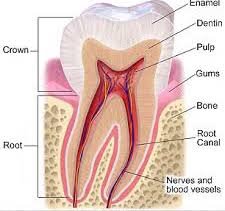
The tooth above the gum is the CROWN. The part below the gum is the ROOT. The crown is covered with ENAMEL the hardest tissue in the body and protects the tooth. DENTIN makes up most of the tooth and is hard, yellowish, and bonelike and protects the soft PULP inside. The pulp contains the nerves and blood and lymph vessels that keep it alive and healthy. The PULP is how the tooth receives nourishment and transmits signals to the brain. Dentin carries some of the nerve fibers that tell you when something is wrong inside the tooth. Blood vessels and nerves enter the tooth through the ROOT CANAL. As most teeth mature, the root canal closes and the pulp is sealed off. These teeth are “rooted”. In “Rootless” teeth the root canal remains open and the tooth continues to grow indefinitely. RODENT incisors are “rootless” ever growing teeth. The molars of dogs and humans are rooted.

The DENTIN and the PULP go into the ROOT of the tooth. CEMENTUM that is like your body’s glue holds the roots of the teeth in the jawbone. A cushioning layer called the periodontal ligament sits between the cementum and the bone and connects the two.

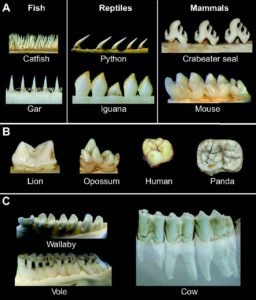
Teeth are present in most vertebrates (exceptions are turtles and modern birds). A significant distinction of mammals is that mammalian teeth are restricted to 3 bones = maxillary, premaxillary, and dentary. The teeth of most vertebrates are replaced throughout the animal’s life. This process doesn’t work well for animals that depend on occlusion (how the teeth fit together) for chewing. It is possible to estimate the age of an animal by determining if primary teeth are present and which ones, or by the amount of wear on the molars. Toothed whales have a single set of teeth.

The Labial teeth are outside close to lips. Lingual are next to tongue and occlusal is where a tooth meets another tooth surface. The efficiency of the mouth to prepare food for digestion depends on the shape and size of the teeth and how they are used. Different mammals have different ways of chewing. Teeth are worn away as they function and form wear facets that appear striated as teeth meet repeatedly in same pattern. Many mammals have fairly flexible articulation and move their jaws in a combination of motions. Guinea pigs slide their jaw forward to grind their food. Some carnivores can only chew up and down such as wolves. Different styles of chewing require different arrangements of the muscles.

There are 4 kinds of teeth:

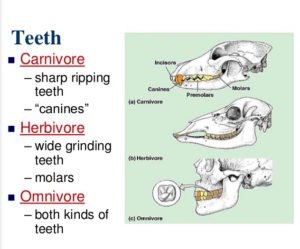
INCISORS cut and are the most anterior front teeth. In many animals these teeth are used for pincers for grasping or picking in feeding and grooming. Some are MODIFIED to form chisels for gnawing often with a gap (diastema) as in rodents, rabbits, and pikas. There are the scalpel incisors of vampire bats, the tusks of elephants, and the shovel-like lower incisors of hippos, and the lateral incisors of some carnivores like bears, which resemble small stabbing canine teeth.
CANINES (“eye teeth”) tear. When present in mammals (often absent) they are the first tooth in the maxilla, are moderately to very long with a single cusp and 1 root. They are used for stabbing and holding prey. They are usually missing or reduced in size in herbivores. Some species use them as weapons and some animals have huge canines as the musk deer, narwhal, babyrousa, and baboons.
PREMOLARS crush. They lie posterior to the canines and vary greatly in size from a tiny peg in a shrew to a massive crushing organ in a sea otter or wolf. Usually they are smaller and simpler than molars. Premolars are deciduous (there is a milk set)
MOLARS grind. They are not replaced but exist only as adult teeth. They are the most posterior teeth in the jaw. We are considered an adult when eruption is complete. Molars vary greatly in size, shape, and function.
The # of teeth and type of teeth in an animal’s mouth tell a lot about it’s past. In toothed whales the # of teeth has increased, however in most mammals the # of teeth has been reduced in evolutionary history.

TEETH HELP:
1. Shape the face and jaw and are the structural support of the facial muscles for expression.
2. Play a key role in the digestive system to get and chew food (MASTICATION)
3. Baby teeth guide permanent teeth into position
4. The teeth, lips, and tongue are essential for speaking or singing.
5. Used for grooming.
6. Used for defense
The 32 permanent teeth are:
8 incisors are cutters or nippers and have 1 root
4 canines are tearers or rippers and have 1 root
8 premolars are grinders and have 1 root
8 molars are grinders. Molars in the top jaw have 3 roots. Molars in bottom jaw have 2 roots.
4 wisdom teeth grow in about the age of 20
Humans are DIPHYODONTS meaning they develop 2 sets of teeth. Rotting food, bacteria, and plaque causes DECAY. HALITOSIS is bad breath from not cleaning your mouth, food rotting in your mouth, decay, or from certain medications. PERIODONTAL Disease of the gums can be a cause of bad breath. What to do: keep mouth clean by brushing teeth, flossing, and rinsing with mouthwash. PLAQUE is a clear film that sticks to the teeth and acts like a magnet for bacteria and sugar. Bacteria break the sugar down into acids that eat away tooth enamel causing holes called cavities. Plaque also causes GINGIVITIS = a gum disease where the gums become red, swollen and sore. Some bacteria in the mouth are helpful and some are harmful.

Before toothpaste people used ground up chalk or charcoal, lemon juice, ashes. About 100 yrs. ago someone invented a mint paste to clean teeth. When you brush you need a pea size bit of toothpaste and spit it out after brushing – don’t swallow it.

Fluoride helps make teeth strong and protects them from cavities. Dentists may treat teeth with topical fluoride or you may take a vitamin with fluoride. Too much fluoride can cause tooth discoloration. Discoloration can also occur from prolonged use of antibiotics. Fluoride is a natural element found in many things like water or food. It makes stronger enamel. Topical fluoride makes the enamel stronger and more resistant to acid. Some toothpaste has fluoride.

EXPERIMENT:
Fluoride rinse solution from dentist
2 eggs
1 bottle of white vinegar
3 containers
Pour 4“ fluoride solution in 1 container and put egg in to soak for 5 minutes. Pour 4“ of vinegar in other containers. Put the eggs in the vinegar. The egg without fluoride will start to bubble.
KEEP YOUR TEETH HEALTHY BY:

Brush 2 times a day
Brush all of your teeth
Use toothbrush with soft bristles and take your time.
Replace your toothbrush when bristles wear out
Flossing your teeth gets rid of food your toothbrush can’t reach.
Visit a dentist at least once a year.
Be careful about what you eat and drink = fruits, vegetables, and water
Bottle mouth or milk bottle decay is when the milk is allowed to bath the teeth for hours. A bottle sucked all day or night can result in pocked, pitted or discolored teeth. Severe cases result in cavities and the need to pull the teeth.

Orthodontic treatment may be needed to correct one’s bite and straighten the teeth. Crooked teeth are harder to clean and more likely to have cavities. Crooked teeth can affect the way a person chews and talks and how the smile looks. Retainers help keep teeth in their position.

Disorders of the Teeth:

CAVITIES happen when bacteria in plaque digest carbohydrates in food and produce acid that dissolves the tooth enamel.
IMPACTED WISDOM TEETH occur when there is not enough room for them to come in. They can damage other teeth, become impacted or infected. You can see them on X-ray. They are usually removed.
MALOCCLUSION is the failure of the teeth to meet properly causing an overbite, underbite or crowding. It can be corrected with Orthodontia
PERIODONTAL DISEASE is when gums and bones become diseased. GINGIVITIS is the inflammation of the gums. There is redness, swelling, and bleeding caused by inadequate brushing and flossing and a buildup of tartar (a hardened film of plaque). If not treated the gums loosen around the teeth and pockets of bacteria and pus form that damage the bone and cause tooth loss.

Materials: A bald baby with no teeth, a teething ring, puzzle of a tooth showing parts, examples of teeth from animals or skulls showing teeth (beaver, cat, shark are good examples), x-rays of teeth especially showing primary and secondary, toothbrush, floss, cast model of human teeth (from a dentist), model of the jaw of a shark showing many rows of teeth, picture to label parts of a tooth, chart to keep for when they brush their teeth. I also have kids echo words that especially use the teeth to make ( f, th, s, v, and z words). You might give them some tongue twisters too!


The Importance of Teeth and Chewing Food.

Chewing is a very important part of healthy digestion. Chew your food well. What you get in return is better health. Chew your food completely to be swallowed with ease. Digestion begins with chewing your food.

Chewing triggers the rest of the digestive process. The process of chewing activates messages to the rest of the gastrointestinal system to begin the entire digestive process. Chewing activates taste receptors in the mouth and prompts the nervous system to relay information to the gastric system to optimize the process of digestion. Stimulation of the taste receptors can signal the stomach lining to produce hydrochloric acid that helps in the breakdown of protein. Chewing also signals the pancreas to prepare to secrete enzymes and bicarbonate into the lumen of the small intestines.

Chewing breaks down food molecules to smaller particles. Increases the surface area, reduces esophageal stress and exposes food to saliva for a longer time. Saliva helps lubricate the food making it easier for foods to pass through the esophagus. The enzymes in saliva contribute to the chemical process of digestion. Carbohydrate digestion begins with saliva. The first stage of fat digestion occurs in the mouth.

Incomplete digestion can lead to bacterial growth. When food is not well chewed and food fragments are too big to be broken down, incomplete digestion occurs. Nutrients do not get extracted from the food and it becomes fodder for bacteria in the colon, which can lead to bacterial overgrowth, flatulence, and symptoms of indigestion.

Chewing relaxes the lower stomach muscle. Chewing is directly connected with the movement of food through your digestive tract, and with the movement of food from your stomach to your small intestine. At the lower end of your stomach, there is a muscle called the pylorus. This muscle must relax in order for food to leave your stomach and pass into your small intestine. Sufficient saliva from optimal chewing helps relax the pylorus, and helps your food move through your digestive tract in a healthy fashion.

Recipe for healthy teeth includes regular brushing and flossing, and a diet rich in teeth-healthy foods. Some food choices can contribute to the wear and tear of teeth.

Bacteria in the mouth burn sugars in order to live. The byproduct of this is acid which dissolves tooth enamel and causes cavities. Sticky sugary foods are bad for teeth because they stay on the teeth longer, giving bacteria a chance to burn sugars to acid and cause cavities. Foods and drinks that are acidic and sugary add up to double trouble for they have a multiplying effect.

Saliva helps to naturally wash the mouth of food particles and can keep food from sticking to teeth. Anything that stalls saliva production is not ideal for tooth health either.

Teeth brushing or mouth rinsing after consumption helps prevent decay. Avoid foods that combines sugar, acid and stickiness such as our, chewy candies like Starburst and Skittles. Brushing too soon after a highly acidic or sugary meal can actually cause additional damage to teeth, as the enamel of is softened immediately following contact with “bad” food. Wait 20 to 40 minutes before brushing. Saliva has a neutralizing effect on acid because it contains bicarbonate. It also has calcium and phosphate that help to “re-mineralize” the tooth’s surface.

GOOD FOR THE TEETH:

Cheese, sugar free gum, pears (most acid neutralizing), yogurt, and sesame seeds reduce plaque and help re-mineralize teeth. Cheese is low in sugar and acid, high in calcium, and contains casein, a protein found in milk that is particularly useful for fortifying the tooth’s surface. Dentists may prescribe a re-mineralizing paste called MI Paste made from casein. Parmesan cheese is recommended as a remedy against the degrading effects of acid exposure that accompanies frequent vomiting, often experienced by pregnant women or cancer patients undergoing chemotherapy.

BAD FOR THE TEETH:

Sugary drinks, dried fruit, hard candy, alcohol, citrus acidic foods, starchy foods like bread and potato chips that stick to teeth, coffee.




The Respiratory System

With young children I start by taking the fist end off of a simple air toy and asking them what they see inside. Everyone says nothing is there. Then I put the top on and squeeze it and the fist pops off. I tell them that air is inside. Air takes up space.
What was the first thing you did when you were born? Hint -you do it all the time no matter where you are. BREATHE. Take a deep breath. Ask children to watch you and breathe with you: deep breathing, shallow breathing, slow deep breathing, and fast. Make sounds with children and note that sound stops when you run out of air. You must have air in your lungs to sing, cry, laugh, or talk! Can you see air, feel air or smell air? Where is air? Air is around us everywhere. It is INVISIBLE. You can’t see air. Have kids blow on their hand and feel the air. Can you capture the air? Capture it in a balloon.

Do all animals breathe air, plants, or rocks? Some animals do and some get oxygen from water. Show examples of animals and let the children say if they breathe air or water. Plants are our partners in breathing (through their leaves) Plants and animals need fuel for life. Our fuel is oxygen in the air we breathe and nutrients from the food we eat. When you breathe you take in whatever is in the air around you. Poisons, smoke and dirt in the air hurt your lungs and body and you could lose your sense of smell. Fog and clouds of water in the air don’t hurt us. I ask them if different parts of their body are alive (eyes, teeth, bones, skin etc.) All the parts of our body are alive but our hair and nails (explain: when we cut them they don’t bleed)

Do air experiments – Spray a scent in the air and see how fast it travels through the air (See who smells it first and can tell you what it is?) I take a very long air bag and ask the children how many breaths it will take for me to blow it up. They usually say 100. I blow into it from a short distance creating a vacuum and blow it up with one breath. They are amazed. Ask them if they know of ways we use air? Ex. Tires, bubble wrap, generate energy, cooling etc.

Every time we breathe our blood grabs oxygen from the air to feed our whole body. We exhale CO2. Trees breathe, grab CO2, and put O in the air for us. Examine the parts of the lung model and trace the path of air: NOSE, TRACHEA( windpipe), 2 LUNGS, 2 Bronchi, Bronchioles(“tree branches”), Alveoli( AIR SACS where RBC grab oxygen and give up co2) Diaphragm/a muscle that helps us breathe. How can we have strong healthy lungs? EXERCISE THE LUNGS and BREATHE CLEAN AIR

All the parts of our body used for breathing are called “THE RESPIRATORY SYSTEM”. If we get an infection of the respiratory tract we may have a cold, runny nose, sore throat, tuberculosis, bronchitis, or pneumonia. In asthma the muscles constrict making it hard to breathe

Take a walk outside and notice signs of air around

MATERIALS: Air toys, models of animals, picture of the stoma on the underside of leaves where they breathe, air fist, balloon, dancing ball, twirly gig, fan, air bag, air pump, scent, lung model.


Eyeballs


Eyeballs


Ask the students questions. How many eyes do we have? Where are they on our body? What about other animals that have eyes? How are our eyes different?


Some animals have eyes on the side of their head like a rabbit or on top of their head like a spider. A spider has eight eyes! Some animals have big eyes like an owl or a cat and can see well at night. A hawk has telescopic vision and can zoom in and see a mouse way off in a field. A snake that is a viper has pits that allow it to see the body heat of other mammals glowing in the dark. Insects like a fly or bee have compound eyes made of lots little sections that help them see movement.


We cannot see anything if there is no light. Where does light come from? The sun makes white light that can be divided into the colors of the rainbow. What are some other things that make light? (Things that burn like wood or coal, lightening, fireflies, glow worms and some fish. Be prepared for flashlight)


Examine the eye model and discuss the parts of the eye.


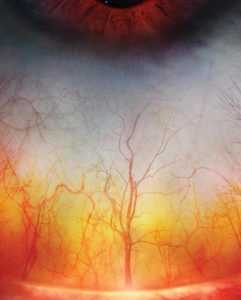
a) Sclera = the whites of eyes (we can see blood vessels in the sclera).


b) Cornea = a clear window in the front.


c) Iris = colored part of the eye that lets light in.


d) Pupil = the dark hole in the middle


This is a good time to talk about eye safety and eye health, foods with vitamin A, the eye check up, things that can get in the eyes and sting or hurt the eyes, types of eye protection. I show the roll-up darkening glasses they give you after a check up, sunglasses and different types of protective glasses. Talk about instruments like the telescope, microscope, spectrascope and periscope. Seeing is believing they say. You might print out some illusions for them to examine.


Goals: Children will know that they have two eyes on the front of their face and that other animals may have eyes that are very different from theirs and in different locations like rabbits and mice that have eyes on the sides of their heads that allow them to see all around and help keep them from getting caught and eaten. Children will know that spiders have eight eyes and worms have no eyes. Children understand where light comes from and that it is necessary for us to see. The light of the sun is white light and can be divided into the colors of the rainbow. Children will be familiar with the parts of the eye.


Materials: Models of animals with have eyes different from ours. Pictures showing eyes of different animals Bug eyeglasses Prism in a sunny window to make a rainbow for the children to see. The rainbow will move in the room as the sun travels. Color paddles Rainbow coloring sheet Model of the eyeball and socket Eye chart and eye puzzle


Additional Information About Eyes Expressions you may have heard:


Look before you leap – – Seeing is believing – – -I’ve got eyes in the back of my head. – – What you see is what you get – – -For crying out loud— Can you believe your eyes?


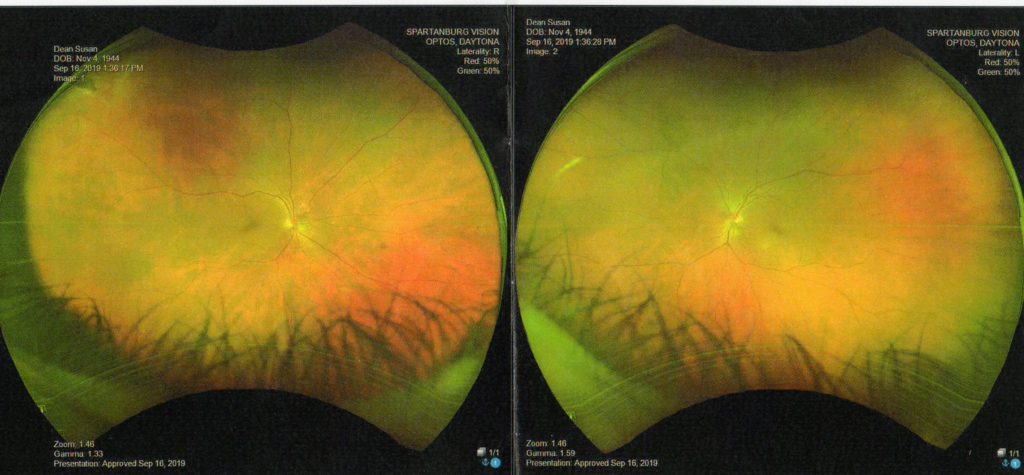
I recently had my eyes examined and he gave me this picture if the inside of my eyeballs. 2019 Amazing what they can do!

                                               Inside my eyes

      We could not see if there was no light. Light from the sun allows us to see. There are other things that create light such as burning wood, coal, oil, candles, matches, electricity, and batteries. Some animals make their own light such as some fish or fireflies. White light that we can see from the sun can split into 7 colors that we can see – the colors of the rainbow You can use a prism in a window to split light and make a rainbows on the wall.
Of all of the senses vision is often considered the most important! 4/5ths of everything we know reaches our brains through our eyes by electrical signals through the optic nerve to the brain. Eyes receive information from light rays that are either absorbed or reflected by the world around us. Objects that absorb all the light rays appear black. Objects that reflect all the light rays appear white. Colored objects reflect the light rays that they do not absorb.
The LENS of the eye focuses the light rays on the RETINA inside the eyeball forming an image upside down. The electrical signals are sent to your brain and translated right side up. The lens is protected in front by a fluid and behind the lens is a clear jellylike fluid. The muscles of the elastic lens can change its shape to bring things into focus near or far away. 20/20 is normal vision
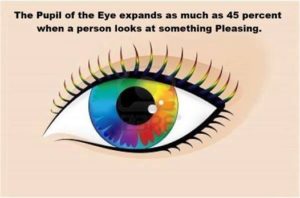
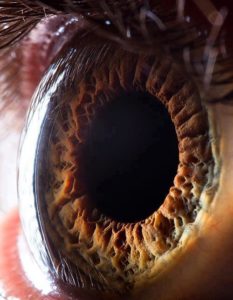
The IRIS is the colored part of your eye surrounding the PUPIL. Your pupil is the dark circle in the middle of the eye that admits light rays. Muscles can make your pupil smaller or larger to let in the right amount of light. If it is dark, the pupil gets larger as the iris gets smaller to let in more light. If it is bright, the pupil gets smaller and the iris gets larger to let in less light.
The RETINA lines the inside of your EYEBAL and has special receptor cells called RODS and CONES. Rods are for black and white vision in dim light and for interpreting distance. The cones function in full light and enable you to see colors. Color blindness is inherited, rarely occurs in women, and is caused by a defect in the cones. Different cones are sensitive to different colors. There is a test one can take for color blindness.
A newborn baby is farsighted and cannot focus on things nearby for several months. As a person gets older the lens may lose its elasticity and one may not be able to focus on things clearly. This may be corrected with glasses.
Tiny muscles control the movements of the eyeballs. If there is an imbalance in the strength of the eye muscles you may appear cross-eyed or walleyed.


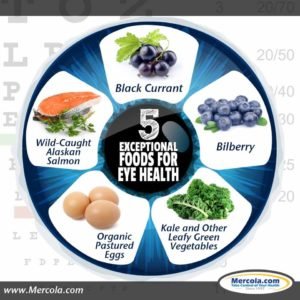
You need carrots and green leafy vegetables to get Vitamin A in order to have good night vision.


Looking nearby the lens thickens. Looking far away the lens gets thinner. The tough clear CORNEA protects the IRIS and LENS. Your brow, eyelid and lashes help to keep dirt and dust out. Eyelids help keep eyes clean and moist. Your lachrymal gland at the upper outside of the eye constantly supplies moisture to keep the cornea clean. The fluid empties into your tear duct into your nasal cavity.
EYEBALLS as big as ping-pong balls, sit in EYE SOCKETS of bone that help to protect them. Eyelid blinking is a voluntary and involuntary movement.
There are many inventions to assist us in seeing such as; the telescope, binoculars, microscope, spectra scope, and periscope. There are things to protect the eyes such as protective glasses, sunglasses, and goggles. Your vision is the strongest of the six senses that you have.
Sclera = the whites of the eyes.
Cornea = the clear tissue in front of the pupil and is like a window.
Iris = limits light.
Lens = directs light
The retina is smaller than a dime and changes light to impulses.
The ciliary muscle changes the shape of the lens to focus.
Vitreous humor = jelly like liquid inside eye.
The blind spot is where the optic nerve enters eye


Eyes have a special bathing system. The lachrymal gland is at the outer corner of the eye and a little bit of tear comes out when you blink to keep the eye moist. Tears come out of the tear duct on the inside corner of the eye.
There are differences in the vision animals have. Some underwater animals have a clear nictitating membrane over their eyes for under water vision.


Where your eyes are located on your head determines your range of vision. Animals see what they need to see to survive in this world. Mammals all have the same basic eye construction. It is the position on the head that affects how they see. Eyes on the side of the head diminish binocular vision, but allow a wider range of vision. The eyes of animals having good night vision are large and bulbous and more sensitive to light. Some animals have a reflective layer behind the retina that bounces light back through the eyes


Hawks have telescopic vision and their eyes take up most of the space in their head.
Rabbits have eyes on the side of their heads giving them a wrap-around vision for they have a lot of predators to watch out for.
Cats can see at night and can see colors, but not as bright. They may not see red at all. You can sneak up on a whale from straight ahead because their eyes are way back on the sides of their heads and they cannot see directly ahead.
Sharks can see shapes and movement as good as us. Most sharks only see shades of black and white.
Pit vipers have the ability to see the infrared light of our body heat at night. Pit vipers have 4 sight organs: 2 eyes and 2 pits and they can see heat waves radiating from a body.
Honeybees have compound eyes. A compound eye has 6 facets and is designed to see movement.
Cats with eyes in the front of their head have binocular vision.
Owls have visual power 8 times more acute than ours and have the widest range of vision of all birds.
Manny mammals have 2 types of cones and are less able to see reds and greens. All mammals have some degree of color vision.
Foxes eyes are yellow. Rabbit’s eyes are red and they have a panoramic view with a blind spot straight ahead.


Wolf spiders have 8 simple eyes. The side eyes are for motion and peripheral vision. There is a wide variation in the eyes of spiders. They lack lenses so cannot see from near to far.
Frogs have large eyes to peer above the water. They can push their eyes down into their mouth cavity forcing food into their throat
Amphibians were the first animals to make tears.
The vertical pupil is characteristic of nocturnal animals.
Insects cannot close their eyes.


1. Eat right for sharp sight
For sharper vision, incorporate these dietary powerhouses into your daily nutritional regimen:
Antioxidants: Beta-carotene, lutein, and zeaxanthin protect the macula (a part of the eye that is near the center of the retina) from sun damage. Foods rich in these nutrients have been found to prevent age-related macular generation — a leading cause of blindness. Some of these foods include dark leafy greens, egg yolks, yellow peppers, pumpkin, sweet potatoes, and carrots. DHA (Fish Oil): DHA is a fatty acid that can be found in coldwater fish like wild salmon, krill, and cod. A high-quality mercury-free fish oil supplement will provide structural support for the eyes through strengthening cell membranes. Pure water: Water is beneficial for the entire body. Drinking an adequate amount of pure filtered water will prevent total-body dehydration, and subsequently dry eyes.


2. Your eyes need exercise
The muscles in your eyes need to be exercised. It may be your key to optimal vision. Exercising the eyes has been found to keep eye “floaters” at bay. Here are some simple exercises that can improve your vision:
Warm up the eyes: Rub your hands together to create warmth, and then put them over your eyes for 5 seconds. Repeat this process 3 times. Roll your eyes: Starting by looking at the ceiling, slowly roll your eyes 10 clockwise and 10 times counter-clockwise. Focus: Hold a pen an arm’s length away. Focus your vision on it, and then slowly bring the pen forward until it is about 6 inches away from your nose. Slowly move the pen back to its original position. Repeat this process 10 times. Massage your temples: Using the knuckles of your thumbs, gently massage your temples in small circles. Perform the motion in one direction 20 times, and then 20 times once more in the opposite direction.


3. Monitor your environment
Many environmental factors contribute to poor vision. Fluorescent lights, computer screens, environmental allergens, chlorine in swimming pools, air conditioning and heating, reading in dim lighting, and constant rubbing of the eyes all play a role in diminishing your vision. In addition, cigarette use increases optic pressure, which can result in a number of damaging consequences.


4. Resting the right way
Your eyes need rest. For every 50 minutes spent reading or sitting in front of a computer screen, give your eyes a rest for 10 minutes. Cupping your hands over your closed eyes ensuring that no light is reaching them is a great way to relax them. Be sure to get 7-8 hours of sleep per night to ensure not only rested and recovered eyes, but a rested and recovered body.


Close up of the schlera.


The cornea is the only tissue that doesn’t require blood vessels.


High definition close-up of the eye


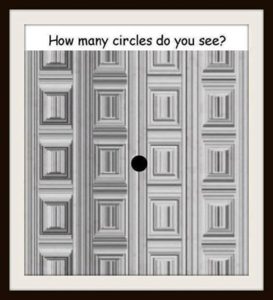
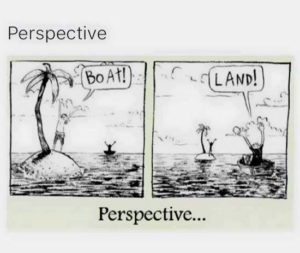
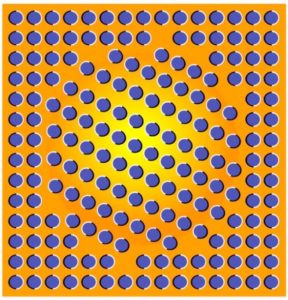
Remember we have limited vision of the world. Often things are invisible to us or an illusion and what we see is not there or happening. Check out these illusions!