by Susan Dean | Feb 6, 2018 | Earth Science

“The Greatest Star of Them All” by Alexander Green www.spiritualwealth.com
Familiarity can be the enemy of awe and wonder. This is particularly true of something we see less and less this time of year: the Sun. Throughout most of human history, we had no idea the Sun was a star… or that the stars scattered across the night sky were other suns unimaginably far away. For thousands of years, it was an article of faith that the world was an immovable disk around which the Sun, the planets and the stars all revolved. Everyone believed, indeed knew this. That changed a few centuries ago. Yet it is only within the last few decades – using everything from ground-based telescopes and spectroscopes to the space-based Solar and Heliospheric Observatory (SOHO) – that we have gained a real understanding of our nearest star.
So let’s take a closer look at the celestial giant on which so much of our lives depends… The Sun is 93 million miles away. A passenger jet flying 550 miles per hour would take 20 years to get to the Sun. To reach the next nearest star, Alpha Centauri, that same plane would need five million years. The Sun is by far the largest object in our neighborhood, making up 99.8 percent of the mass of the solar system. Its diameter is 865,000 miles. Were it hollow, 1.3 million earths could fit inside it. Yet, in astronomical terms, the Sun is just an average-sized gas ball – out of some 200 billion – in the Milky Way galaxy.
Things look fairly placid here on Earth, if not downright stationary. But that is an illusion. The Earth spins on its axis at 1,040 miles an hour while chugging around the Sun at 66,600 miles per hour. Meanwhile, the Sun – with its retinue of planets – is screaming around the center of the galaxy at 483,000 miles per hour while the Milky Way itself moves toward the Andromeda Galaxy at a hair-raising 1.3 million miles per hour. (And you wonder why you always feel rushed?
The Sun is the most alien place in the solar system. Its interior is unimaginable hot – at 27 million degrees Fahrenheit – and converts 400 million tons of hydrogen into helium every second. Indeed, conditions there are so extreme that hydrogen and helium atoms break into their constituent parts – protons and electrons – and re-fuse into heavier elements. That process – called nuclear fusion – is what makes stars shine.
Author and astronomer Bob Berman writes, “The power of the Sun’s continuous nuclear fusion is equal to 91 billion megatons of TNT per second. That’s 91 billion standard one-megaton H-bombs going off in the time it takes to say ‘Holy moly.'”
Fortunately, we’re a safe distance away. In fact, we’re the perfect distance away. Venus is a boiling mess. Mars is a frozen desert. But you and I are here because we inhabit “the Goldilocks zone,” a region where temperatures are moderate and water can exist as a liquid.
We are all tied to the Sun in the most intimate ways. It is the master timekeeper, marking off our days and nights as well as the years. The Sun drives our weather and climate and even affects your moods.
Psychologists are familiar with something called Seasonal Affective Disorder. When the skies turn grey, the weather cools and the days shorten, our bodies slow down, our energy wanes and our outlook darkens. Your biological clock and even your disposition are affected by sunlight (or the lack of it).
In fact, we need this precious resource to live. True, too much sunlight is damaging. But too little is dangerous, too. Sunrays generate Vitamin D, a substance that strengthens your immune system, protects against rickets, and combats osteoporosis, multiple sclerosis, rheumatoid arthritis, hypertension, diabetes and influenza. Vitamin D is the most powerful anti-cancer agent ever discovered. Researchers say you should enjoy 20 to 30 minutes of sunshine before applying sunblock.
Not just our planet revolves around the Sun, but life itself. Through photosynthesis, plants convert sunlight into usable energy, kicking off the food chain and creating the foundation for the entire web of life. The Sun is responsible for most of our energy, too. In “Chasing the Sun,” Richard Cohen writes, “The Sun is the great self-renewing resource, the creator of coal, peat, oil, hydroelectricity, and natural gas. It raises moisture into the atmosphere, to return as the downpours that drive turbines; it powers the winds and the waves, and all their effects; it lavishes itself over the entire planet, delivering to the Earth’s surface more energy in just forty-four minutes than we use in a year.”
The Aztecs and Egyptians worshiped the Sun, as did the Persians, Incas and Tamils of southern India. Grand monuments to it still dot the globe, from the pillars of Stonehenge to the Great Pyramid at Giza to the temple ruins of Machu Picchu. This is not surprising, really. Consider how many ways the Sun resembles the traditional image of a deity: It is a mysterious enigma, ever-present, powerful beyond measure, a giver of light, responsible for life on earth, yet too terrible to gaze at directly. Sun worship stemmed from a fundamental truth: Without our nearest star, life on earth wouldn’t exist. Yet knowledge about the Sun was not easily won. We had to wait for the advent of the telescope and the scientific method. Isaac Newton, in fact, spent so much time studying the Sun that he had to shut himself in a darkened room to wait for the full return of his sight. It took three days. Dutch philosopher Spinoza ground the mirrors for his own telescope – and died at 44, his lungs rotted from year of inhaling glass particles.
Early church authorities tried to strangle the science of astronomy in its cradle, insisting it undermined the Bible’s geocentric view of the universe. Joshua commanded the Sun to stand still, not the Earth, thundered Martin Luther. When Italian astronomer Giordano Bruno openly theorized that the Sun was a star and the universe might contain other worlds, he was promptly put to the stake. Galileo, the father of observational astrononomy, was forced to recant his heliocentric views and placed under lifelong house arrest. Scientists quickly got the message, privately declaring that it was better to be humble than hanged. Progress and scientific understanding could not be stopped indefinitely, however. Today we know the Sun influences crop yields, global temperatures and ocean currents. Solar eruptions – caused by intense magnetic activity – affect the position and strength of the Gulf Stream, the frequency of auroras, the clarity of radio transmissions, the longevity of Earth satellites, the thickness of the atmosphere and the condition of the ozone layer.
The atoms that make up your body were forged in the heart of ancient suns. The iodine in your thyroid gland was fashioned from supernova material. The iron in your blood came from the cores of previous star generations. As Carl Sagan famously declared, we are star stuff contemplating star stuff. The Sun is the lamp of the world, an awe-inspiring, life-giving ball of fire, a constant source of comfort and wonder. Throughout history, it has dominated art, language, religion and science. It is the great muse of artists, responsible for glorious sunsets, dazzling rainbows and the ethereal Northern Lights. Yet there is much about the Sun we simply don’t know. Scientists are still trying to understand what causes sunspots and solar winds, how its magnetic particles affect the Earth’s climate and how the Sun’s rays can be cost-effectively captured.
New spacecraft are even being designed to harness its power. Engineers are betting that some day – many years hence – it might be just the right fuel to carry us beyond our dying star’s grasp and out of the solar system… in search of another Sun.

by Susan Dean | Feb 6, 2018 | Earth Science
“For my part I know nothing with any certainty, but the sight of the stars makes me dream.”~Vincent van Gogh ~
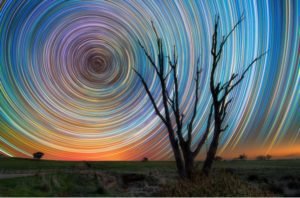
Time lapse photography of stars movement.
The Sun and Stars
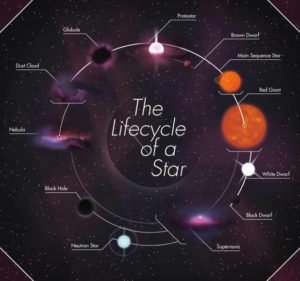
Nebulas are stellar nurseries where stars are born. They are beautiful places in our universe of incredible shape and colors! They are huge clouds of spinning balls of gas and dust. Particles are drawn together by gravity and shrink to form pro-stars. As they shrink the particles collide and fuse together and explodes out creating heat and light. It ignites and a star is born. Planetary nebulas are born from the death of old stars.
New stars are blue and white and very bright. Dwarf stars are smaller and last longer. Large giants and super giants have shorter lives. When the supply of gas runs out the star dies. If a cloud spins slowly it creates one star. If a cloud spins fast it creates twin stars.
If a cloud spins medium, a star with planets is born. About ½ stars in universe are double stars.
Our sun is 93 million miles from earth. The sun’s diameter is 869,900 miles. The suns light takes 8 minutes to reach us. There is fusion inside the core of the sun and atoms of hydrogen collapse into each other forming helium and giving off enormous energy. Seventy elements have been identified in the sun by a spectroscope.
The layers of the sun are:
1. core
2. radiation zone
3. convection zone
4. photosphere a sea of boiling gases 10,000 * F – the thin layer of the sun’s surface
5.chromosphere – the inner atmosphere
6. corona the outer atmosphere is the halo you see during a solar eclipse by the moon that stretches far into space and lasts 7 minutes. Sometimes during an eclipse, a diamond ring shines out or “Bailey’s Beads,” little rays that sparkle through an eclipse.
The hottest stars are blue and white. The hottest stars have the brightest light. Medium stars are yellow-orange and cooler stars are red. Small stars fade away. Big stars grow bigger and cooler changing from blue or yellow to red. A red giant may swell to a super giant and explode in a supernova pushing it’s outer layers into space leaving a tiny star, a white dwarf that is very dense and heavy. They are tiny, dense, and give off x-rays. Their weight gives them enormous gravity.
White dwarfs are old stars with a dim light. They may explode to neutron stars or black holes. The neutron star radiates like a lighthouse, is dense, heavy, and spins fast giving off radio waves. One cup of neutron stars weighs a million million tones. 1 cup of white dwarfs is 100 tonnes. There is a gravitational collapse. The red super giant vanishes.
Shooting stars are not stars but meteors that enter our atmosphere and burn up. Stars aren’t moving. The earth is rotating. Stars twinkle because their light wobbles as it passes through our atmosphere. The color of a star reflects the temperature of the star and it’s composition. The star sphere has an equator. There are more than 500,000 million stars are in our galaxy of stars alone.
Galaxies are groups of stars. Galaxies cluster together. There are billions of galaxies. A Spiral galaxy is a flat disc with arms spiraling out from a center bulge. The Milky Way galaxy is a spiral galaxy fairly large at 100,000 light years across. Old stars are in the center. Young stars are in the arms. The whole Milky Way Galaxy of stars spins in space. The milky river of starlight we see in the sky is part of the Milky Way Galaxy. Our solar system is 2/3 of the way out from the center of our galaxy. Galaxies may be barred spiral and arms curl out from a bar. Elliptical galaxies are usually old stars. Some are like squashed balls, and some become irregularwhen they collide with another galaxy. This is the rarest type. The galaxies closest to ours are the large and small Magellanic Clouds that are irregular galaxies. Andromeda is the nearest visible galaxy. Galaxies group together to form super-cluster chains. Our Milky Way Galaxy belongs to a group of galaxies called The Local Group. If you look toward Sagittarius, you are looking toward the center of our galaxy. We are part of the LOCAL GROUP of 32 galaxies. Our sun is the star of the Milky Way Galaxy! If there is no sun then there is no heat, no light, no clouds, no rain, no life. Thereby it shines and spins by the grace of The Creator.
Stars contain 99.8 % of the matter in the solar system. Solar means of the sun. If you weigh 60 lbs on earth, you would weigh 1,680 lbs on the sun. Our sun is a nuclear bomb 5 billion years old and it will continue to burn for 5 billion years more. Heat, light, and electrically charged particles stream out from the sun to the ends of the solar system. Hydrogen is the sun’s fuel. The sun’s gravity locks the planets in orbit. Planets circle the sun. The solar system has 9 planets and 60 moons, millions of asteroids, and billions of comets!
Planets in our solar system are much closer to us than stars. The closer a planet is to the sun, the faster it must move in orbit. The closest star to our solar system is Alpha Centauri. SIRIUS is the brightest star in our sky magnitude 1.4. The faintest stars are mag. 6.
In 1543 Copernicus said planets go around the sun and the earth rotates on its axis. The sun spins on an axis and turns 1 time in 25 days – 27 days at the equator. The sun mystery is that the sun wobbles and shivers getting larger and smaller by10 km. The earth wobbles.
It takes the earth 26,000 years to complete one circle or precession around our galaxy. About 3,000 asteroids located between Mars and Jupiter circle our sun in what we call the asteroid belt. Ceres is the largest asteroid. Billions of space icebergs called comets travel around our sun beyond Pluto forming a huge disc.
When the solar wind lights the sky, the wind is trapped at the poles and causes beautiful auroras. I asked my father one time, “What is the most beautiful thing you have ever seen?,” and he said it was an aurora borealis. The sun constantly blows invisible gases into space. The solar wind is a flow of plasma from the sun that may cause radio blackouts, auroras, and change in the earth’s magnetism. Sunspots occur when giant storms erupt on the surface of the sun. They are cooled areas that are dark spots visible for a few hours or several weeks usually near equator. Solar flares are energy that builds up blasting jets of burning gas into space. Flames or prominences appear that can travel 200 mph and stretch 100 thousand miles. Earth is in the sun’s outer atmosphere. The earth’s atmosphere and magnetic field protect life from the sun.
On a clear night you can see about 2000 stars. There are 88 star pictures called constellations. Many are named for characters in Greek stories. (Orion the hunter is a giant who carried an unbreakable sword. The fuzzy patch of light in the sword is the Orion nebula. Stars go in circles at the poles.
Polaris is 50 times greater than our sun. Hold an umbrella and turn it, Polaris is always at the top. If Polaris sinks, the sailor is going south. If Polaris rises they are going north. If stars rise in the sky / going east. If stars are setting – west. POLARIS stays still. Face north and move arm up ½ way about 45*. There is Polaris, the last star in the handle of the little dipper. The stars aren’t actually moving but the earth is rotating. The ecliptic is the suns path through constellations in the sky called the zodiac.
Activities: Give students a picture of a constellation and let them pick out the glow in the dark stars and stick them on the wall with sticky putty. Let them make star finders. I use small pictures of the polaris constellation. Students punch holes using large push pins through the small stars in the picture through a small square of black construction paper underneath which is placed over a small square of carpet or cardboard. The black paper is placed over the end of a cardboard tube from paper towels and held with rubber band. Look through and you see Polaris! One year we made stars from clay, colored them and put them on a little tree another year we made “sun catchers” using contact paper and colored cellophane. Solar ovens are nice and we also make sun prints. I love to teach them the song “The Stars are Coming Out Like Popcorn”. They love it!

INCREDIBLE 5 YEAR TIME LAPSE OF THE SUN
CLICK HERE TO SEE MORE AMAZING SOLAR PHOTOS
by Susan Dean | Feb 6, 2018 | Earth Science

Awe-inspiring Earth Notes:
Age = 4.5 billion years old
Diameter = 8,000 miles
Weight = 6.6 sextillion tons
Circumference = 23,627 miles
Distance from sun = 92,897,000 miles
Travels 583,400,000 miles to circle the sun.
Travels at a speed of 65,868,000 mph around the sun through the galaxy.
The solar system travels 45,000 mph through the Milky Way Galaxy.
How is the earth like a loaf of bread? It has a crust. How is the earth like a birthday cake? It has layers.
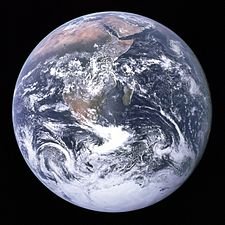
Our earth is 41/2 billion years old. Earth, sometimes called the water planet or the blue planet, is a big rock of iron and some nickel. It’s called the water planet or blue planet because ¾ of the surface of the earth is covered by water and it looks pretty blue from the moon. The earth is like a big magnet, the 3rd from the sun of nine planets spinning around the sun. A star with planets is called a solar system. Our solar system is in the Milky Way galaxy, a spiral galaxy and part of a cluster of galaxies. There are many galaxies in the universe. They cluster together to make super cluster chains!
Our earth is like a layered birthday cake all decorated with life! There are 4 layers of the earth; the inner core, outer core, mantle and crust. The crust is mostly oxygen and our bodies are mostly oxygen too.
Earth erupts, quakes, has tectonic plates that slide around, has an atmosphere, weather, gravity, a thunderstorm belt, a north and south pole, an equatorial belt, and seasons. There’s a global electrical current that forms the thunderstorm belt around the earth. Earth has a negative charge and the atmosphere has a positive charge. Clouds are the electrical generators. The sun is the driving force. Gravity is the pulling force. The weight of an object on earth is the force of gravity on the object.
Earth has 5 oceans: Arctic, Atlantic, Pacific, Indian, and Antarctic. 7 continents: North America, South America, Africa, Europe, Asia, Australia, and Antarctica. 7 mountain ranges: Rockies, Andes, Appalachian, Alps, Urals, Himalayas, and The Great Dividing Range.
The Pacific Ocean is the largest and deepest and there is a ring of volcanoes called “The Ring of Fire.” Water in the Pacific has two gyres( water circles going in opposite directions. Other oceans have 1 gyre) The Mid Atlantic Ridge has a huge trench and curves like a snake.
Earth spins and so do the sun and our galaxy and it makes one complete turn in a day (24 hours), takes a year to circle the sun (365days) and 26,000 years to circle the galaxy.
The hottest, driest, snowiest place is California, coldest is Alaska, wettest is Hawaii, and the windiest is New Hampshire.
MATERIALS: Model of the earth and poster showing sun and planets, spotlight, glow in the dark stars of different sizes, laminated cards showing stars of the constellations, large laminated pictures of sun and planets to put in order and for games. Instrument showing planets spin faster the closer to the sun (Easy to make: empty pen cartridge and thread cord through it, attach ball to one end of cord and small handle to other end. Leave enough cord to pull ball in showing how it speeds up – Twirl around holding pen end and then pull cord bringing it to the center and speeding it up).
ACTIVITIES: Teach song “I’m the Earth”. Put planets in order from the sun. Do planet activity sheet. Kids pick a constellation, count out their stars and create it on the wall with the “glow in the dark” stars of different sizes. They can stick them up with that sticky clay.
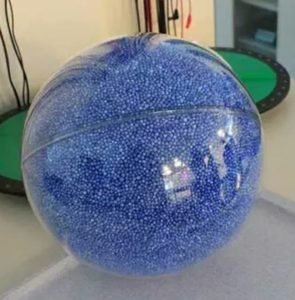
A visualization of how many earths would fit into the sun.
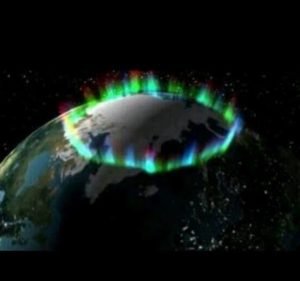
Northern lights as seen by NASA

Use the work sheet below for kids to color the planets and then cut them out and put in the right order from the sun.

GLOW IN THE DARK STARS SUPERPAK
INFLATABLE EARTH
NFLATABLE SOLAR SYSTEM
SOLAR SYSTEM FLOOR PUZZLE
by Susan Dean | Feb 6, 2018 | Earth Science
Water Experiments
1. Put a dry pinecone in a bucket of water and observe what happens.
2. Put fresh water in one jar and salt in another and gently drop a raw egg into each. The one in salt water floats. If an egg is old it will stand u or float on fresh water. Salt water has a higher density.
3. Let them observe a water vortex that forms in the sink or tub when you let the water out. Kids love the vortex they can make with the vortex maker – a connector between two plastic bottles.
4. Freeze some water in a plastic cup after marking the water level. Measure it afterwards to see how it expanded. Water expands by 1/9th its volume when it freezes.
5. Spray some water on the chalkboard to observe water evaporation. Blow a fan on one spot to see how moving air accelerate the evaporation of water.
6. Put a drop of food coloring in a glass of water and observe how the molecules move through the water to color it.
7. Dissolve different substances in water to show it’s great ability as a solvent (salt, sugar, corn starch, instant coffee or chocolate etc..)
8. Put some ice in a bowl of water to show that water floats on top of itself when frozen (show picture of an iceberg).
9. Let a jar of saltwater sit to evaporate and see if the salt evaporated out.
10. Put some water colored with food coloring in a vase of white flowers and see how plants drink water.
11. Teach them “The Water Cycle” song and “Water Going Down the Drain”
12. Put some ice in a can with some salt and observe the formation of dew on the outside.
13. When water evaporates it takes heat with it. Put some water on the back of your hand and blow on it. You will notice a different feeling when you blow on the dry hand.
14. Check out the weight of a gallon of water.
15. Test what sinks or floats in water.
A GOOD EXAMPLE OF SURFACE TENSION
by Susan Dean | Feb 6, 2018 | Earth Science
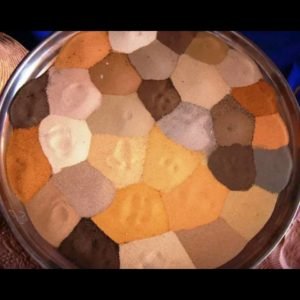
COLORED SANDS OF THE SAHARA DESERT
James Hutton is the father of geology. He envisioned the cyclical nature of geologic processes. Geology is a science that deals with the history of the earth and its life especially as recorded in rock. It is the study of earth’s structure and the forces that produce them, including earth tectonics.
There are 92 elements naturally occurring on earth. An element has only one kind of atom. Elements are created in the stars. Some elements are attracted to each other and some are not. When 2 atoms of hydrogen get very hot and combine into 1 atom of helium (dry ice), neutrons are released as energy causing more heat. In nuclear fusion, 2 atoms fuse together to form a heavier element. When nuclear fusion takes place in a cloud of hydrogen, so much energy is released a star is born. If the reactions are uncontrollable, the star explodes in a supernova and elements spew into space.
99% of the mass of the universe is made of 2 elements – hydrogen and helium.
99% of the mass of the earth is made of 8 elements: iron, oxygen, calcium, silicon, magnesium, aluminum, sulfur, nickel.
Elements in the human body:
oxygen 65%
carbon 17.5%
Hydrogen 10.2%
nitrogen 2.4%
calcium 1.6%
all others 3.3%
Gold is one of the few elements found in a pure state. Its most common occurrence is in quartz. Bismuth is the heaviest element not radioactive. There are 6 elements that cannot be combined with other elements: Helium, neon, argon, krypton, xenon, and radon. They always exist as single atoms.
A mineral is made of one or more chemical elements. Chemicals in a mineral account for its softness, shine, and other noticeable properties. Anything not a plant or animal is a mineral. Many things are made of minerals: houses, cars, glass, dishes, pots, knives, paint, bridges, signs, jewelry, furniture, clay, chalk, talc powder, cement, sidewalks, roads, pipes, and wires. Almost all minerals are found in a solid state but water.
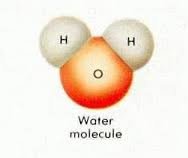
WATER is a liquid mineral. Ice is a water crystal. Flint is one of the oldest minerals used by man. Salt is a mineral known as Halite that comes from the sea. People used salt and turquoise for money long ago. We eat minerals in our food: liver = iron, milk and cheese = calcium, salt = iodine, beans & peas = copper and manganese, fish = phosphorus.
Of the rock forming minerals the most common are quartz, feldspar, & mica. Quartz is the most important rock-forming mineral and has many colors. Ex. smoky quartz, citrine, amethyst, rose.
Metals are minerals that have certain properties like shiny and good conductor of heat and electricity, and can be pressed, hammered, and bent such as gold, copper, silver, iron, aluminum and steel (foil, tin and aluminum cans). A television has 35 minerals and the telephone has 40.
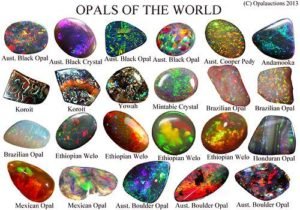
Gemstones are minerals that have beauty, hardness, rarity, and sometimes translucence. Of the gemstones, emerald and diamond are the most rare.
Rock is an aggregate of one or more minerals and they are the building blocks of the earth’s crust Many rocks contain silica (SiO2); a compound of silicon and oxygen that forms 74.3% of the Earth’s crust. This material forms crystals with other compounds in the rock. The proportion of silica in rocks and minerals is a major factor in determining their name and propertiesThe types and abundance of minerals in a rock are determined by the manner in which the rock was formed.. Rocks are geologically classified according to characteristics such as mineral and chemical composition, permeability, the texture of the constituent particles, and particle size. Most rocks contain about 6 minerals. A mineral is homogenous. (molecules of every mineral are arranged in a particular crystalline structure that dictates its shape.)
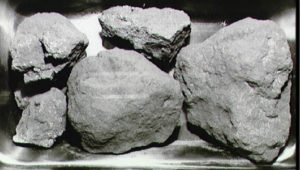
MOON ROCKS
 THE MOST VALUABLE ROCKS ON EARTH!
The Rock Cycle is the dynamic transitions through geologic time among the three main rock types: sedimentary, metamorphic, and igneous. The Rock Cycle explains how the three rock types are related and how processes change one type to another over time. The cycle is driven by plate tectonics and water and temperature.
Rocks are many colors, sizes, and shapes and are found everywhere: pebbles, stones, boulders, mountains, and islands. They can be round, square, spiked, plated, smooth, rough, hard or soft. Some have eyes. Some have stars. They may be clear, black, or mixed colors, magnetic or radioactive. Quartzite is metamorphosed sandstone found in the high Blue Ridge Mts. It is the most durable rock known. Quartz consists of rock crystals such as rose, amethyst, tigers eye.
ROCK QUARRIES are areas where rock is mined. Ex. Granite, sandstone, marble, limestone. Gravel is crushed rock. Rock is eroded by wind and water continually and is created through volcanoes. Famous rocks are: the Grand Canyon, Clingmans Dome, the Petrified Forest, and Caesars Head
The cryptocrystalline group of rocks has a crystalline structure so fine you cannot see particles under a microscope. It includes agate, bloodstone, carnelian, onyx, moss agate, chert, flint, and jasper.
Schistocity is how a rock breaks. Some crumble, flake, or break in one direction. Some rocks fluoresce and glow under ultraviolet light. Ex.willemite, calcite, hardystonite, autunite, scheelite, hydrozincite, semi-opal, wernerite
Moon rocks are the most expensive rocks ever collected and are a symbol of a dream come true. They are lumps of blackish rock. There is no trace of fossils or oceanic matter on the moon. Moon rock mineral composition is similar to earth rocks but differently combined. There are 2 types of rock on the moon: igneous rocks and breccias. There is the highest content of elements with high melting points and few with low melting points (opposite on earth). They are a mixture of pieces of iron, meteorites, igneous rock, and glassy fragments. The soil is a high content of nickel, cadmium, zinc, silver, gold, and copper. The soil has a high content of meteorite chips formed 3-7 billion years ago.
IGNEOUS ROCKS are formed from fire deep in the earth. Magma is molten rock. Magma is the Greek word for dough. Hot lava spews forth from volcanoes. The plutonic
rocks solidify deep in the earth’s crust. Basalt and granite crystallize in magma. Some minerals are formed by direct crystallization from a gas. Sulfur crystallizes from a gas released at volcanic vents around hot springs and forms a powdery crust or large crystals, burns with an unpleasant odor, is used in insecticides and to make paper, matches, and explosives.
Granite is quartz, feldspar, and mica and is the most common igneous rock. It is molten rock that cools underground before it gets to the surface. Huge rocks are created this way and can be red, pink, yellow, and brown. A good place to find them is around old volcanoes.
Iron pyrite is a cube made of iron and sulfur. It forms good crystals, comes from the decay of animal and vegetable matter, forms nodules in shale and chalk, occurs in irregular masses, and is pale brass yellow and sparks when struck.
Galena is lead and sulfur, the most common mineral with lead, cubes splits easily and are large masses in limestone. It is heavy and shines silver gray.
Magnetite is iron and oxygen. The crystal is the same as diamond and it is strongly magnetic. ex. Lodestone (points north.)
Hematite is Greek for blood. Kidney ore makes a red streak and is the most important source of iron. It is widespread in sedimentary rocks and causes the red color of many rocks.
Corundum has 6-sided barrels and spindles such as ruby, sapphire and 6 rayed stars.
Feldspar occurs in almost all igneous rocks and is white, light pink and green. It is changed to clay by wind and water. We find granite with pink feldspar or white feldspar.
Almandine and staurolite are plutonic. Staurolite is found at Mineral Bluff, Georgia and in Virginia.
Lava is a common igneous rock. If lava cools fast it forms obsidian that looks like glass. Other igneous rocks are diorite, felsites, basalt, pumice, granite, and feldspar.
Pyrolucite consists of manganese and oxygen and forms fernlike shapes in sedimentary rock or thin radiating crystals that form nodules at the bottom of the sea with copper, iron, and nickel.
Stone Mt. in Georgia is an example of a rock formed at great depths. Uplifts and erosion have made it visible. The following mountains were formed from slow folding glaciers: Swiss Alps, Appalachians, Atlas, Urals, Rockies, and Himalayan. Volcanic domes and cones are faulted and folded peaks. Faulted mountains rise and fall. Ex. Kilimanjaro, Fujiyama, Vesuvius, Etna. Dome Mt. of Utah is an example of volcanism but it does not erupt.
SEDIMENTARY rocks are mostly made under water from rock, sand, and mud. The top layer puts pressure on the bottom and they change into sandstone, limestone, shale, marble, slate, schist, coal, conglomerate, and gypsum (chalk.)
One finds limestone where land was once under water and it forms only under water.
Conglomerate is made in old streams and riverbeds. Sandstone can be gray, yellow, red, and brown. Shale is created from fine silt and mud and has the odor of wet earth. Ex. Limestone, sandstone, mudstone, dolomite, salt, coal. Stalactites in caves are sedimentary rock formation
METAMORPHIC rocks are formed from heat and pressure changes 40 miles below the earth’s surface in 1% of the earths crust. Limestone turns to marble.
Shale turns to slate. Schist is from mudstone and shale and sparkles with mica.
Serpentine is green and slippery to the touch as if covered with wax or soap. Quartzite is formed from sandstone. The most famous metamorphic rock is marble Ex. Talc, marble, serpentine, quartzite, slate, schist.
CRYSTALS The most solid substances are crystalline and have a shape. Diamond as a natural crystal has no sparkle.
There are 6 Systems of crystals:
- Cubic = halite
- Orthorhombic = sulfur
- Tetragonal = rutile
- monoclinic = epppidote
- Hexagonal = calcite
- triclinic = amazonite
How to identify rocks: Where did it come from? How hard is it? We use the hardness scratch test.
Hardness scale:
Talc is metamorphic and the softest
Gypsum is sedimentary and colorless or white. Ex. plaster of parries, chalk
Calcite is colorless or white and found in all groups. Ex. Iceland spar
Fluorite is colorless or many colors
Apatite yellow is most common
Feldspar is one of the most common minerals on earth and turns to clay
Quartz is most common
Topaz
Corundum ex. Ruby, sandpaper
Diamond is the hardest mineral, is rare and formed from compressed carbon.
Use a streak plate to identify rocks. Some make a colored streak. You can identify them by origin, hardness, streak, and weight.
Fossil is a Latin word meaning “dug up”. Fossils animals and plants are found in sedimentary rock such as limestone. Wood becomes petrified,
Meteorites – Gibeon in 1838 fell in Namilua Africa. Henburg fell in Australia and caused 13 craters in 1½ sq. miles in central Australia. Canyon Diablo caused the Arizona meteor crater and was the first meteor crater identified on earth. An iron meteor fell 40,000 years ago. It was 80 ft in diameter and weighed 63,000 tons. The impact crater is 4,200 feet in diameter. The floor is 750 feet below the rim. 150 impact craters have been discovered around the world
To think about:
Tools you would need for mining, a rock hound, rockslide, rock climbing, between a rock and a hard place, faith as a stone in a box, honey from the rock, rock and roll! Get the lead out of your shoes
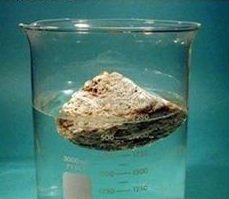
PUMICE IS THE ONLY ROCK THAT FLOATS ON WATER!

112 ELEMENTS ILLUSTRATED
Death Valley






 THE MOST VALUABLE ROCKS ON EARTH!