Inflamation in the Body

INFLAMATION IN THE BODY

The process by which the body regularly heals and detoxifies itself can also lead to life-threatening illnesses. The culprit: Inflammation. T Without it, stubbed toes and runny noses don’t heal; inflammation is the body’s natural healing ability—essentially removing the injury to allow for recovery—but it can also accumulate in the body in a chronic fashion, leading to serious illnesses such as arthritis, obesity, diabetes, cancer and heart disease.

Harvard Medical School research found that inflammation becomes chronic because of an imbalanced immune system. Mast cells are normal immune cells that in healthy individuals repair damaged cells. But in individuals with obesity and diabetes, mast cells accumulate in fat and can actually leak into tissue and start to cause serious damage.

Your diet and lifestyle choices can help you outsmart your body’s glitch mechanism and prevent—even reverse—the effects of chronic inflammation.

Reduce Inflammation Causing Foods

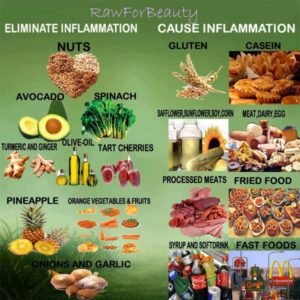
Red meat, dairy, processed foods, alcohol, and sugar are some of the leading causes of inflammation in the body due largely to the high incidence of Omega-6 fatty acids found in processed foods and animal products. While Omega-6 (like from hemp) is crucial for our health, too much can cause chronic inflammation.

Maximize Hydration

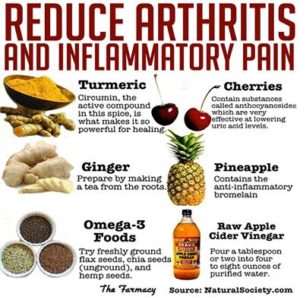
Water is important for every cell of our bodies, and it’s especially powerful in flushing out toxins and inflammation. Caffeinated beverages and alcohol can dehydrate leading to more inflammation.

Add Healthy Omega Fats

Essential fatty acids, like the Omega-3s found in hemp or flax oil, support the body’s anti-inflammatory response and reduce chronic inflammation. They can aid in pain management from chronic arthritis or acute injuries.

Getting Friendly with Bacteria

Cultures around the globe have eaten fermented or cultured foods since antiquity. The Standard American Diet has replaced these traditional foods for sugary, fatty, saltier versions that are often void of the necessary probiotics that protect and support the digestive system. Whether adding in cultured foods such as kimchee, sauerkrautor tempeh, or using a probiotic supplement, this can be a great aid in treating and preventing chronic inflammation.

Tapping the Power Plants

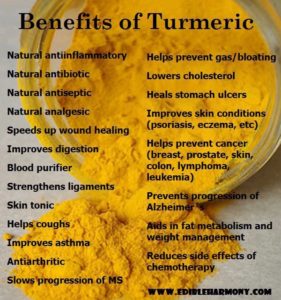
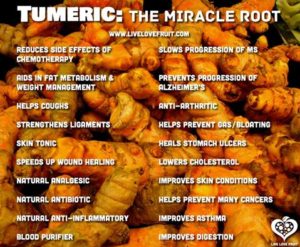
The plant kingdom is loaded with powerful healers, from plant enzymes in pineapple (bromelain) to turmeric (the seasoning in Indian food), which is loaded with curcuminoids—powerful anti-inflammatory compounds. Ginger is another powerful inflammation fighter that can be incorporated easily into your diet or taken as a supplement.

GOLDEN MILK TUMERIC TEA     This lightly spiced drink is similar in flavor to chai and is packed with anti-inflammatory and antioxidant properties. Makes 2

  • 1 cup unsweetened non-dairy coconut milk or almond milk
  • 1 (3-inch) cinnamon stick
  • 1 (1-inch) piece turmeric, unpeeled, thinly sliced, or 1/2 teaspoon dried turmeric
  • 1 (1/2-inch) piece ginger, unpeeled, thinly sliced 1 tablespoon honey
  • 1 tablespoon virgin coconut oil
  • 1/4 teaspoon whole black peppercorns Ground cinnamon (for serving

Whisk coconut milk, cinnamon, turmeric, ginger, honey, coconut oil, peppercorns, and 1 cup water in a small saucepan; bring to a low boil. Reduce heat and simmer until flavors have melded, about 10 minutes. Strain through a fine-mesh sieve into mugs and top with a dash of cinnamon. Golden milk can be made 5 days ahead. Store in airtight container and chill. Warm before serving. Dried turmeric can be substituted when fresh is not available. Dried turmeric will settle to the bottom of the mug, so stir well before drinking.


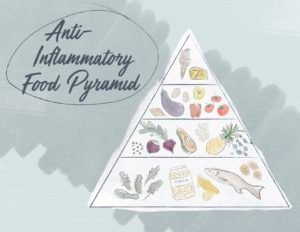
AntiInflammatoryFoodPyramid

Natural Pain Relief

Herbal Treatments
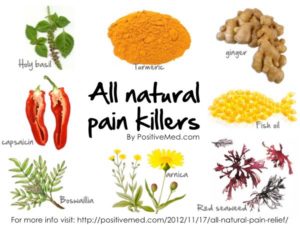
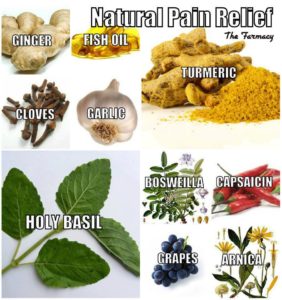
There are many herbs that can be used – ginger and turmeric for inflammatory processes; to rosemary, skullcap and valerian for headaches and muscle spasms; herbs can be used to treat almost any type of pain. aspirin, was originally extracted from white willow bark.)

Supplements
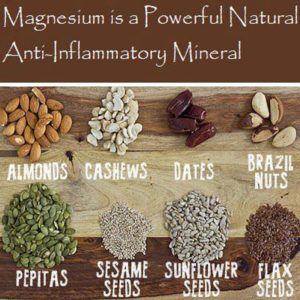
Omega-3 fish oil capsules are recommended to help treat cardiac problems, rheumatoid arthritis, and other autoimmune diseases. Calcium, magnesium, and potassium help reduce muscle spasms and other types of muscle pain; and SAM-e and MSM are used for arthritis pain and stiffness.

Heat and Cold
Using hot or cold packs, or alternating heat and cold helps relax muscles spasms and reduce muscle pain. Therabeads are microwaveable hot packs. There are reusable gel packs that can be heated or cooled and ones shaped to be used on knees, shoulders, or sinuses.

Aromatherapy
Using essential oils externally can ease pain from many causes including muscle tension, neuropathy, migraine, and inflammation. Never use a pure essential oil on your skin, and even blends should be kept away from the eyes. Most essential oils are strong and must be diluted with a “carrier oil” before use or they will cause burns.

Capsaicin Creams
Capsaicin creams are useful for arthritis pain, shingles, and neuralgia. According to a study at the University of Oxford, 40% of arthritis patients cut their pain levels in half after one month of regular use, and 60% of neuralgia patients did the same after 2 months. There is evidence that applying a small amount inside the nostrils will reduce the intensity of cluster or migraine headaches.

Stress Reduction
Stress increases pain levels. Stress reduction techniques like meditation, progressive relaxation, exercise, guided meditation, and listening to soothing music or nature sounds have shown to be helpful in pain management. Tai Chi and Yoga are especially helpful forms of exercise for stress reduction, since they combine exercise and meditation.

Massage
Massage is an excellent addition to a pain management program, especially if the massage therapist is also trained in myofascial trigger point therapy. Massage helps relieve pain and reduce stress, and with the addition of trigger point therapy, it can also reduce referred pain from myofascial trigger points.

Acupuncture or Acupressure
Many pain patients swear by acupuncture treatments for their pain, saying that they feel much better after a treatment. For those who are wary of having needles inserted into their bodies, acupressure can be a viable option. Instead of placing needles into the skin, acupressure uses pressure applied to the same meridian points that would be used in acupuncture, without the slight risk of infection or injury that comes with the more invasive needles.

Diet Changes
Diet changes can be very helpful in cases where sensitivities to foods such as gluten are increasing pain levels, or where nutrient deficiencies are a factor. There are many books available describing elimination diets used to determine if a food sensitivity is a factor in pain levels, and even more explaining which foods provide which nutrients. One major culprit in increasing pain is aspartame, the artificial sweetener used in most diet products. Eliminating this one ingredient from the diet can reduce pain levels by half or more for sensitive individuals.

Hydrotherapy
Hydrotherapy is the use of water as a therapeutic agent. It can involve hot or cold baths, with or without the addition of mineral salts, essential oils or other agents that can be absorbed through the skin; exercise programs that take place in a pool to help support weakened joints or muscles and provide resistance without over-stressing the body; or whirlpool baths that can ease muscle and joint stiffness and reduce stress levels.
 
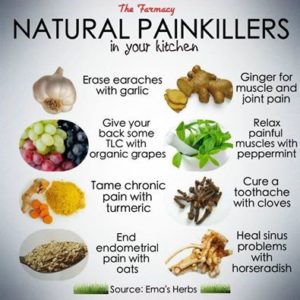
Natural Pain Killers:

Ginger! (muscle pain)
Apple Cider Vinegar! (heartburn)
Clove! (toothache)
Garlic! (earache)
Cherries! (headache / joint pain)
Fish! (stomach pain)
Grapes (back pain)
Yogurt (prevents PMS)
Oats (Endrometrial)
Salt (foot pain)
Pineapple (digestive upsets)
Peppermint (muscle pain)
Turmeric (chronic pain)
Flax Seed (breast pain / soreness)
Horseradish (sinus)
Tomato Juice (leg cramps)
Blueberries (bladder infections)
Honey (mouth sores)
Water (injuries)
Coffee (migraines)
 
Miscellaneous Recipes for Pain:
1. Make muscle pain a memory with ginger
When Danish researchers asked achy people to jazz up their diets with ginger, it eased muscle and joint pain, swelling and stiffness for up to 63 percent of them within two months. Experts credit ginger’s potent compounds called gingerols, which prevent the production of pain-triggering hormones. The study-recommended dose: Add at least 1 teaspoon of dried ginger or 2 teaspoons of chopped ginger to meals daily.

2. Cure a toothache with cloves
Got a toothache and can’t get to the dentist? Gently chewing on a clove can ease tooth pain and gum inflammation for two hours straight, say UCLA researchers. Experts point to a natural compound in cloves called eugenol, a powerful, natural anesthetic. Bonus: Sprinkling a ¼ teaspoon of ground cloves on meals daily may also protect your ticker. Scientists say this simple action helps stabilize blood sugar, plus dampen production of artery-clogging cholesterol in as little as three weeks.

3. Heal heartburn with cider vinegar
Sip 1 tablespoon of apple cider vinegar mixed with 8 ounces of water before every meal, and experts say you could shut down painful bouts of heartburn in as little as 24 hours. “Cider vinegar is rich in malic and tartaric acids, powerful digestive aids that speed the breakdown of fats and proteins so your stomach can empty quickly, before food washes up into the esophagus, triggering heartburn pain,” explains Joseph Brasco, M.D., a gastroenterologist at the Center for Colon and Digestive Diseases in Huntsville, AL.

4. Erase earaches with garlic
Painful ear infections drive millions of Americans to doctors’ offices every year. To cure one fast, just place two drops of warm garlic oil into your aching ear twice daily for five days. This simple treatment can clear up ear infections faster than prescription meds, say experts at the University of New Mexico School of Medicine. Scientists say garlic’s active ingredients (germanium, selenium, and sulfur compounds) are naturally toxic to dozens of different pain-causing bacteria. To whip up your own garlic oil gently simmer three cloves of crushed garlic in a half a cup of extra virgin olive oil for two minutes, strain, then refrigerate for up to two weeks, suggests Teresa Graedon, Ph.D., co-author of the book, Best Choices From The People’s Pharmacy. For an optimal experience, warm this mix slightly before using so the liquid will feel soothing in your ear canal.

5. Chase away joint and headache pain with cherries
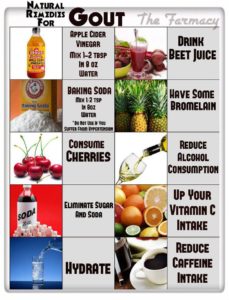
Latest studies show that at least one in four women is struggling with arthritis, gout or chronic headaches. If you’re one of them, a daily bowl of cherries could ease your ache, without the stomach upset so often triggered by today’s painkillers, say researchers at East Lansing ’s Michigan State University. Their research reveals that anthocyanins, the compounds that give cherries their brilliant red color, are anti-inflammatories 10 times stronger than ibuprofen and aspirin. “Anthocyanins help shut down the powerful enzymes that kick-start tissue inflammation, so they can prevent, as well as treat, many different kinds of pain,” explains Muraleedharan Nair, Ph.D., professor of food science at Michigan State University . His advice: Enjoy 20 cherries (fresh, frozen or dried) daily, then continue until your pain disappears.

6. Fight tummy troubles with fish
Indigestion, irritable bowel syndrome, inflammatory bowel diseases…if your belly always seems to be in an uproar, try munching 18 ounces of fish weekly to ease your misery. Fatty acids in fish, called EPA and DHA, can significantly reduce intestinal inflammation, cramping and belly pain and, in some cases, provide as much relief as corticosteroids and other prescription meds. “EPA and DHA are powerful, natural, side effect-free anti-inflammatories, that can dramatically improve the function of the entire gastrointestinal tract,” explains biological chemist Barry Sears, Ph.D., president of the Inflammation Research Foundation in Marblehead , MA . For best results, look for oily fish like salmon, sardines, tuna, mackerel, trout and herring.

7. Prevent PMS with yogurt
Up to 80 percent of women will struggle with premenstrual syndrome and its uncomfortable symptoms, report Yale researchers. The reason: Their nervous systems are sensitive to the ups and downs in estrogen and progesterone that occur naturally every month. But snacking on 2 cups of yogurt a day can slash these symptoms by 48 percent, say researchers at New York ’s Columbia University. “Yogurt is rich in calcium, a mineral that naturally calms the nervous system, preventing painful symptoms even when hormones are in flux,” explains Mary Jane Minkin, M.D., a professor of gynecology at Yale University.

8. Tame chronic pain with turmeric
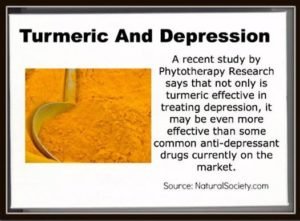
Studies show turmeric, a popular East Indian spice, is actually three times more effective at easing pain than aspirin, ibuprofen or naproxen, plus it can help relieve chronic pain for 50 percent of people struggling with arthritis and even fibromyalgia, according to Cornell researchers. That’s because turmeric’s active ingredient, curcumin, naturally shuts down cyclooxygenase 2, an enzyme that churns out a stream of pain-producing hormones, explains nutrition researcher Julian Whitaker, M.D. and author of the book, Reversing Diabetes. The study-recommended dose: Sprinkle 1/4 teaspoon of this spice daily onto any rice, poultry, meat or vegetable dish.

9. End endometrial pain with oats
The ticket to soothing endometriosis pain could be a daily bowl of oatmeal. Endometriosis occurs when little bits of the uterine lining detach and grow outside of the uterus. Experts say these migrating cells can turn menstruation into a misery, causing so much inflammation that they trigger severe cramping during your period, plus a heavy ache that drags on all month long. Fortunately, scientists say opting for a diet rich in oats can help reduce endometrial pain for up to 60 percent of women within six months. That’s because oats don’t contain gluten, a trouble-making protein that triggers inflammation in many women, making endometriosis difficult to bear, explains Peter Green, M.D., professor of medicine at Colombia University .

10. Soothe foot pain with salt
Experts say at least six million Americans develop painful ingrown toenails each year. But regularly soaking ingrown nails in warm salt water baths can cure these painful infections within four days, say scientists at California ’s Stanford University . The salt in the mix naturally nixes inflammation, plus it’s anti-bacterial, so it quickly destroys the germs that cause swelling and pain. Just mix 1 teaspoon of salt into each cup of water, heat to the warmest temperature that you can comfortably stand, and then soak the affected foot area for 20 minutes twice daily, until your infection subsides.

11. Prevent digestive upsets with pineapple
Got gas? One cup of fresh pineapple daily can cut painful bloating within 72 hours, say researchers at California ’s Stanford University . That’s because pineapple is naturally packed with proteolytic enzymes, digestive aids that help speed the breakdown of pain-causing proteins in the stomach and small intestine, say USDA researchers.

12. Relax painful muscles with peppermint
Suffering from tight, sore muscles? Stubborn knots can hang around for months if they aren’t properly treated, says naturopath Mark Stengler, N.D., author of the book, The Natural Physician’s Healing Therapies. His advice: Three times each week, soak in a warm tub scented with 10 drops of peppermint oil. The warm water will relax your muscles, while the peppermint oil will naturally soothe your nerves — a combo that can ease muscle cramping 25 percent more effectively than over-the-counter painkillers, and cut the frequency of future flare-ups in half, says Stengler.

13. Give your back some TLC with grapes
Got an achy back? Grapes could be the ticket to a speedy recovery. Recent studies at Ohio State University suggest eating a heaping cup of grapes daily can relax tight blood vessels, significantly improving blood flow to damaged back tissues (and often within three hours of enjoying the first bowl). That’s great news because your back’s vertebrae and shock-absorbing discs are completely dependent on nearby blood vessels to bring them healing nutrients and oxygen, so improving blood flow is essential for healing damaged back tissue, says Stengler.

14. Wash away pain injuries with water
Whether it’s your feet, your knees or your shoulders that are throbbing, experts at New York ’s Manhattan College , say you could kick-start your recovery in one week just by drinking eight 8-ounce glasses of water daily. Why? Experts say water dilutes, and then helps flush out, histamine, a pain-triggering compound produced by injured tissues. “Plus water is a key building block of the cartilage that cushions the ends of your bones, your joints’ lubricating fluid, and the soft discs in your spine,” adds Susan M. Kleiner, Ph.D., author of the book, The Good Mood Diet. “And when these tissues are well-hydrated, they can move and glide over each other without causing pain.” One caveat: Be sure to measure your drinking glasses to find out how large they really are before you start sipping, she says. Today’s juice glasses often hold more than 12 ounces, which means five servings could be enough to meet your daily goal.

15. Heal sinus problems with horseradish
Latest studies show sinusitis is the nation’s number one chronic health problem. And this condition doesn’t just spur congestion and facial pain, it also makes sufferers six times more likely to feel achy all-over. Horseradish to the rescue! According to German researchers, this eye-watering condiment naturally revs up blood flow to the sinus cavities, helping to open and drain clogged sinuses and heal sinus infections more quickly than decongestant sprays do. The study-recommended dose: One teaspoon twice daily (either on its own, or used as a sandwich or meat topping) until symptoms clear.

16. Beat bladder infections with blueberries
Eating 1 cup of blueberries daily, whether you opt for them fresh, frozen (nom nom nom) or in juice form, can cut your risk of a urinary tract infection (UTIs) by 60 percent, according to researchers at New Jersey’s Rutgers University. That’s because blueberries are loaded with tannins, plant compounds that wrap around problem-causing bacteria in the bladder, so they can’t get a toehold and create an infection, explains Amy Howell, Ph.D. a scientist at Rutgers University .

17. Heal mouth sores with honey
Dab painful canker and cold sores with unpasteurized honey four times daily until these skin woes disappear, and they’ll heal 43 percent faster than if you use a prescription cream, say researchers at the Dubai Specialized Medical Center in the United Arab Emirates . Raw honey’s natural enzymes zap inflammation, destroy invading viruses and speed the healing of damaged tissues, say the study authors.

18. Fight breast pain with flax
In one recent study, adding 3 tablespoons of ground flax to their daily diet eased breast soreness for one in three women within 12 weeks. Scientists credit flax’s phytoestrogens, natural plant compounds that prevent the estrogen spikes that can trigger breast pain. More good news: You don’t have to be a master baker to sneak this healthy seed into your diet. Just sprinkle ground flax on oatmeal, yogurt, applesauce or add it to smoothies and veggie dips.

19. Energize migraine medication with coffee
Prone to migraines? Try muscling-up your painkiller with a coffee chaser. Whatever over-the-counter pain med you prefer, researchers at the National Headache Foundation say washing it down with a strong 12- ounce cup of coffee will boost the effectiveness of your medication by 40 percent or more. Experts say caffeine stimulates the stomach lining to absorb painkillers more quickly and more effectively.

20. Tame leg cramps with tomato juice
At least one in five people regularly struggle with leg cramps. The culprit? Potassium deficiencies, which occur when this mineral is flushed out by diuretics, caffeinated beverages or heavy perspiration during exercise. But sip 10 ounces of potassium-rich tomato juice daily and you’ll not only speed your recovery, you’ll reduce your risk of painful cramp flare-ups in as little as 10 days, say UCLA researchers.
 
Pain Killer Oil There are only four all-natural ingredients:                                                                                   Tea Tree Oil, a potent anti-inflammatory. Most people don’t know it is an amazing anti-inflammatory because it is too thick to penetrate your skin on its own.
  The second key ingredient is vanilla, a natural vasodilator. Vanilla opens up blood vessels and allows the Tea Tree Oil to penetrate. This combination extinguishes any inflammation in its path with a cumulative effect.
  Blue Malle Eucalyptus is the most potent strain of Eucalyptus. Even low cineole Eucalyptus can reduce inflammation by cytokine inhibition. Blue Malle has the highest cineole content in the world. Eucalyptus stands alone as a pain reliever. It works faster than Tea Tree Oil. The immediate pain relief you experience is from Eucalyptus oil. The long-term relief is from Tea Tree Oil.
Olive oil binds all 4 ingredients together.
 
]
]


10 Benefits of Eating Organic

10 Benefits of Eating Organic

Top 10 Benefits of Eating Organic                                                    

  1. Waterways aren’t contaminated by chemical run-off from farms
  2. Pesticide-related health risks to farm workers (and anyone living in the area) are eliminated.
  3. You will dramatically reduce the amount of pesticide residue you ingeston a daily basis. Pesticides ingested by pregnant women may be linked to birth defects and health issues.
  4. Biodiversityis increased with the use of buffer crops, and by avoiding killing or harming insects and other wildlife that is not a threat to crops.
  5. Pesticides are responsible for a staggering amountof greenhouse gas emissions.
  6. You can avoid eating any genetically modified foods.
  7. Reduced reliance on chemical and agri-engineering corporationsis good for farmers.
  8. Organic farming ishealthier for the soil.                
  9. Organic dairy cows are not injected with milk-boosting       hormones which may increase insulin levels in humans.
  10. Organics taste better. It’s just my humble opinion, but I’ve noticed a difference in the taste of strawberries, peaches, grapes and leafy greens, so if you’re still skeptical, I dare you to put your faith in conventionally grown foods to the test. 

Cara Smusiak writes on behalf of Naturally Savvy.com about how to live a more natural, organic and green lifestyle.

More reasons to go organic:
It tastes better
It is healthy
It is safe
Animals are healthier and happier
More wildlife and biodiversity
Can feed the world
Planet friendly
Resilient to climate change
Non-polluting
Stores more carbon
It tastes better

It is healthy
No food has higher amounts of beneficial minerals, essential amino acids and vitamins than organic food. Organic food avoids pesticides and all controversial additives including aspartame, tartrazine, MSG and hydrogenated fats. Organic food contains higher levels of vitamin C and minerals like calcium, magnesium, iron and chromium as well as cancer-fighting antioxidants and Omega 3. Organic milk for example, is on average 68% higher in Omega 3 essential fatty acids. There is evidence that organic food can reduce cancer, stroke and heart disease.

It is safe
There are over 3,800 brands of insecticide, herbicide and fungicide approved for use in the UK. Some fruit and vegetables are sprayed as many as ten times before reaching supermarket shelves. GM is banned from organic produce. Genetically modified (GM) crops and ingredients are banned under organic standards. Shoppers wanting to avoid GM products may be surprised to know that over a million tonnes of GM crops are imported each year to feed non-organic livestock, which in turn supply our supermarkets with pork, bacon, milk, cheese and other dairy products.

Organic animals are healthier and happier
Organic animals are free to pursue natural behavior because they have plenty of outside space to thrive and grow, and are not routinely drugged with antibiotics. Organic standards prohibit cruelty and guarantee truly free-range lives for farm animals. The UK Government’s own advisors found that plant, insect and bird life is up to 50% greater on organic farms. Organic farms have more wildlife. Organic farming relies on wildlife to help control natural pests, so wide field edges are left uncultivated for bugs, birds and bees to flourish. They are also not sprayed away by the fertilizers, chemicals and pesticides routinely used on non-organic farms.

Organic can feed the world
Organic crop yields equal or are more than industrially farmed crops. There is increased food security as there are few external inputs (chemical fertilizers, weed killers), it is ecological so less dependent on scarce resources such as oil and is more sustainable. Organic farms require more manpower so help the local job market, really important as poverty is a prime cause of hunger.

Organic can double or triple yields of conventional farming
Yields of organic corn and soya is the same but with less water and 30% less energy
Organic is planet friendly.
Over 20% of greenhouse gas emissions come from food and farming today. Nitrogen fertilizer manufacturing is the worst offender. To produce just one ton of food takes one ton of oil, one hundred tons of water and produces seven tons of greenhouse gasses using modern industrial methods unlike Organic farmers who work with nature to feed the soil and control pests, so that the farm is a single balanced organism, carbon in = carbon out. By choosing organic, local and seasonal – we can significantly reduce our carbon footprint.

Organic soil is healthier and more resilient to climate change
Because organic soil contains higher levels of carbon stored in the humus, more soil microbes, and better soil structure, it withstands drought, heavy rains and erosion better. Less water for irrigation is needed, rains do not wash away the soil, or dry weather blow away the soil.

Organic does not pollute the world
There are no poisonous chemicals (weed killers, pesticides, fertilizers) which can kill wildlife and which cause illnesses such as cancer, autoimmune deficiency, respiratory problems and allergens. Friendly animals, insects and microbes that protect against pests and disease are not killed nor are bees that are essential for pollination. As a result there is no poisoning of our water supplies or our atmosphere.

Organic agriculture stores more carbon
Methane emissions from animals are a problem in intensive farming practices. Organic soils have 50% more carbon in their soil. Soil under grass stores more carbon than arable land. Loss of carbon from arable soil is a problem when using nitrogen based chemical fertilizers. In industrial farming systems animals grow extra fast as they are fed on indigestible soya and grain. There is very little grassland, high methane emissions, and a problem with disposing of highly polluting slurry. Farmyard manure is second only to compost for restoring carbon and fertility to arable fields; grass rotations also restore soil fertility and carbon. Animals feeding on the grassland then further increase its fertility. Low animal stocking, grass leys and natural slow growth means that methane emissions from animals is matched by carbon storage in the ground.

Organic soils have 50% more carbon in their soil. Conversion to organic practices would capture 2 tonnes of CO2 per hectare per year back into the soil. Carbon capture in the soil using organic methods can have a huge effect on carbon levels in the air. Soil contains three times as much carbon as the atmosphere and five times as much as forests and vegetation put together. The answer is local, organic grass reared meat not imported meat raised on fields created from forest, and not local animals intensively reared on soya (grown using methods producing high carbon emissions possibly on land cleared from forest).

Organic carbon levels could reduce atmospheric CO² by 2%.
Healthier plants animals and people
Organic growing can solve the food crisis
Can solve the carbon emissions crisis as organic soil and plants stores more carbon
Organic produce is safe, pesticides, etc destroy our food and our healthfood/shoppersguidetopesticides.jpg

Choose Organic      Choosing organic food helps protect your family from toxic pesticide residues commonly found on fruit and veggie skins.

     Hormone-Free Desserts      Standard ice cream usually comes from cows fed a steady (and unnatural) diet of genetically engineered corn, soy, and even antibiotics and hormones linked to certain cancers. Organic dairies ban all of these, and their cows are required to eat a more natural diet featuring organic grasses and hay. This also creates milk higher in a heart-protecting fat called conjugated linoleic acid, or CLA. Pick Stonyfield After Dark Chocolate

    Eggs from Happier Hens      More than 90 percent of the eggs produced in this country come from hens crammed into tiny cages and given feed loaded with antibiotics? Birds raised outside on pasture produce nutritionally superior eggs.

    Pesticide-Free in the Frozen Food Aisle     Stick with the sustainable farming theme year-round opting for organic in the frozen fruit and vegetables aisle. Buy in bulk from a local organic farm during the growing season, and preserve the harvest to enjoy later. Cascadian Farms offers organic frozen vegetables nationwide. Shop from your local organic farmer whenever possible.

    Sustainable Nurtured Skin & Hair     “Natural means nothing.” For truly organic personal care products, look for the actual USDA organic symbol not just “organic” in the product name. Try Dr. Bronner’s Baby Mild or peppermint organic soap for bathing, hand washing, and even shampooing to get started.

    Truly Natural Meat     Choosing organic beef means customers don’t have to deal with the possibility that their meat was injected with ammonia gas, food dye, or any of the other nasty substances the food industry typically uses. Look for the USDA Organic label—not wording like “natural”—to find meat free of pharmaceuticals and other contaminants.

    Milk   Many parents buy organic milk to avoid exposing their family to cancer-causing, genetically engineered growth hormones used in some conventional dairy operations.

    Chickens That Don’t Eat Chicken     Reports of factory farms feeding their chickens food laced with chemicals, heavy metals, pharmaceuticals, and even parts of other chickens grow more common, the public is shifting toward local grass-fed chicken supplemented with organic grains. These are known as pastured birds. 


Reasons to Buy Organic

Reasons to Buy Organic
 
1. It’s raining corn chemicals.
 U.S. farmers are using so much glyphosate, the main component of weedkillers like Roundup, that researchers are finding it in rain, the air, and streams. According to USDA data, farmers sprayed a whopping 57 million pounds of glyphosate on food crops in 2009—mainly on genetically engineered corn and soy crops. Because glyphosate is a systemic chemical, it actually works its way inside the plant and winds up inside of food at alarming levels. The chemical is linked to potentially irreversible metabolic damage, infertility, obesity, learning disabilities, and birth defects.2. We’re eating shampoo chemicals.
A 2010 study published in the journal Environmental Health Perspectives found that hormone-disrupting phthalates, common fragrance chemicals used in soaps and shampoos, are winding up inside produce. A potential source? Human sewage sludge applied as a fertilizer to farm fields. The sludge can be tainted with shampoo chemicals that wash down the drain—and wind up at the water-treatment plant, the source of the sludge. Luckily, the use of human sewage sludge is banned in organic farming.

What to do about it: If you buy your produce from local farmers who aren’t certified organic, be sure to ask them how they fertilize the soil. If you use store-bought compost in your backyard garden, avoid compost that lists “biosolids” as an ingredient and bagged blends that are heavy and caked together or that put off an ammonia or sewer smell. High-quality compost should be crumbling, earthy, and dark.

3. Pesticides are making us fat.
Both pesticide applicators and farmers who use synthetic chemicals are experiencing a troubling health trend: an increased risk of becoming overweight and obese. Pesticides, even at very low doses, threaten the general public, too. Many chemicals commonly used to grow nonorganic food are hormone disruptors, and scientists are starting to discover that they tamper with our body’s natural weight-loss chemistry. (They actually call them “obesogens.”) Certain bug-killing organophosphate pesticides are linked to obesity, a known risk factor for many other diseases, including cancer and type 2 diabetes.

What to do about it: Eating organic for just five days can rid the body of virtually all pesticide residues. Think you can’t afford it? Look for in-season deals at local farmers’ markets, buy in bulk, and preserve the excess to enjoy during the winter months.

4. Pesticides may raise your diabetes risk.
In addition to acting as obesogens, pesticides are linked in a growing number of studies with diabetes. Though obesity and genetics remain the two biggest risk factors for the disease, certain pesticides may interfere with the way our bodies produce the blood-sugar-regulating hormone insulin. In one of the most recent studies looking into pesticides and diabetes, scientists concluded that it may not even be the active pesticide ingredients causing the problems but the “inert” ingredients added to formulations to aid with application, help the pesticide seep into soil, or prevent the formulation from washing away.

What to do about it: You can avoid diabetes-inducing pesticides by switching to an organic diet, but one of the inert ingredients used in pesticide formulations, phthalates, can crop up in common household items. Protect yourself completely by avoiding synthetic fragrances, soft vinyl products, and “slow-release” or gel-coated medications, all of which contain phthalates.

5. Pesticides could be interfering with your vitamin D levels.
There’s a class of pesticides called organophosphates that includes roughly 20 pesticides, which together account for 70 percent of the pesticides used in the U.S. And a study in the online journal PLoS One found that those pesticides could interfere with vitamin D, the miracle vitamin that wards off cancer, diabetes, infections, heart disease, and broken bones and boosts your immune system. It’s thought that these pesticides interfere with your body’s metabolism of vitamin D, so even if you’re getting enough, the pesticides prevent your body from absorbing it properly.

What to do about it: In addition to eating organic, get your recommended amount of vitamin D by spending at least 10 minutes of every day outside when the sun is at its strongest or by taking a 600 IU supplement of vitamin D3, which is a more beneficial form of the vitamin than vitamin D2, another supplement you might see at the store.

6. Factory-farmed meat can make you old, fast.
Factory farming, the process of raising thousands of animals in small, cramped spaces, has become so filthy that farmers not only inject low levels of antibiotics into animals, breeding antibiotic resistance in humans, but they’ve also had to resort to other questionable techniques to prevent e. coli and other bacteria from getting into the food supply. One example: After slaughter, factory-farmed chickens are washed in chlorine baths that contain 30 times more chlorine than an average swimming pool. To mask the chlorine odor and, ostensibly, according to chicken producers, to keep the bird moist while cooking, the chickens are then injected with a solution of water and phosphate, a chemical that can increase the risk of chronic kidney disease, weak bones, and even premature aging.

What to do about it: Opt for organic meat or meat produced by a local farmer. Most small-scale chicken producers don’t bother with chlorine baths, and even in large-scale organic operations, chlorine baths can contain no more chlorine than is allowed in drinking water.

7. Organic farms could save rural economies.
Thanks to an increased reliance on pesticides and machinery, farms have been able to grow in size while cutting back on labor. And though that sounds like a winning formula for increasing profits for farmers, it doesn’t. The Rodale Institute has found that organic systems are nearly three times as profitable as chemical agriculture systems. Organic systems see an average of $558 in net returns per acre per year, versus just $190 per acre per year for chemical systems. Research from the United Nations and others has also shown that organic farms provide 30 percent more jobs per hectare than nonorganic farms, and that organic farmers net $45,697 in profit, compared with just $25,448 for nonorganic farmers.

What to do about it: Find a local, organic farm to support, and keep your food investments in your own community.



High Fructose Corn Syrup

     High-fructose corn syrup is a ubiquitous ingredient present in processed foods and sugary beverages across the globe. It is a well-known health destroyerwith ties to conditions like metabolic damage and cancer. Now, scientists have revealed that the substance — oftentimes genetically modified — may also be damaging the brain functions of consumers worldwide. The official release goes as far to say that high-fructose corn syrup can make you ‘stupid’. Conducted by the UCLA and published in the peer-reviewed Journal of Physiology, the study is the first to demonstrate how a diet heavily concentrated with high-fructose corn syrup can hamper brain functions — particularly those associated with memory and learning.
 
       “Our findings illustrate that what you eat affects how you think,” said professor of neurosurgery Fernando Gomez-Pinilla, from the David Geffen School of Medicine at UCLA.

      The findings should come as no surprise, given that it has previously been revealed that high-fructose corn syrup oftentimes contains the toxic heavy metal mercury. Mercury is highly dangerous and can cause serious complications with biological function — particularly when exposed to the substance on a daily basis through food intake and other sources (CFL light bulbs, amalgam fillings).

      Despite the negative effects of high-fructose corn syrup on the brain, the scientists found that there are natural solutions that can help to minimize and negate the damage. Scientists found that omega 3′s helped to fortify the brain after observing the results of feeding both flaxseed oil and DHA to the study rats. The scientists found that the omega 3′s were helpful in aiding the ability of brain cells to transmit signals to one another. As a result, memory and total mental ability is improved.

      It is continually being found that high-fructose corn syrup is highly toxic to the human body, and is absolutely unfit for consumption. There is simply no reason why the ingredient should exist within the food supply, other than to save companies money.    Natural Society