Saving seeds
I collect seeds all the time. Seeds are as distinctive from one another as grains of pollen or people. It is the beautiful flowers that make incredible seeds that can stick to you, fly or float.
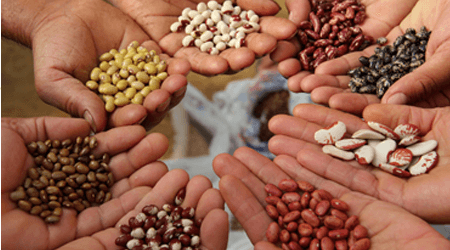
Seeds feed the world! Seeds that feed most people: Corn, Rice, Bread, Cereal, Pasta, Beans, and Nuts.
I love seeds as much as I love dirt!
You can use a big basket and clippers to collect seeds, snipping mature flowers, seedpods or stems. Hang the stems for seeds to drop onto paper. You may spread seeds on paper or put in a basket to air dry for about a week. For zinnias, just clip the flowers, let them dry and pull the petals off. The seeds are attached to the flower petals. If you hang catnip, the tiny seeds fall onto the paper. Remember the food you buy may also contain mature seeds for you to sprout!
Store seeds in envelopes labeled, or plastic snack bags, film canisters or glass jars. They must be dry before you seal I don’t store seeds in my refrigerator unless I eat them. Some seeds must be frozen though before they will sprout. I seal seeds in envelopes and keep in a big basket in a cool dry spot. Bugs like to eat seeds, so make sure seeds are sealed. Humidity and warmth grows mold and rot.
Most seeds last about 3 years Plant open-pollinated varieties of plants and they’ll come back true; Seeds from hybrid varieties won’t come back true.
Harvesting seeds is sustainability in one of its purest forms.
Collect seeds from healthiest plants. Leave some flowers on stems after the flower dies off. The plant will put energy into seed instead of new flowers. A seedpod will replace the flower. Leave the seed to ripen within the pod until the pod turns brown, dries out or cracks open. Harvest before rain to prevent mold
Cut the stem at the base and shake the seed head inside a paper bag. If the seed heads are not fully dry or ripe hang the stems with seed cases intact or lay them flat to dry on a paper or tray away from direct light. If seeds are not dry they will mold in storage. Break open the seedpods. Separate crushed debris from seeds by sifting.
Seeds from fruits and vegetables should be collected before they’re over-ripe. Vegetables such as beans should be harvested when pods are dry. Vegetables with wet pulp such as tomatoes, pumpkins and squash can be separated from the pulp and laid out to dry on newspaper. The seeds of harder pulp fruits and vegetables are simply opened by crushing and removed manually.
The best way to store seeds is to package them in paper envelopes or bags. The temperature should be cool for longer storage. Write the name and date on the envelope.
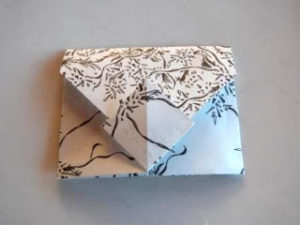
To start making seed packets; below is a simple tutorial to create your own miniature origami envelopes. Enjoy!
1. Cut a piece of paper into a 4″x4″ square. Place the square facedown.
2. Fold the paper in half diagonally to make a triangle.
3. Fold one corner down to meet bottom edge.
4. Fold right corner over 1/3 of the way across the bottom edge.
5. Fold the left corner over 1/3 of the way across the bottom edge.
6. Fold corner back over to the left 1/2 of the way across the bottom edge.
7. Stick your finger into the small pocket triangle and press it open to make a square.
8. Fold top corner down to create a crease.
9. Fill your envelope with your collected seeds.
10. Fold and seal to keep any critters who love seeds out!
Store your decorative envelopes in a cool, dark place to give as a gift or plant when the time is right!
Our Dwindling Food Variety
As we’ve come to depend on a handful of commercial varieties of fruits and vegetables, thousands of heirloom varieties have disappeared. It’s hard to know exactly how many have been lost over the past century, but a study conducted in 1983 by the Rural Advancement Foundation International gave a clue to the scope of the problem. It compared USDA listings of seed varieties sold by commercial U.S. seed houses in 1903 with those in the U.S. National Seed Storage Laboratory in 1983. The survey, which included 66 crops, found that about 93 percent of the varieties had gone extinct.
A Seed Revolution
Ninety-four percent of vintage open-pollinated fruit and vegetable varieties have vanished. Many farmers stopped saving seeds and embraced hybridization, genetic modification, and seed patents for money and now multinational corporations control our food supply. They are known to take little-known varieties of seeds, patent them, and demand royalties from farmers whose ancestors grew them for centuries. Seeds are disappearing, crops are stripped of the ability to adapt, and the food supply is at risk.
Yanna Fishman, the sweet-potato queen, has a wild garden in the highlands of western North Carolina, and grows 40 varieties of sweet potatoes. Dave Cavagnaro, an Iowan photographer, teaches people to hand-pollinate squash with masking tape to keep vintage varieties pure.
Seeds don’t just grow plants; they build stories, heritage, and history shared every time seeds pass hand-to-hand. Our relationship to the land is very powerful.
“A seed makes itself. A seed doesn’t need a geneticist or hybridist or publicist or matchmaker. But it needs help,” she writes. “Sometimes it needs a moth or a wasp or a gust of wind. Sometimes it needs a farm and it needs a farmer. It needs a garden and a gardener. It needs you.” Janisse Ray The Seed Underground
Pharmaceutical or chemical companies sell 91% of seeds.
1.4 billion pounds of Roundup are used a year.
Eighty percent of food produced is genetically modified.
Dow took over agriculture and Monsanto and DuPont are the most toxic and unregulated. They want to patent and own seeds, takeover the seed and food supply, and the plant world. Natural selection is evolving to a controlled environment, limiting the diversity of life and interrupting the natural process of evolution and natural selection.. You cannot save seeds from hybrids they develop. A seed dictatorship is being established. Our next famine could be a seed famine. If you haven’t seen this documentary, you should!

LINK TO: SEED – THE UNTOLD STORY
Safe Seed Companies that have taken the Safe Seed Pledge and tested their stock to be free of GMOs. These ten companies foster greater sustainability for people and the planet. They specialize in rare seed preservation and are not affiliated with Monsanto or GMOs in any way.
reneesgarden.com
Renee’s Garden Seeds is run by gardeners for gardeners. Renee handpicks and sells varieties that are very special for home gardeners, based on flavor, easy culture and garden performance. Seeds are time-tested heirlooms, the best international hybrids or fine open-pollinated varieties tested and guaranteed for every major U.S. climate zone. Individually written seed packets offer beautiful watercolor portraits, with personally written descriptions, growing instructions, a quick-view planting chart, growing tips, harvesting information and cooking ideas.
seedsavers.org
A non-profit working to save heirloom garden seed from extinction by preserving varieties of seed gardeners and farmers brought to North America when their families immigrated, and traditional varieties grown by American Indians, Mennonites and the Amish.
rareseeds.com
Baker Creek is a family-owned business offering the largest selections of heirloom varieties in the U.S. and one of the largest selections of seeds from the 19th century, including Asian and European varieties. They specialize in rare and hard-to-find heirloom seeds from over 75 different countries.
clearcreekseeds.com
Clear Creek is a small, family-owned business specializing in open-pollinated heirloom seed varieties. They offer several variety packs and have a smaller selection.
southernexposure.com
Southern Exposure Seed Exchange offers varieties that perform well in the Mid-Atlantic and Southeast, and many unusual Southern heirlooms.
fedcoseeds.com
Consumer members own 60 percent, and employee own 40 percent. Because the cooperative doesn’t have an individual owner, profit isn’t its primary goal. Their seeds and other products are quite affordable. Fedco evaluates hundreds of varieties of hybrid, open-pollinated and heirloom seeds identifying the ones that are most productive, flavorful and suited to the northeastern U.S. climate.
groworganic.com
Peaceful Valley offers a large variety of organic seeds and a great selection of gardening tools, pest control, season-extending products, composting supplies, growing, propagating and irrigation equipment, and books. They offer special pricing programs for farmers, school gardens and landscaping businesses.
johnnyseeds.com
This is a large, well-known employee-owned seed company with more than 1,200 varieties of hybrid, open pollinated, and heirloom vegetables, flowers, and medicinal and culinary herbs. They offer large quantities of seed and cover crops, high quality gardening tools, equipment and accessories, soil amendments and organic pest control products. Their site and catalog is full of detailed growing instructions and tips.
territorialseed.com
Territorial Seed is a large, family-owned company offering hybrid, open-pollinated and heirloom seed varieties. Territorial’s germination standards are higher than prescribed by the Federal Seed Act. Their farm is certified USDA Organic.
seedsofchange.com
Seeds of Change was acquired by the Mars company, a supporter of GMOs in their food products. Demand for healthy, organic products is high and many organic brands have been bought out by industrial food corporations. Seeds of Change offers 100% certified organic open-pollinated, hybrid and heirloom seeds. They grow their own seeds on their research farm or within their network of organic farmers. They have the marketing power of a large corporation now and you can get their seeds at Home Depot, Lowe’s, Wal-Mart, Whole Foods, and other retail chains. Seeds of Change is the only organic, open-pollinated seed company available at mainstream stores nationwide.





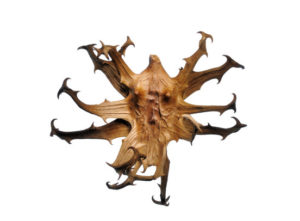
 Argentina Screw Bean
 Sacred Lotus
 Australian Pine


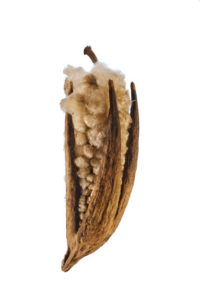
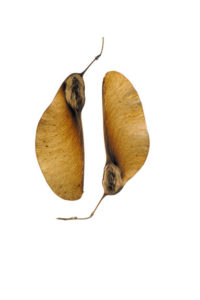 woody Pear